Bubbles Art, Science, Math and Language Arts!

The wider the range of possibilities we offer children, the more intense will be their motivations and the richer their experiences. We must widen the range of topics and goals, the types of situations we offer and their degree of structure, the kinds and combinations of resources and materials, and the possible interactions with things, peers, and adults. ~Loris Malaguzzi, Hundred Languages of Children

OLYMPUS DIGITAL CAMERA

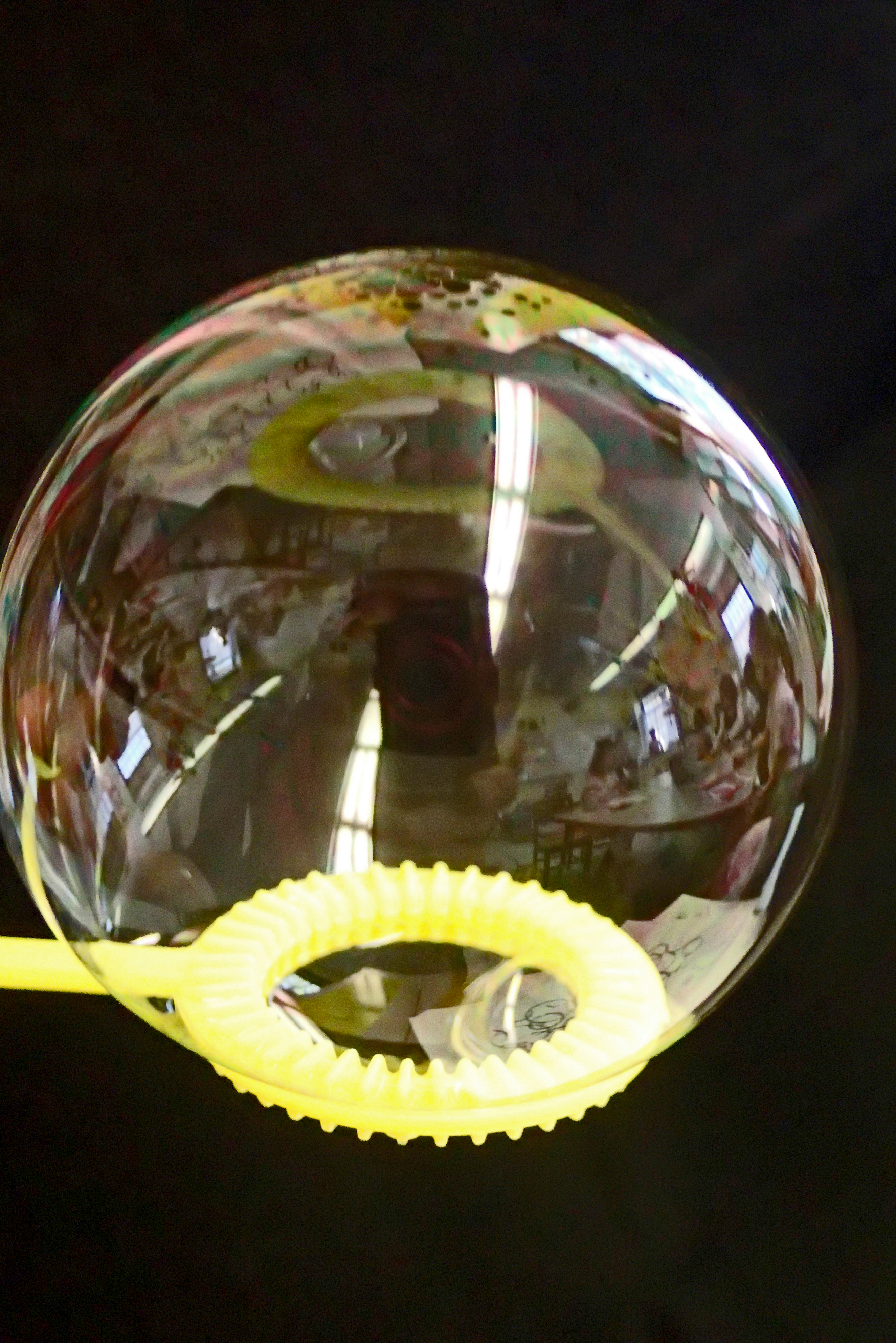
Bubbles are fascinating and afforded us several challenging and fun ways to explore and experience science, art, math, and language arts. There was a plethora of things to notice, marvel at, wonder about, investigate and enjoy!

… The variety of sizes. The delicate and yet strong nature of soap film walls. The colors and reflections that are captured in the bubbles. The many things that can be used as a bubble wand. Do heart-shaped wands make heart-shaped bubbles? The ways we feel when we blow bubbles. Should we blow slowly or quickly? Does that make a difference? Can we fill the room with bubbles if we use a window fan? The joy and sorrow felt as bubbles pop. The way the wind takes the bubbles as they leave the wand. The way the bubble solution feels, and sometimes tastes, as the bubbles pop close to our lips. Can we create bubbles from things other than store-bought bubble solution? How could we create bubbles in art? What colors are bubbles? Which words best describe bubbles and our experience? 

Prior to starting I told the girls we would be scientists, authors, readers and artists, and that the process would take us several days. We experienced bubbles through our eyes, our ears, our brains and our bodies!

  • We did several read alouds.
  • I blew bubbles and the girls experienced them only with their eyes. What did the bubbles look like? How did they move?
  • They blew bubbles. Again, as scientists they tried to observe things about the bubbles, the process and each other.
  • We all blew bubbles, and just experienced the joy of bubbles – much laughing, movement and even some screaming!
  • We created bubble wands using various materials: pipe cleaners, plastic plant mesh, plastic water bottles, straws and string. We tested and observed each – Was it easy to make bubbles with them? Did they make big bubbles? Small bubbles? What shape were the bubbles? Did the bubbles mirror the shape of the wand?
  • After each experience the girls shared words and feelings, which I scribed onto a large piece of chart paper.
  • We ended up with three lists of words. We observed the lists: How many are in each? Which list has the most words? Which the fewest? Why? (We noticed that the words increased as we engaged more fully in each experience and grew in comfort with the process.) We used math strategies to add the lists together and come up with the grand total. We marveled at our abilities to describe our experiences. We used these lists to create our list poems.

OLYMPUS DIGITAL CAMERA

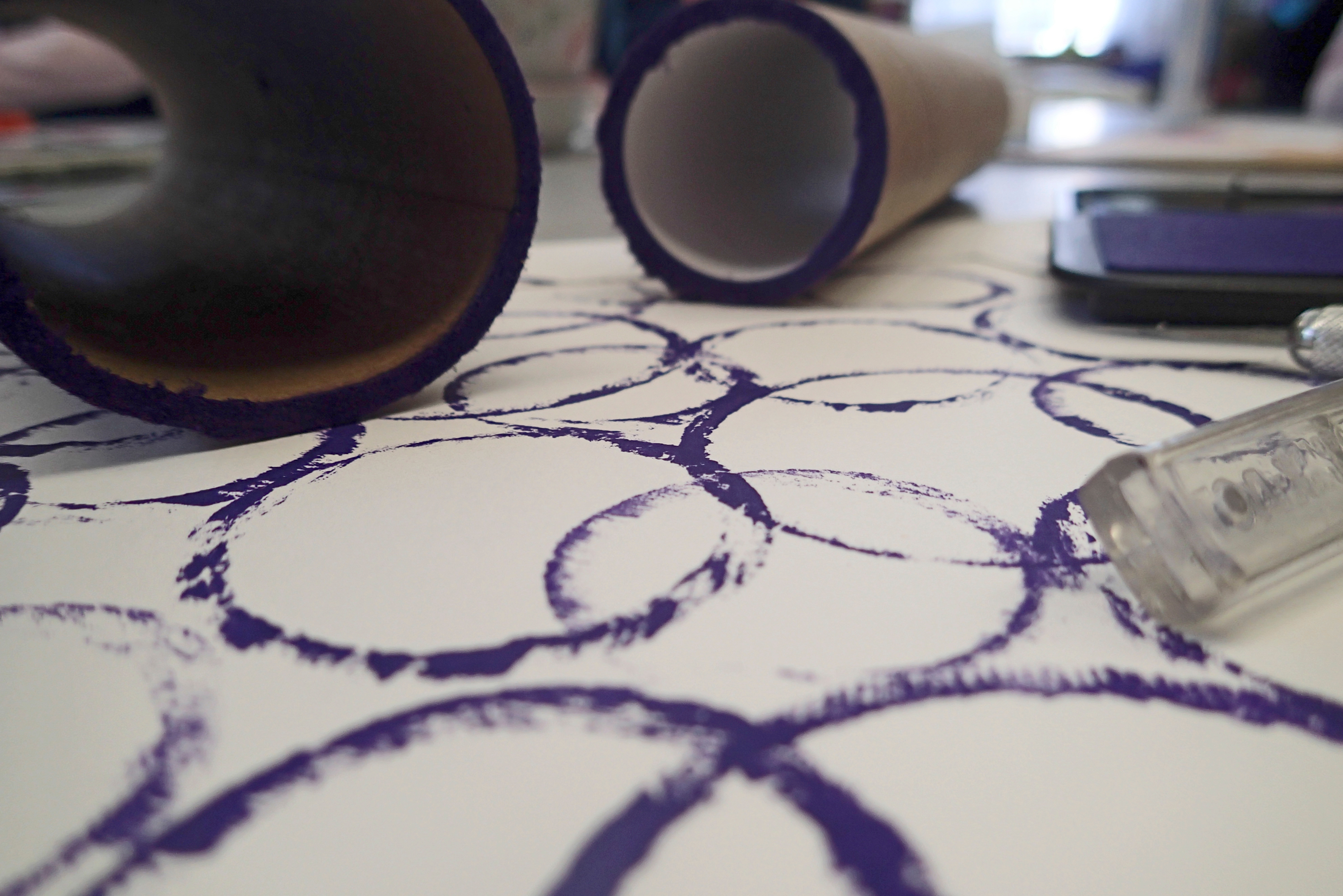
I brainstormed many ways to create a frame for the list poems and finally decided (for ease and aesthetic reasons) to cut a frame to place over the girls paper as they stamped. The frame allowed them to stamp freely while maintaining a clear border for their list poem. I held the frame in place, as the girls used the cardboard tubes and ink pads to create their bubbles.

I was amazed and impressed with the thoughtfulness with which they approached their work. Each girl had her own particular process, but each was purposeful in her choice of tubes (various diameters) and placement of bubbles. My only instructions were to be sure to press straight down so as to get a good print (and not to fret if it was less than perfect, as that added to the uniqueness of each piece) to consider overlapping the bubbles at least a bit, and to not be afraid to overlap the frame.

OLYMPUS DIGITAL CAMERA

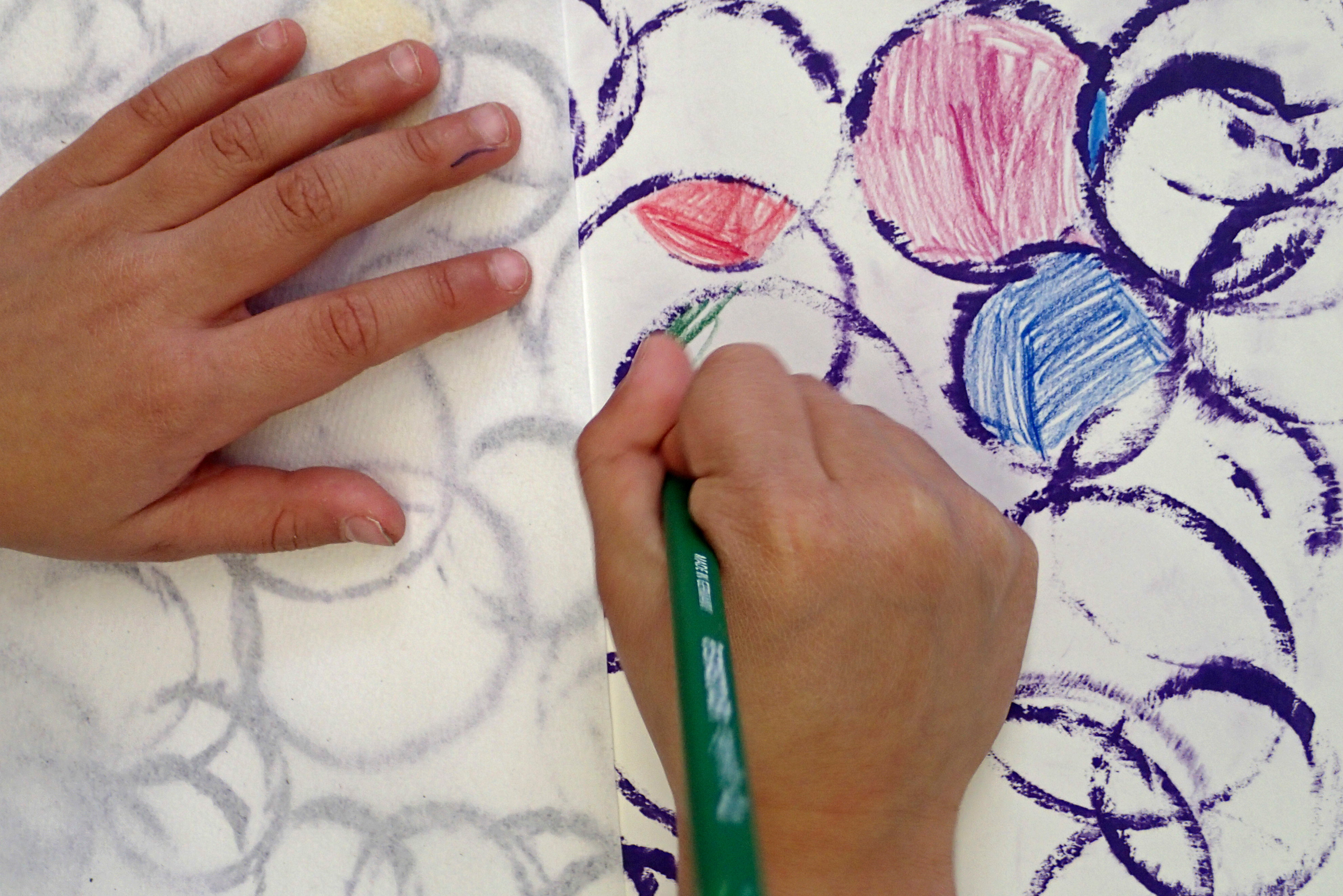
I brought in some artist quality pencils to share with the girls. I talked about why I liked the pencils – great colors, nice feel in my hand, beautiful movement across the paper – and why I chose to share them with the girls – they are artists too and I thought they would enjoy using them. I asked them to take care of the pencils as they were special to me. The girls were fantastic with the pencils! They carefully chose the colors, replaced them in rainbow order, only sharpened them as much as necessary, shared them with each other, and really seemed to empowered by using them. (We ended up using them in free choice as well as other projects.)

After the ink dried, the girls worked diligently to fill in each full shape (not the partial bubbles around the edges). We discovered that the ink, though dry, sometimes transferred around the paper, so we used a paper towel to minimize movement. Thankfully any transferred ink erased easily.

bubble words

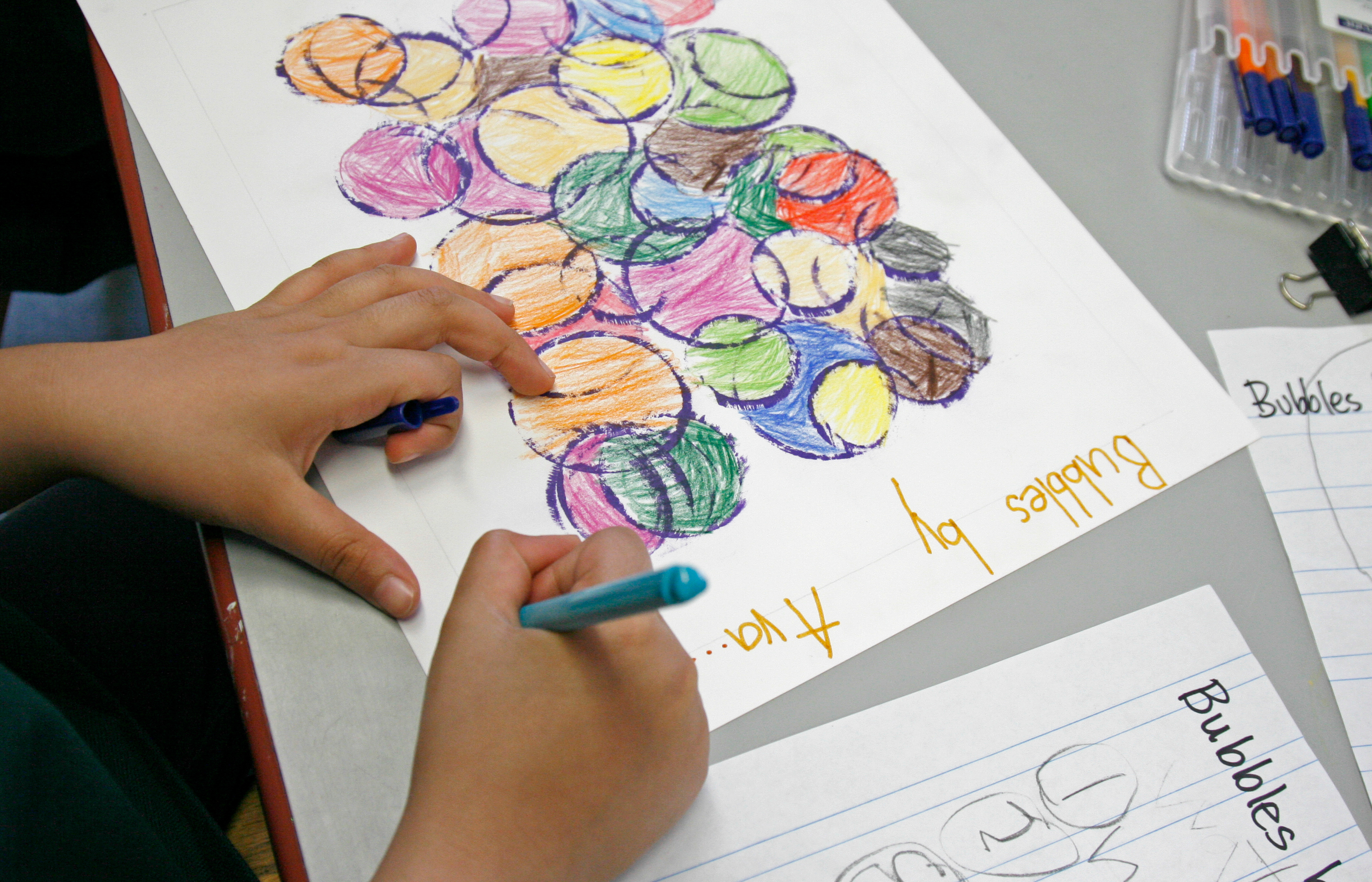
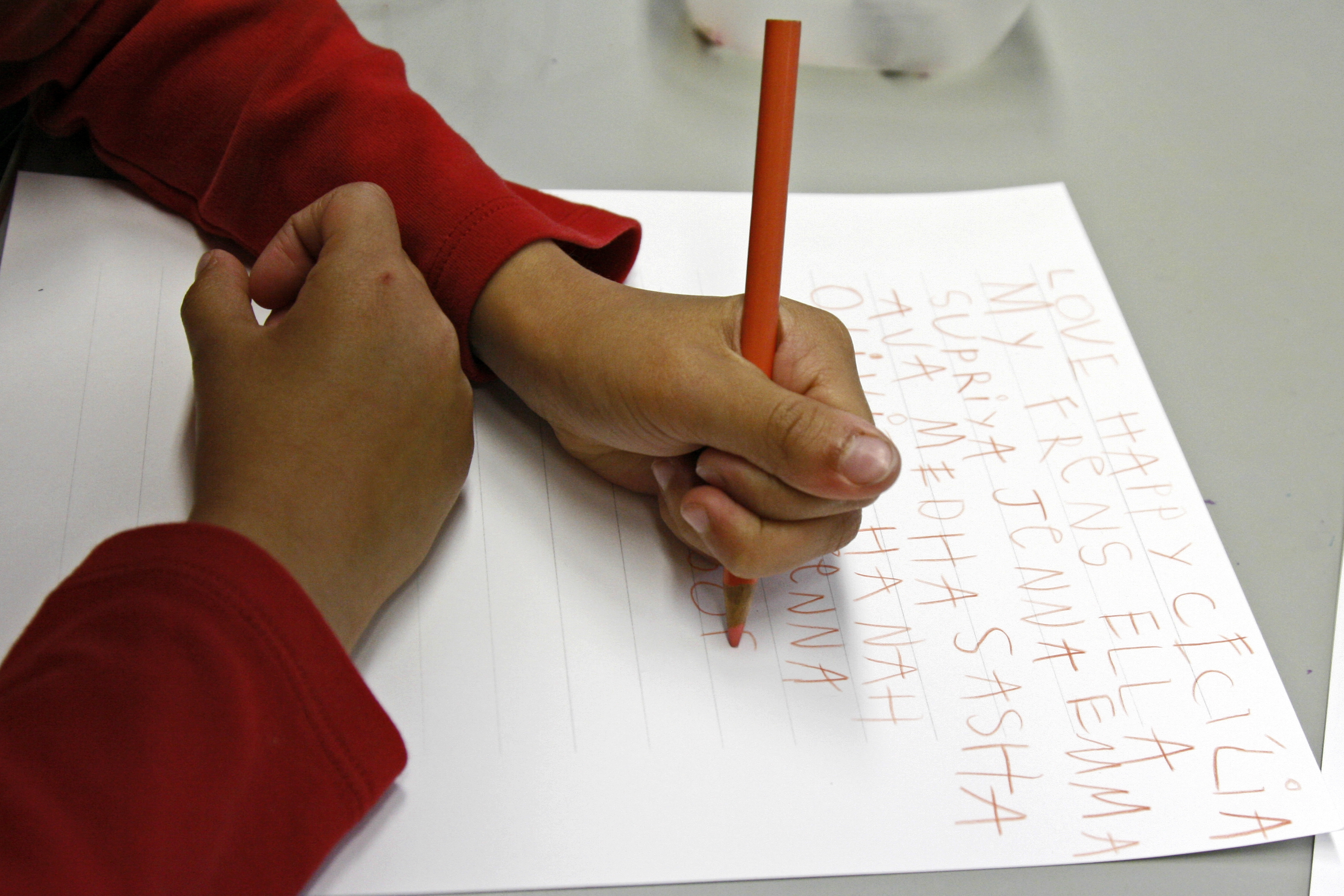
Once finished with their art piece, the girls moved on to their list poems. The goal was to create a list poem and encircle the bubbles with the poem. (We read, observed and discussed poems from Falling Down the Page by Georgia Heard prior to this project, and emulated the freedom Georgia showed in placing words on the page.) Each girl began by choosing 12 words from the class lists and writing them in the frame of her paper. If needed, she chose more words.

When everyone was finished – and it took some girls many days to do so – we shared our poems and art pieces with each other. Finally, we displayed them on the hall bulletin board, with black and white photos of each of us blowing bubbles as the border.

RESOURCES:

Hiking boot canvases

I found a pair of Asolo hiking boots. Loved the fit, but the color? Not so much … red. I was conflicted. A good feeling boot is hard to pass up, but whew, red? Definitely not my thing.

I walked around the store for a good long time trying to decide what I’d do. Then It hit me – tangle them! If that worked, they would rock! The black sharpie would soften the red, and the tangles would create a functional piece of art.

hiking shoes 1

It worked! (Don’t you think?) Turns out they were a fantastic canvas for tangling.

hiking shoes 2 Now I can’t imagine hiking in anything else.

I am the rockin’, creative, hiking girl in the fabulous, one-of-a kind boots.


Sewing, thinking, and creating with Faith Ringgold

Tar Beach is, in my opinion, both simple and profound. it is easy to understand and yet filled with illustrations and ideas that inspire both wonder and discussion. It is an excellent platform from which to explore a female artist/author, and to integrate arts and creativity into the curriculum.

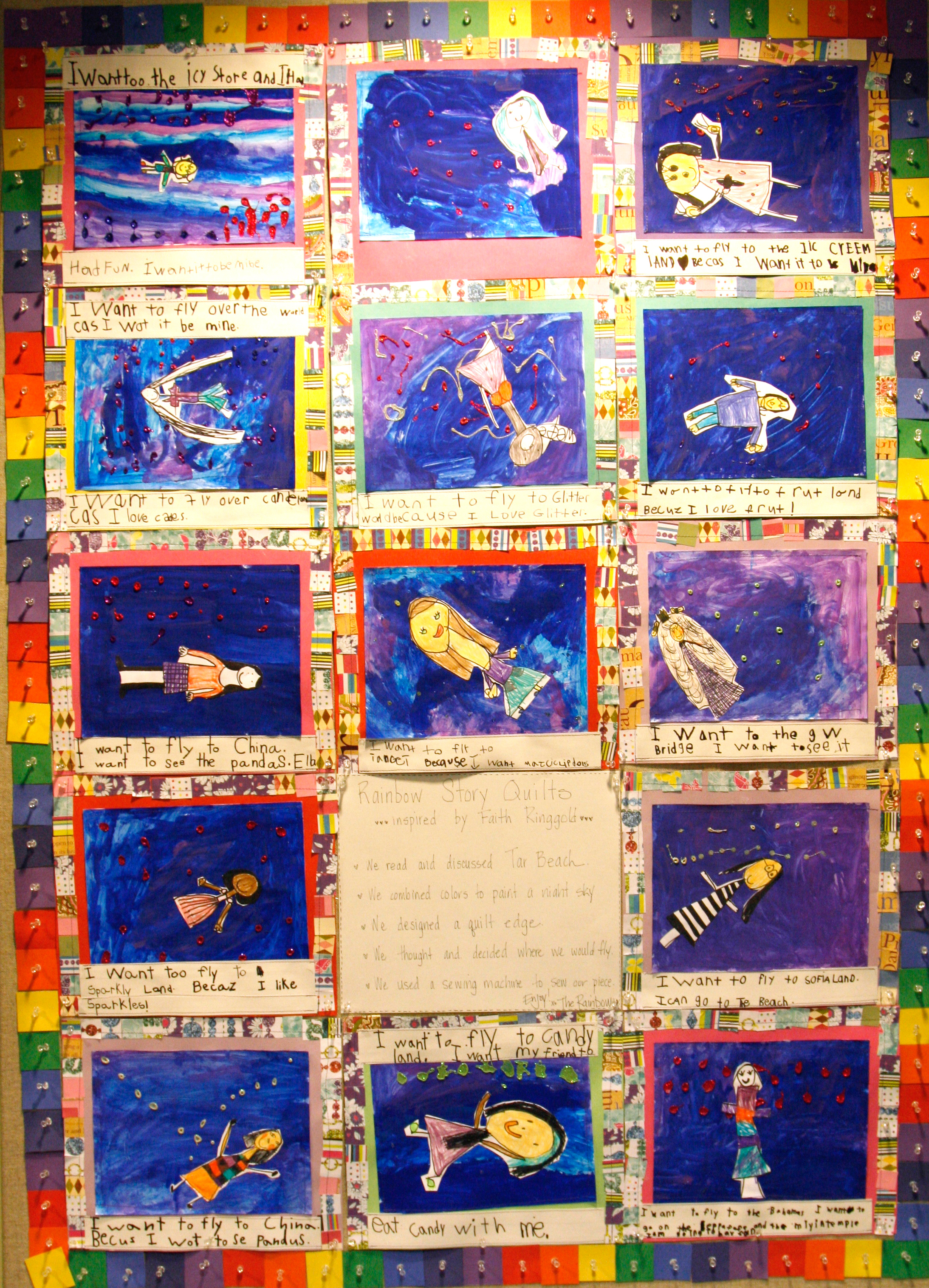
We did an interactive read aloud of the book – actually reading it two or three times at different points along the process of the project. We watched videos of Faith talking about her writing and art – especially her story quilts. We examined pictures of the quilts and noticed that the stories were told in word and illustration. We inquired about, reflected on, and discussed many things.

Why is the book called Tar Beach? What is the tar beach? Have you ever been to a tar beach? Do you think it would be fun? Why or why not? Can someone really fly over the city like Cassie? Do stars come lift you up so you can fly? What could Faith Ringgold possibly mean? Why does Cassie fly where she flies in the story? Have you ever wanted to belong to a club but couldn’t? Have you ever wanted to do something to help others feel better? Have you ever wanted to do something to help your parents feel better? What are your dreams? Where would you go if you could go anywhere?

The discussion was rich, and continued as the girls worked on the art/literacy project.

I combined ideas I found on the web (see resources) with my own ideas to create a project that involved drawing and a certain sense of mapping – choosing and implementing the body position of their flying person, as well as placement of their person on the paper, color mixing, painting, small motor skills (cutting, gluing), sewing, imagining and writing.

The project was not simple. It took a bit of prep on my part and a good bit of stamina and work by the girls. We worked together on this project for several days.

  • I measured the paper and cut many sheets of paper. We needed a background, a piece for the sky, a piece for them to draw themselves flying, a piece for them to write their dreams, and squares to glue around the edge for the quilted part.
  • The girls brainstormed how they might look if they were flying. Once the had an idea they liked, they set to creating it in pencil. Happy with their work, they went over the lines with sharpie markers. (There is something striking about children’s work in black sharpie.) Finally they added color to their person.
  • They pasted the square pieces – in the fashion of a quilt – along the edges of a 12 x 18 sheet of paper. By the way, it takes a LOT longer than you might imagine. I was impressed with the girls perseverance.
  • They created a night sky using various shades of blue and purple and filled the sky with glitter stars.
  • Once their sky painting dried they decided how they would fly and glued their person onto the sky.
  • They were very careful and deliberate with all their work!
  • Finally, after thinking deeply about where they would want to fly and why, they used their best spelling, and writing, to transcribe their thoughts onto the project.

faithringold2

At first I thought that would be the end of the project – glue all the things onto the background and display them. However, it seemed unfinished, and somehow disrespectful of the strength and capabilities of the girls, to have quilt pieces devoid of any sewing.

I was reminded of a quote by Jerome Bruner. After visiting some Reggio Emilia schools (they are early education classrooms, by the way), Jerome commented on the level of respect afforded the children by the educators. “It is like a seminar at the graduate department of the university, with the same kind of respect, of exchange in talking about what you have just said, and about your former thinking” (Rindaldi, p. 58). While the quote comments on thinking, I believe it can be expanded to include respect for the students’ work as well as their thinking.

I decided I would bring in my sewing machine and have the girls sew their art pieces with my machine. We talked about the fact that I, and many of the adults in their lives, sew on a machine. I explained the way the machine worked – in all its glory as well as it’s potential for harm. (No one wants a needle sewn through their finger!) I told the girls that I was confident in their ability (with my help) to use the machine and generate beautiful things. Then, we got to work.

faith ringold sophia

I sat behind them as they sewed. We had a dialogue regarding where and how they should sew. We talked about going fast or slow. We discussed hand positioning. We agreed that if I said “stop” they would immediately remove their foot from the pedal. They were fantastic! For a five year olds, there was quite a bit of sewing – and it was all straight lines so they had to work on keeping the paper at the proper guide. After a bit of time coaching each girl, I was pretty much a watchful spectator.

When we were all finished, I created a used their pieces to create a quilt on the hall bulletin board. It was awesome to notice all the older girls and teachers who stopped to examine, and marvel at, our words and artwork.

faithringold quilt

RESOURCES:

Inspiration for art project:

  1. http://weskart.blogspot.com/2010/12/faith-ringgold.html
  2. http://pinkandgreenmama.blogspot.com/2010/05/art-in-schools-faith-ringgold-paper.html#.U-FFXoBdUoo

Video:

  1. Making the quilt –  http://www.youtube.com/watch?v=794M-mcOJY4
  2. Writing Tar Beach –  http://www.youtube.com/watch?v=ZdPxHvGB1Xo

Faith Ringgold:

  1. http://www.faithringgold.com/
  2. http://faithringgold.blogspot.com/2007/03/faith-ringgold.html

Reggio Quote:

  1. Carlina Rinaldi, In Dialogue with Reggio Emilia: Listening, Researching and Learning. London: Routledge.

Beyond the page with Georgia O’Keeffe

rose“If you take a flower in your hand and really look at it, it’s your world for a moment.” Georgia O’Keeffe

“Nobody sees a flower – really – it is so small it takes time – we haven’t time – and to see takes time, like to have a friend takes time.” Georgia O’Keeffe

Georgia O’Keeffe’s paintings and thoughts about flowers are impressive and thought provoking. Her thoughts suggest mindfulness and reflection.  Her paintings translate the small and easily overlooked, into something large that captures attention.

My students are always impressed with Georgia’s work. But, while they marvel at the size of her flowers, I  think they have a difficult time wrapping their minds around the changes she makes. In Georgia’s hands, flowers became larger than life – even larger than the canvas on which she painted.

I have done Georgia O’Keefe inspired art with my classes other years, and each time they struggled to use the whole page. They made lovely flowers but they made them small – in the center of the page – not covering the whole page. I encouraged and reminded, but still the flowers were smaller than Georgia’s. I loved watching them examine the flowers, but I hated the feeling of pushing them, and constantly having to say “Oh, can you make that bigger?” or “The whole page, use the whole page!” or thinking in my head “eee GADS, that’s not what I asked you to do.”

This year I tried a new method. I wish I could remember the lesson or book that contained the spark which led to this lesson, because I would love to thank them, and give you a great resource, but alas, I cannot. So, you will have to be satisfied with my lesson!

First we looked at her flowers and talked about what we noticed. One thing we noticed was that Georgia’s flowers often look like they go beyond the edge of her canvas. “Oh YES!” I excitedly exclaimed. “EXACTLY!” I told them I had never been able to figure out a way to help my students draw their flowers off the edges of the paper – until now! I told them I read about what other artists had done, and I found something I thought would work perfectly for us.

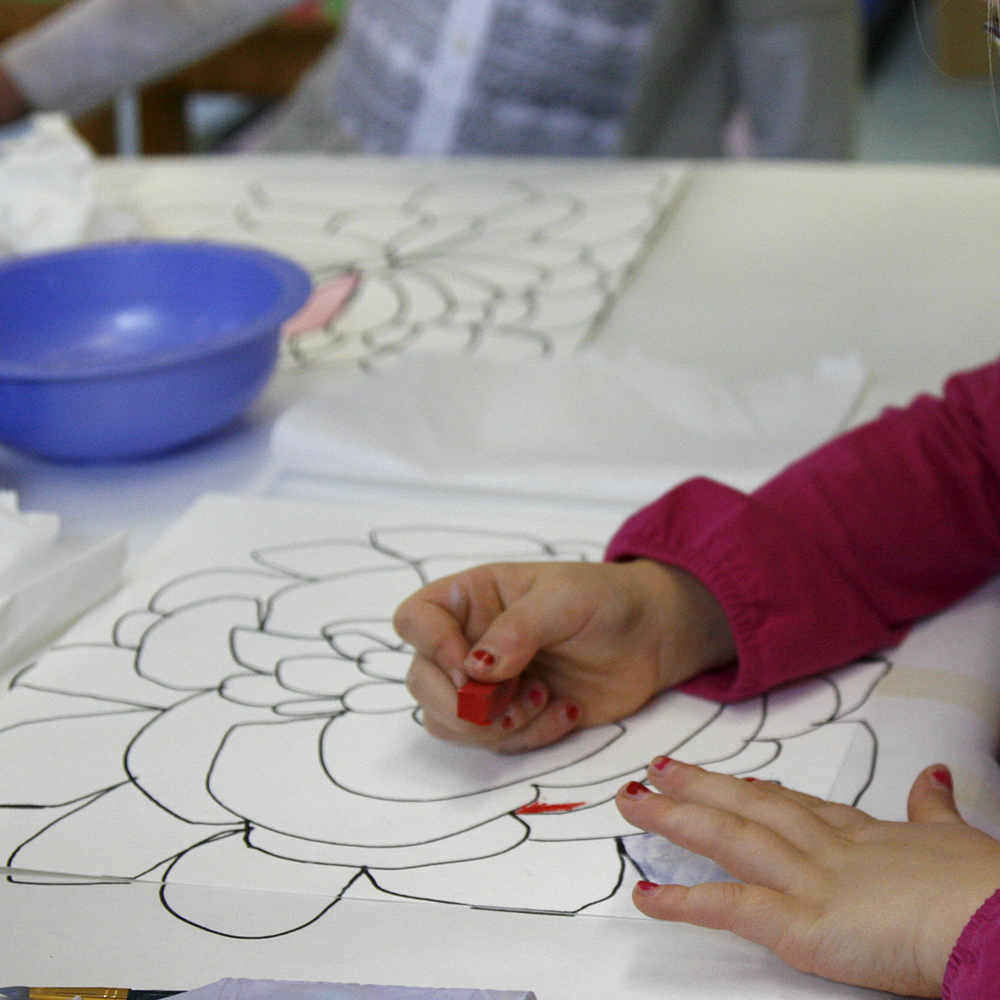
I explained that I had covered the tables with white craft paper so they would feel free to draw off the edges of the page. I told them their art piece would actually be the piece of watercolor paper I had taped to the white craft paper (I taped them underneath.) but I said they should imagine the whole white space as their canvas. “When you draw your flower, make it big. Make parts of it land on the white craft paper!”

They asked if they would draw a flower from memory. “No! I brought lots of flowers for you to look at!” I dropped many flowers on the carpet in front of them amidst “ooohs” and “aahs.”

“I want you to be like scientists. I want you to really look at the flower you choose and then create it on your paper.” I suggested they try to make their flower have a shape similar to the flower they chose, but told them they could be creative and change things up a bit. The most important things were to trust themselves as artists, really see the flower (like Georgia did) and to draw their flower big so others would see it too.

Armed with a sharpie marker, I chose my flower and began to  draw for them. I made the shapes simple – matching the flower in some ways and changing it in others. I commented that sometimes I changed shapes because it was a bit easier for me to draw, and sometimes I tried really hard to draw exactly what I saw.

They all wanted to know if we would add color. “Absolutely! But, we are going to use a new method.” I brought out a tray of sidewalk chalk, a cup of water and a paintbrush. I explained we would color with the chalk and then smudge it – just a bit – with our fingers. Then, we would use the paintbrush and water to create our a watercolor on the page. I cautioned them against too much water – “Squeeze the brush out like this before you use it. … There will still be plenty of water. Look!” I told them they might have to experiment with the amount of chalk they added and the amount of smudging they did. I showed them a few different possibilities and set them free – with my fingers crossed.

After carefully choosing a flower, and navigating how more than one might use the same flower, they uncapped their sharpies and began drawing. They were fantastic!!! All the girls made their drawings larger than the flower they observed, and all but one extended their flowers beyond the page. And, perhaps best of all, it was so easy for them!!!!

 GO collage5

They were incredibly engaged in every step of the process – choosing a flower, observing it, drawing it with the black sharpie, coloring with sidewalk chalk, smudging the chalk and turning the chalk into watercolor. I wish I could share photos of their faces with you. They were girls – 5 and 6 years old – transformed into intent, focused artists – easily mistaken for students well beyond their years.

GO collage3

As always I was impressed (and humbled) to be there for the “magic” that took place in that art class. Together, somehow, my students and I found that synergistic space where we were able to become more than … or perhaps just exactly … who we are.

….

Two nice Georgia O’Keeffee resources:

http://www.okeeffemuseum.org/about-georgia-okeeffe.html

Click to access scoop-okeeffe.pdf

Quieting my mind with a good tangle

Wow I had a tough time turning off my brain … and to be honest, my spirit … last night. It seemed everything just wanted to stay wound up a bit too tight to allow for sleep.

Thankfully, as I went up to bed, I noticed my black art squares sitting with a pack of white, gold and silver gel pens. “Oh!!!” I thought, “That’s what I’ll do! A zentangle ©.”

I’ve zentangled – or did my version of a tangle – many times previously. I have always enjoyed it but never really experienced it as zen-like as some suggest it might be. But I have to say, for some reason, last night it was really a zen experience!

I picked up a sheet of paper I had previously discarded because I had been unhappy with my placement of the strings (zentangle boarders). I used the parts of the strings I liked, and casually reworked just a bit of the string placement. I decided to work using only white ink (because I didn’t use any white the last time I tangled). I worked with some designs I’ve used previously, and allowed myself to be inspired by others’ designs, in order to create new ones of my own.

Perhaps it was because I was so tired. (Did I mention it was 1AM?) Perhaps it was because I wasn’t really trying to create something – I was just playing, treating the page almost like a piece of scrap paper. Perhaps it was using the form but not feeling bound by the form. I’m not really sure. But whatever the reason, the process was particularly peaceful, free, and enjoyable.

zentangle

I added the paraphrase of a Thich Nhat Hanh quote as both an affirmation of what I was doing, and as a reminder of what I always want to do…

Breathe, believe, and be. Smile, cultivate calm, and be cognizant and grateful for the present, wonderful moment.

…………….

With gratitude to the creators of Zentangle and the many people doing great inspiring work, here are a couple links:

http://www.zentangle.com – The website of Zentangle Method creators Rick Roberts and Maria Thomas

http://sandybee.weebly.com/ – The website of Sandy Steen Bartholomew.


In the cloud with Uri Alon

cloud

If you haven’t watched Uri’s TED talk, you should!

His TED talk bio begins …. “Uri Alon studies how cells work, using an array of tools (including improv theater) to understand the biological circuits that perform the functions of life.”

How awesome is THAT?? A big time scientist using improv theater as a research aid. Give it a look and then we’ll talk.

http://www.ted.com/talks/uri_alon_why_truly_innovative_science_demands_a_leap_into_the_unknown?utm_source=newsletter_weekly_2014-06-13&utm_campaign=newsletter_weekly&utm_medium=email&utm_content=bottom_left_image#t-927335


Calvin and Hobbes

Calvin and Hobbes crack me up! I was reminded of them when I saw the documentary film Dear Mr. Watterson by Joel Schroeder. (http://www.dearmrwatterson.com/DMW/dearmrwatterson.html)

I think Bill Watterson and his characters are quite creative, so I thought I’d share a strip that cracks me up as a teacher (and a student!). It’s published in There’s Treasure Everywhere – one of many Calvin and Hobbes books I own and enjoy. Even the title is fab!

calvinandhobbes

Ok, now, before other teachers (or creativity researchers) crank and kvetch that Calvin isn’t REALLY being creative because his innovation isn’t useful in this application, let me say I get it! I understand that definition of creativity, but I LOVE Calvin’s possibility thinking (Anna Craft), his notion of loopholes, and his desire to use them. That sense of possibility, of playfulness, of seeing and using loopholes, of reckless abandon, of seeing and creating the new – that is important and useful!

Do I think Calvin needs to learn a bit of prudence? Yes, of course — though it would make his character much less amusing — but prudence cannot come at the cost of possibility thinking or illumination.

Illumination – that AHA! moment — and evaluation (prudence) — are two distinctly different things. Both are valuable and both must be given encouragement, thought, space and time. And, both must be celebrated!

So, one of my goals as a teacher is to encourage creativity, possibility noticing and thinking, dreaming, playfulness, and risk taking, while also teaching, and encouraging evaluation.

Oh, and I also hope to be open to those times when my question actually asks to be interpreted creatively! Cause really, read the question before Calvin once more. Didn’t he do what was asked? Hmmm ….

Creativity of the concussed

Marvelously resilient

Yet frighteningly fragile

Beautiful, brilliant and

Responsible for so much

And perhaps beyond my wildest dreams

Incredibly important and

Not to be banged about, like a ball within my

Head

Under no circumstances!” you assert and

Really I agree, but

To my chagrin

Sometimes it happens

And wow does it hurt, but

Lest I forget – beautiful, brilliant and marvelously resilient

Oh yes,

That’s right, don’t fret, just rest

Writing and drawing … or, Kindergarteners tackling the blank page!

I enjoy the “mixed media” of writing and drawing. They compliment and enhance one another, making my art more satisfying and beautiful.

After working on my blank page art project I knew I wanted to try it with my kindergarteners. I wondered if they would have a similar experience of comfort using the magazine as a scrap paper journal, and their words as the background for their drawing.

It was fascinating to be part of their experience!

I began by sharing my own work – both my process and my product. I shared my reluctance to work on the beautiful, blank pages, as well as how free I felt using the magazine as scrap paper. I told them I loved being able to experiment on the magazine pages. I showed them my magazine drawings and talked about my thoughts – what I liked, what I didn’t like, how I studied the faces I found in the magazine, and how I eventually developed a face that I liked. I commented that I didn’t think it was perfect, but that I really liked it just the same.

I encouraged them to relax as they worked. “Don’t worry making mistakes. It’s all part of the process. Look at what you did. If you see something you don’t like, don’t fret, just do it again until you do like it.

I asked them to be free and soft – in their minds and in their bodies – as they used sharpie markers to make the faces. I reminded them there could be no erasing but assured them they would be fine.

They were very funny in their interpretation of my words. I had to explain to some of them – as the pen almost fell from their overly relaxed fingers – “Oh no, that’s fabulous, but you really do have to hold the pen with a nice grip. What I meant is relax your arm, make your strokes easy and smooth. Like this.”

I started by giving them a drawing technique that would allow them to be successful while at the same time, giving them the freedom to create “their own faces.” I told them they would be able to make as many faces as they liked, but asked them to make their first face by following the steps with me.

The technique was quite straightforward.

  • First a large oval for the head.
  • Then a column for the neck, with two small hills on either side to form the shoulders.
  • One long curved line for the eyebrows and sides of the nose came next. We noticed that the shape of the eyebrows really changed the emotion of our faces. We had a really tough time with the tip of the nose, so many left it out.
  • The eyes were almond-shaped with circles. We experimented with different sized almonds and circles. We placed the pupils in different places. Some of us added glasses. The faces had great character – even without lips or hair!
  • Lips were a bit tricky and some wanted to just make a smile. I told them they had to give the lips a try. After a bit of “ugh” and a sigh, they relented and tried. They drew awesome lips.
  • Some of us added ears – amazed that they actually go from the center of our eyes to the center of our lips. Finally we added hair.

mag work 3

My students seemed intrigued by my thought process and used my words throughout their work. One student drew something she didn’t like and said “Well, that’s ok, I can just go to the next page.” Another told me “I’m trusting myself, Miss James. I’m being brave, doing it and just believing it will come out alright.” It was absolutely amazing to see my words empower them!

After a good bit of drawing, it was time to fill a page with words that made them happy. I suggested they think of their handwriting as a beautiful part of their art piece. They worked hard choosing words and then filled the page with their handwriting. (It’s a LOT of work for a kindergarten student.) When every line was filled they were ready to make their final face.

_MG_2713

I gave them the option of practicing in their magazine again before working on their art piece. Some did, some didn’t, but either way, they were all engaged, confident, happy, and successful!

Our bulletin board is filled with different faces – each unique and fabulous – just like the artists who made them. Occasionally I shake my head, amazed that the artists are kindergarten students.

face 1

Why were they able to be so successful? I’m not certain, but I have some ideas.

I believe they are fantastic and capable. I value them and their work, and my behavior and language reflect that value.

  • I share my expensive art pencils with them (and they treat them like treasures).
  • I give them the best paper I can, and even if it is simple, inexpensive paper, I make sure it is worthy of their work – clean, cut straight, and unwrinkled.
  • I treat them as fellow artists.
  • I ask them to do art that I do – not just “kids” art.
  • I share my thoughts and work with them.
  • I don’t hide my struggles. I consider their suggestions and offer my own.

And, wow, there is something powerful about the process.

  • The technique is easy to remember but still rich enough to express the wishes of each artist.
  • There is a nice balance of structure and freedom.
  • There is the comfort of the non-blank page of the magazines and word filled pages.

And some how, that all combines to be magical, powerful and emboldening. I dig it!

RESOURCES:

Journal Spilling: Mixed Media Techniques for Free Expression by Diana Trout (2009)

Mini-c creativity in the classroom

Creativity takes many forms in the classroom. You just have to be open to it!

At its core, creativity is the ability to generate unique and original ideas or things. Children are naturally creative. However, since they do not fully understand any particular content area, their creative thoughts and actions are sometimes overlooked, or simply acknowledged with the comment, “Oh, isn’t that cute!”

According to Beghetto and Kaufman’s “4-C model of creativity” there are four levels of creativity: Big-C , pro-c, little-c and mini-c creativity. Big-c creativity is associated with the extraordinarily gifted — celebrated artists or poets who develop a new genre, scientists who discover cures for previously incurable diseases, or musicians who change the world of music. Pro-c creativity is creativity exhibited in a creative profession — a head chef who creates a menu of new recipes. Little-c creativity is day to day creativity — a song created to encourage children to clean their rooms, or an original student-developed project to demonstrate their knowledge, understanding or subject skills. Big-C, pro-c, and little-c creativity rely on external judgements regarding their value.

Mini-c creativity refers to the new and useful awareness and interpretations involved in learning as new information is filtered through pre-existing understanding and experiences. While engaged in mini-c creativity, learners actively and creatively construct their own knowledge set. Unlike other levels of creativity, mini-c creativity is personally meaningful and does not rely on external judgement.

princess heart

“This is for you, Miss James!” ( My student watched with obvious excitement as I opened the folded piece of paper.)

“It is Princess Heart, Miss James. She is pink and blue, and her favorite color is purple!” She paused, looked at me and then said it again, with quiet glee. “She’s pink and blue, and her favorite color is purple.” Another pause. “Get it? She’s pink and blue, and her favorite color is purple.” (Wink, nod, smile.)

I get it, and I love the creativity and learning it expresses.


For further reading …

  • Toward a Broader Conception of Creativity: A Case for “mini-c” Creativity by Ron Beghetto and James Kaufman (2007)
  • Beyond Big and Little: The Four C Model of Creativity by Ron Beghetto and James Kaufman (2009)
  • Fundamentals of Creativity by Ron Beghetto and James Kaufman (2013)