Writing and drawing … or, Kindergarteners tackling the blank page!

I enjoy the “mixed media” of writing and drawing. They compliment and enhance one another, making my art more satisfying and beautiful.

After working on my blank page art project I knew I wanted to try it with my kindergarteners. I wondered if they would have a similar experience of comfort using the magazine as a scrap paper journal, and their words as the background for their drawing.

It was fascinating to be part of their experience!

I began by sharing my own work – both my process and my product. I shared my reluctance to work on the beautiful, blank pages, as well as how free I felt using the magazine as scrap paper. I told them I loved being able to experiment on the magazine pages. I showed them my magazine drawings and talked about my thoughts – what I liked, what I didn’t like, how I studied the faces I found in the magazine, and how I eventually developed a face that I liked. I commented that I didn’t think it was perfect, but that I really liked it just the same.

I encouraged them to relax as they worked. “Don’t worry making mistakes. It’s all part of the process. Look at what you did. If you see something you don’t like, don’t fret, just do it again until you do like it.

I asked them to be free and soft – in their minds and in their bodies – as they used sharpie markers to make the faces. I reminded them there could be no erasing but assured them they would be fine.

They were very funny in their interpretation of my words. I had to explain to some of them – as the pen almost fell from their overly relaxed fingers – “Oh no, that’s fabulous, but you really do have to hold the pen with a nice grip. What I meant is relax your arm, make your strokes easy and smooth. Like this.”

I started by giving them a drawing technique that would allow them to be successful while at the same time, giving them the freedom to create “their own faces.” I told them they would be able to make as many faces as they liked, but asked them to make their first face by following the steps with me.

The technique was quite straightforward.

  • First a large oval for the head.
  • Then a column for the neck, with two small hills on either side to form the shoulders.
  • One long curved line for the eyebrows and sides of the nose came next. We noticed that the shape of the eyebrows really changed the emotion of our faces. We had a really tough time with the tip of the nose, so many left it out.
  • The eyes were almond-shaped with circles. We experimented with different sized almonds and circles. We placed the pupils in different places. Some of us added glasses. The faces had great character – even without lips or hair!
  • Lips were a bit tricky and some wanted to just make a smile. I told them they had to give the lips a try. After a bit of “ugh” and a sigh, they relented and tried. They drew awesome lips.
  • Some of us added ears – amazed that they actually go from the center of our eyes to the center of our lips. Finally we added hair.

mag work 3

My students seemed intrigued by my thought process and used my words throughout their work. One student drew something she didn’t like and said “Well, that’s ok, I can just go to the next page.” Another told me “I’m trusting myself, Miss James. I’m being brave, doing it and just believing it will come out alright.” It was absolutely amazing to see my words empower them!

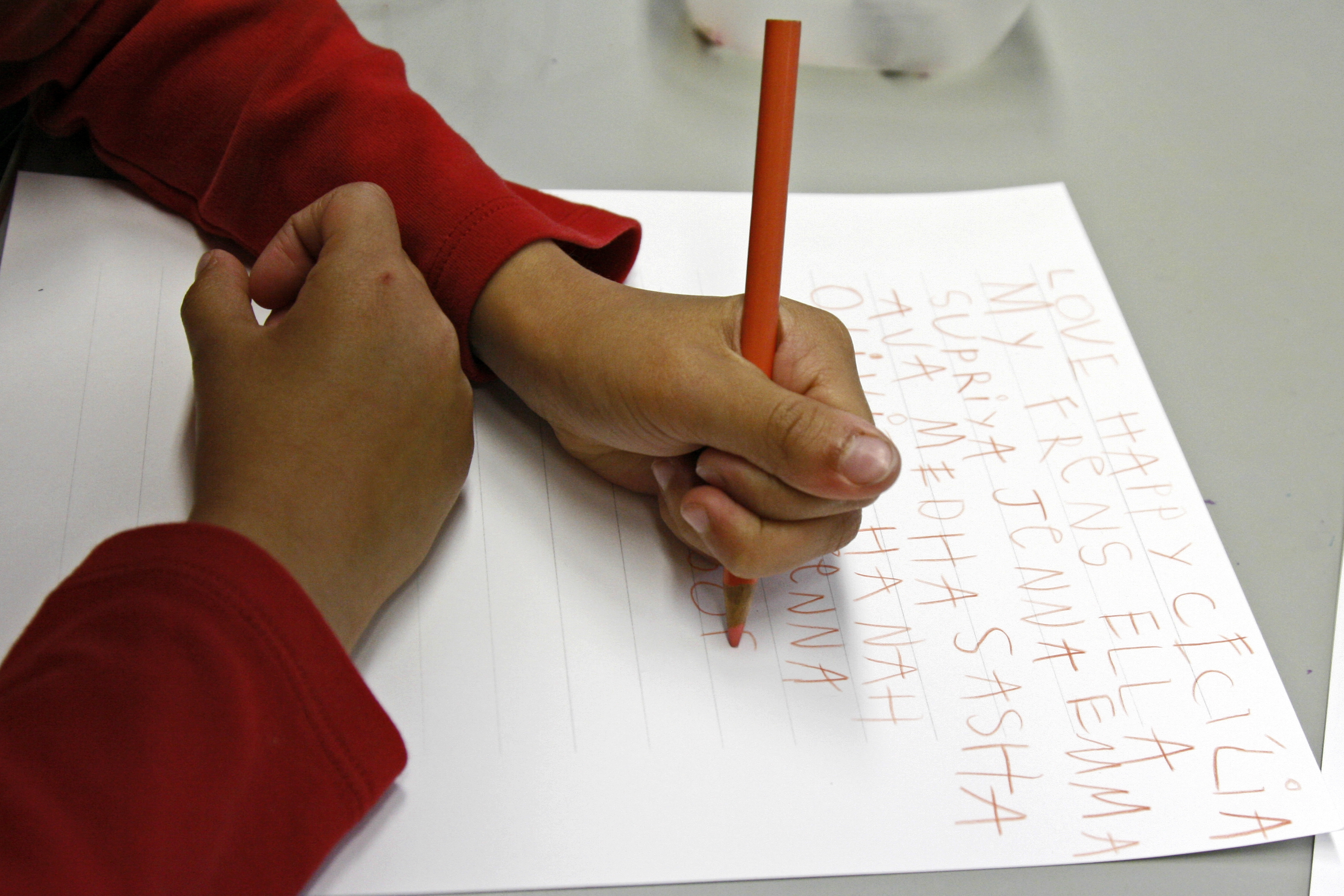
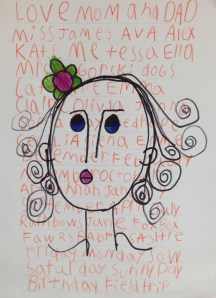
After a good bit of drawing, it was time to fill a page with words that made them happy. I suggested they think of their handwriting as a beautiful part of their art piece. They worked hard choosing words and then filled the page with their handwriting. (It’s a LOT of work for a kindergarten student.) When every line was filled they were ready to make their final face.

_MG_2713

I gave them the option of practicing in their magazine again before working on their art piece. Some did, some didn’t, but either way, they were all engaged, confident, happy, and successful!

Our bulletin board is filled with different faces – each unique and fabulous – just like the artists who made them. Occasionally I shake my head, amazed that the artists are kindergarten students.
face 1

Why were they able to be so successful? I’m not certain, but I have some ideas.

I believe they are fantastic and capable. I value them and their work, and my behavior and language reflect that value.

  • I share my expensive art pencils with them (and they treat them like treasures).
  • I give them the best paper I can, and even if it is simple, inexpensive paper, I make sure it is worthy of their work – clean, cut straight, and unwrinkled.
  • I treat them as fellow artists.
  • I ask them to do art that I do – not just “kids” art.
  • I share my thoughts and work with them.
  • I don’t hide my struggles. I consider their suggestions and offer my own.

And, wow, there is something powerful about the process.

  • The technique is easy to remember but still rich enough to express the wishes of each artist.
  • There is a nice balance of structure and freedom.
  • There is the comfort of the non-blank page of the magazines and word filled pages.

And some how, that all combines to be magical, powerful and emboldening. I dig it!

RESOURCES:

Journal Spilling: Mixed Media Techniques for Free Expression by Diana Trout (2009)
Mini-c creativity in the classroom

Creativity takes many forms in the classroom. You just have to be open to it!

At its core, creativity is the ability to generate unique and original ideas or things. Children are naturally creative. However, since they do not fully understand any particular content area, their creative thoughts and actions are sometimes overlooked, or simply acknowledged with the comment, “Oh, isn’t that cute!”

According to Beghetto and Kaufman’s “4-C model of creativity” there are four levels of creativity: Big-C , pro-c, little-c and mini-c creativity. Big-c creativity is associated with the extraordinarily gifted — celebrated artists or poets who develop a new genre, scientists who discover cures for previously incurable diseases, or musicians who change the world of music. Pro-c creativity is creativity exhibited in a creative profession — a head chef who creates a menu of new recipes. Little-c creativity is day to day creativity — a song created to encourage children to clean their rooms, or an original student-developed project to demonstrate their knowledge, understanding or subject skills. Big-C, pro-c, and little-c creativity rely on external judgements regarding their value.

Mini-c creativity refers to the new and useful awareness and interpretations involved in learning as new information is filtered through pre-existing understanding and experiences. While engaged in mini-c creativity, learners actively and creatively construct their own knowledge set. Unlike other levels of creativity, mini-c creativity is personally meaningful and does not rely on external judgement.

princess heart

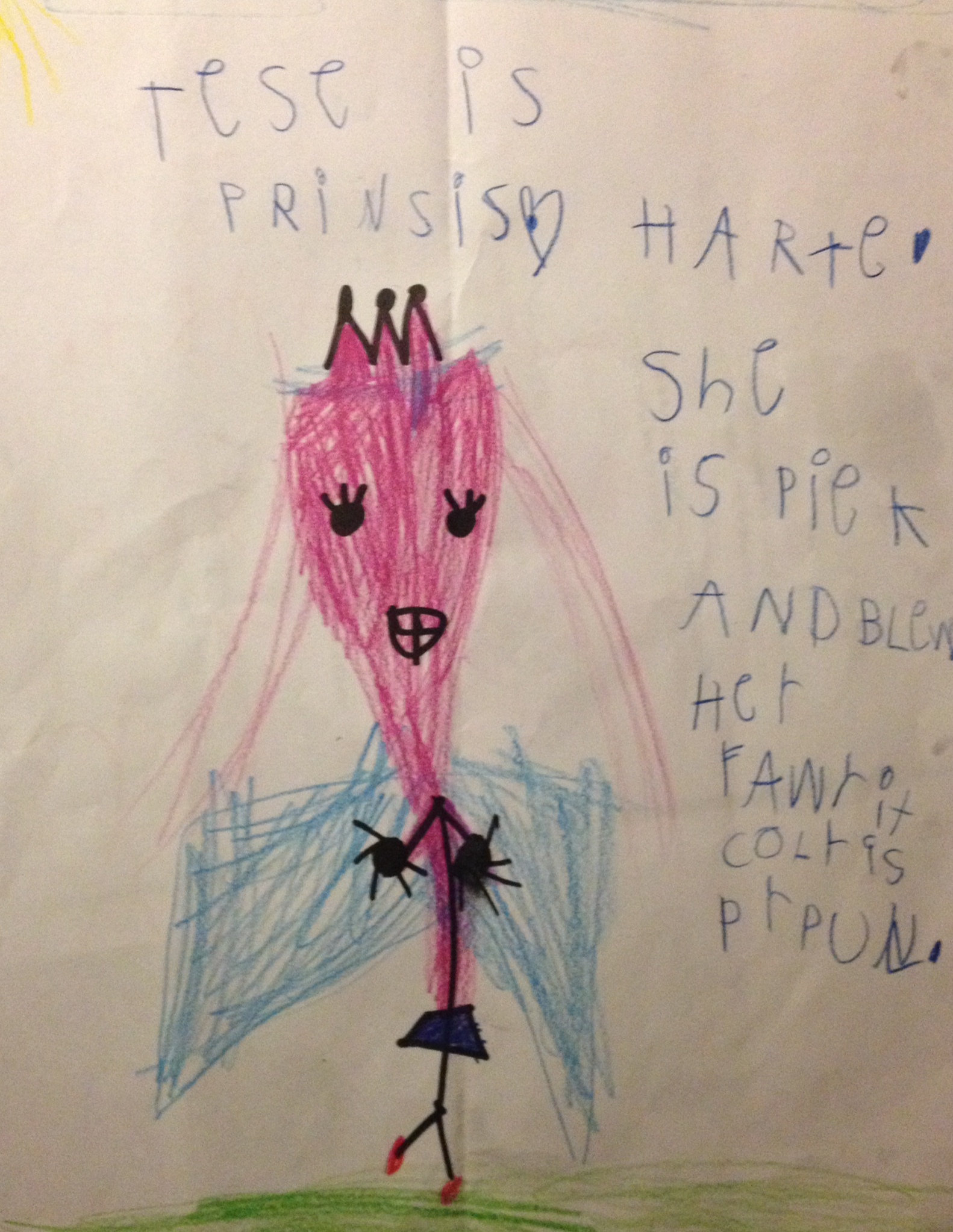
“This is for you, Miss James!” ( My student watched with obvious excitement as I opened the folded piece of paper.)

“It is Princess Heart, Miss James. She is pink and blue, and her favorite color is purple!” She paused, looked at me and then said it again, with quiet glee. “She’s pink and blue, and her favorite color is purple.” Another pause. “Get it? She’s pink and blue, and her favorite color is purple.” (Wink, nod, smile.)

I get it, and I love the creativity and learning it expresses.


For further reading …

  • Toward a Broader Conception of Creativity: A Case for “mini-c” Creativity by Ron Beghetto and James Kaufman (2007)
  • Beyond Big and Little: The Four C Model of Creativity by Ron Beghetto and James Kaufman (2009)
  • Fundamentals of Creativity by Ron Beghetto and James Kaufman (2013)


Possibility thinking

While researching creativity I read several articles by Anna Craft. She suggests the idea of “possibility thinking” as a key element of creativity and an important part of education.

Possibility thinking involves exactly what it says – thinking about possibilities. It involves current knowledge, as we consider what the element/thought is and how it is used. But, it also involves knowledge yet unknown, “what might it be?” and “how might we use it?”

While it is important for us to help our students develop and broaden their knowledge, I believe (agreeing with Craft) that helping our students develop the ability and willingness to engage in possibility thinking is key! Possibility thinking allows us, and our students, to embark on new paths of thinking, and opens the door to new understanding, ideas and discoveries.

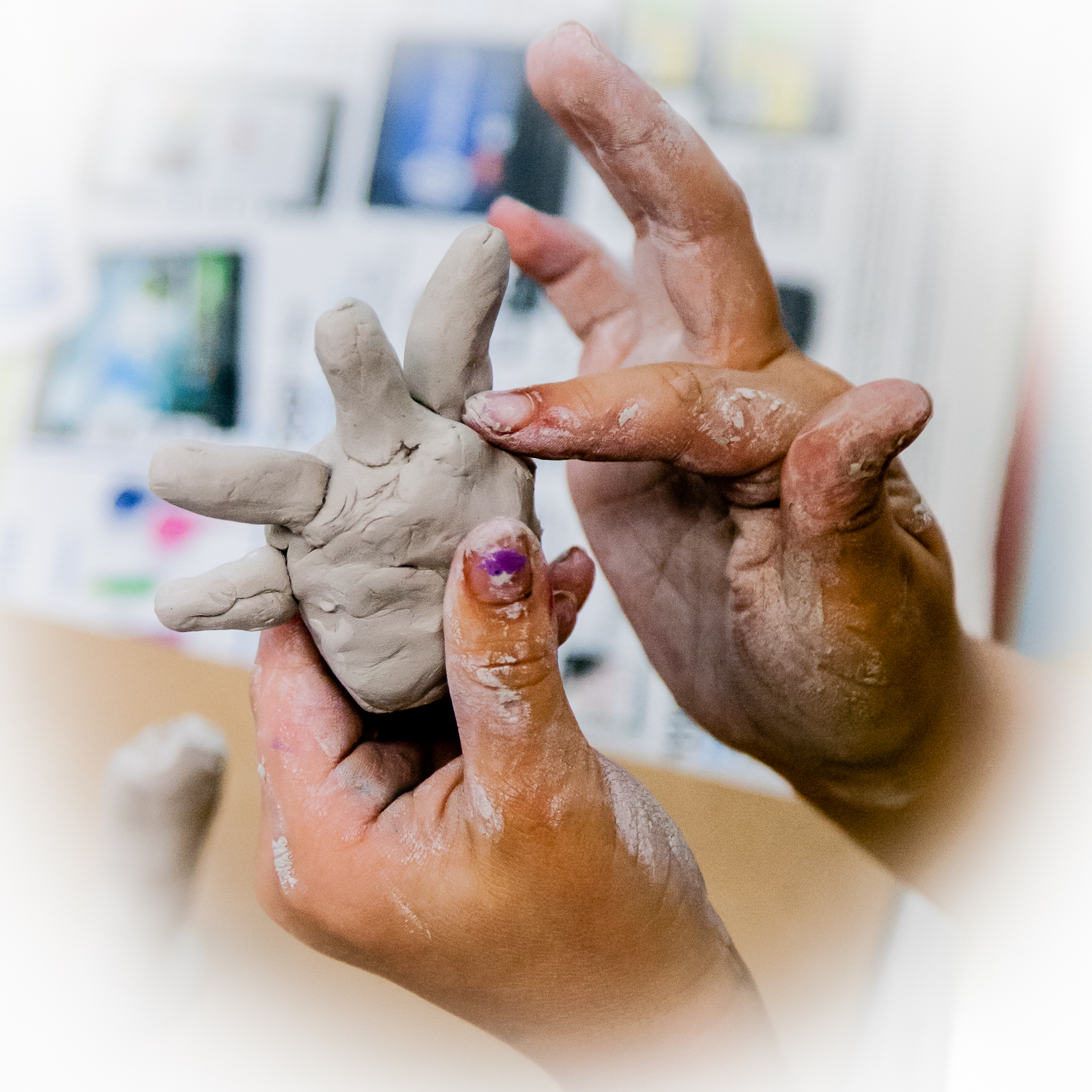
Here is a profound example of everyday possibility thinking (http://www.youtube.com/watch?v=15DE8_-ptZ8). A dad fashions a usable prosthetic hand for his son after viewing a video posted by Ivan Owen – co-creator of the Robohand prosthesis (Here’s a link to Ivan’s ted talk – http://www.tedxrainier.com/events/2013tedxrainier/ivan-owen).

WOW! There are so many great things about this story. First of all, of course, is a young man now able to use his hand.

But there is more – possibility thinking, a generosity of spirit and thought when Ivan Owen open sourced his idea, a mix of convergent and divergent thinking, collaboration, taking risks, experimenting, re-thinking, improving design, persevering, and continuing in the face of skepticism. All this ….

Think of the levels of possibility thinking (and I’m sure there are even more than I mention)

  • Considering and developing a printer.
  • Expanding on that idea which leads to considering and developing a 3D printer!
  • Imagining the possibilities of what can be created with the printer – including affordable, DIY-able, customizable hands!

Un-believable! Or no, not unbelievable, totally believable to someone open to possibility.

small hands

Relentless Creativity

MA cert

Over the last 2 1/2 years I pursued (and attained) an MA in Creative Thinking from the University of Central Lancashire. I focused on the classroom environment that might best support creativity and academic excellence. Occasionally I got a bit off track and wanted to stick a pencil in my eye (not really, lol, but you get my point), but, most of all it was a fascinating journey filled with discoveries, joy and inspiration!

I concentrated on three schools/approaches that endeavor to marry creativity and excellence – El Sistema, Reggio Emilia, and Oklahoma A+ Schools. If you haven’t read anything about them you really should! Or, just follow my blog as I’m sure to talk about them here!

I heard Tricia Tunstall (author of Changing Lives: Gustavo Dudamel, El Sistema and the transformative power of Music – a great book btw) speak at the NJAIS conference in 2012. She shared her experiences with El Sistema (a remarkable music program started by Jose Antonio Abreu). She said some great things, but the most profound idea – which I wrote in capital letters with numerous underlines – was RELENTLESS POSITIVITY! The El Sistema educators are relentlessly positive.

RELENTLESSLY POSITIVE! Wow. I adopted it as my mantra – relentless positivity.

When I decided to start a creativity blog, I struggled to find a title that adequately described who I am, and what I hope to achieve in my life and on this blog. I thought about relentless positivity and relentless creativity. Either would work for me because I see them as rather intertwined. Wanting to highlight creativity, I included relentless creativity in the title. I’m not sure it captures everything I’m imagining, but it’s a good start.

I am relentlessly creative. I love being creative, thinking about creativity, talking about creativity, encouraging creativity and experiencing creativity. And I mean creativity in all arenas – art, science, math, music, life, you name it – everything! Creativity is a way of thinking, learning and being, that has the potential to impact all academic disciplines and all aspects of life. Joy, knowledge, a great scarf, a new recipe, and life changing discoveries are just some of the treasures creativity offers us.

I may not always produce the most beautiful scarf, or craft the perfect recipe, or have the most profoundly creative thought, or make any life changing discoveries, but I will always be relentless in my pursuit of creativity in my life and in the lives of those around me.

Welcome to my blog! I hope you enjoy my thoughts, photographs, projects and posts, and I hope you join the conversation.

Have a wonderful day!

Molly