Drinking tea, and creating.
How’s that for synchronicity?

Drinking tea, and creating.
How’s that for synchronicity?
I’m reading All the Way to Heaven: The Selected Letters of Dorothy Day. Dorothy, founder of the Catholic Worker, was a writer in all senses of the word. She said:
The reason we write is to communicate ideas … We must overflow in writing about all the things we have been talking about and living … Writing is an act of community. It is a letter, it is comforting, consoling, helping, advising on our part, as well as asking it on yours. It is a part of our human association with each other. It is an expression of our love and concern for each other. *
Is that not fantabulous? It encourages me to, again, let my life overflow into my writing.
It’s been a week filled with emotion and anxiousness, but also prayer and blessings. Wednesday was my 12 year anniversary of being diagnosed with cancer.
It’s a beautiful anniversary, because without it, I would no longer be on the planet. But, it’s also a difficult anniversary. It was such an unexpected, glaring indication of my mortality. And, boy oh boy, a cancer diagnosis isn’t just dipping your toes into all of that. You are thrown into the deep end of the pool. The shock of hitting the water takes your breath away. You submerge. But then, face out of the water, you float, and slowly learn to swim.
This year I had a CAT scan scheduled for my anniversary. How’s that for good planning? (laughing) I didn’t choose the date, and I’m pretty sure I wouldn’t have chosen it had I been the scheduler. Still, in many ways it turned out to be the perfect date for the test.
Dorothy quotes Catherine of Sienna, “All the way to Heaven is heaven, because He said ‘I am the Way.’ “ Then she offers her wish — may heaven be in your heart today. *
The CAT scan, on my anniversary, heightened my fear and worry about the unknown. Out of necessity, I worked harder, surrendered more deeply, and prayed with greater fervor for heaven to be in my heart as I went about my day.
I was patient with the receptionist who seemed to be struggling with her own tiredness. I smiled under my mask and chuckled at my goofy comment to her. I chose to be peaceful as I waited — eyes closed, breathing with purpose and prayer. Then Miriam called me and walked with me to the CAT scan room. Miriam is a funny, talented nurse/tech — who knew what my brown scapular was. She laughed, talked, listened, and brought a bit of heaven to me, and boy oh boy am I grateful! Now I wait with hope.
I came home and crawled into bed for a much needed nap. I awoke to snow. I love snow! It’s beautiful and altogether magical. I fell asleep later that night to the delicate pings of the snowy mix against my windows.
The next morning, I bundled up and headed out to shovel. I remain easily fatigued, and not feeling totally well, but, how could I not go out into that cold, bright, beautiful, snow-filled day? Shovel in hand, I considered ignoring my fatigue and overall feelings of malaise. Thankfully my wiser self prevailed. I did slow, steady work, capturing ridiculously tiny amounts of snow in my shovel. And, I rested — a lot.
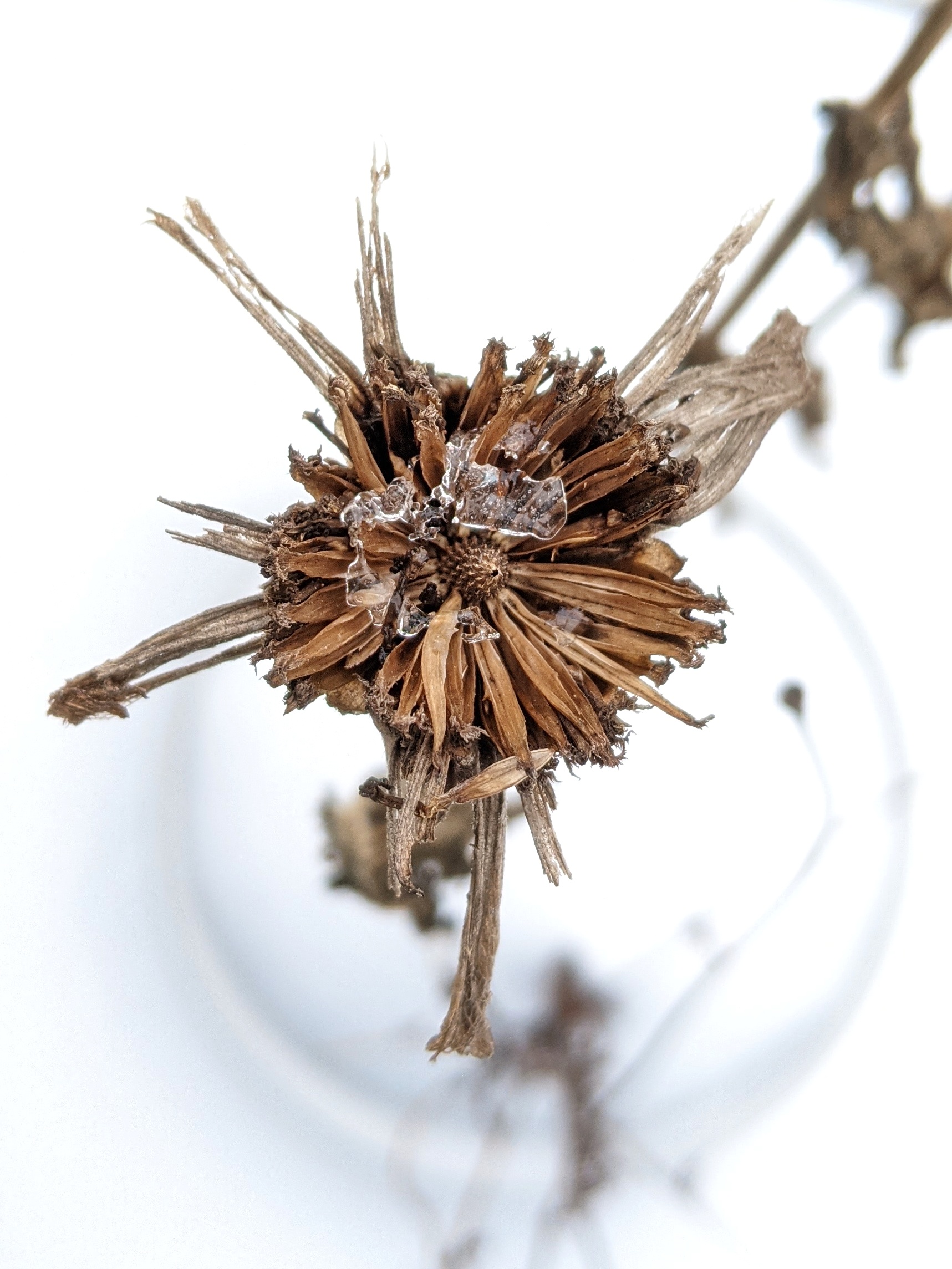
My work and rest routine turned out to be a great gift! The white of the snow was a perfect foil to the texture, shapes, and color of the grasses, berries, seed pods, branches, and flowers that surrounded me as I rested against the end of shovel. The seed pods and flowers provided pockets and pedestals for the ice to take shape. My stillness in the quiet enabled my ears to the hear the sounds of the bird’s flapping wings and chirping songs.
I gleefully snapped shots during each of my rests — sometimes resting more just to photograph. I purposefully chose brilliantly white snow-filled backgrounds with little extraneous visual noise.
When I finished, I sipped hot cocoa and crafted a poem. Hoping to encourage the feeling of soft peaceful silence, I used only lowercase letters. It was funnily jarring to change the uppercase I to lowercase. But, on my second or third read, I settled into it, appreciating the sense it gave that I am very small in this magnificent expanse of life, and snow.
_____________________


brilliant white snow
piercingly cold air
beautiful soft silence
broken only
by the birds’ wings
and sweet songs
shovel, rest, breathe
my breath deepens
my eyes
squinting in the light
see more
my ears
hear more
shovel, rest, breathe, look and listen
i notice a plethora of details
texture and structure
subtle changes in hue and tone
color where I thought there was none
always present
not always perceived
shovel, rest, breathe, look and listen, notice
i am in awe
of the details
the beauty
and the gifts
of God and nature
shovel, rest, breathe, look and listen, notice, marvel
i try
to capture them
with my
heart
mind and
camera
shovel, rest, breathe, look and listen, notice, marvel, photograph
i imagine and feel
sparkles of joy
with each gift
noticed with wonder
captured with gratitude
shovel, rest, breathe, look and listen, notice, marvel, photograph, be grateful
_____________________
It is incredibly important to fill my days with rest, breath, noticing, wonder, awe, and gratitude.
It is absolutely necessary to acknowledge my awesomeness and strength, as well as my tiredness.
It is essential to be kind and merciful to myself, and others.
As a human, sister, daughter, teacher, learner, writer, creative, artist, coach, and every other thing I am, and way I interact in this world, there is incredible value in silence, brilliant light, kindness, having heaven in my heart, and bringing it closer to others.
I join Dorothy in her wish for the world — May we all have heaven in our heart.
*Both quotes are from All the Way to Heaven: The Selected Letters of Dorothy Day by Robert Ellsberg
I haven’t added anything to my inspirational art journal lately. For some reason I’ve been feeling uninspired, and frankly, unconfident. As I experienced this lack of inspiration and confidence, I thought of my Kindergarten girls and all I ask them to do. Sometimes they are uninspired and unconfident, too. I don’t let them stay in that uncomfortable spot, or use it as an excuse. So, I figured I wouldn’t let myself do that either.
I didn’t immediately make an entry, but at least I noticed what was what, and agreed to make one soon.
As I waited to make an entry, I distracted myself by sorting through my rather large collection of books. I found a few books I am ready to let go, a TON of books I want to read, and an old journal.
I flipped through the pages of the journal. This page stopped me mid-flip.

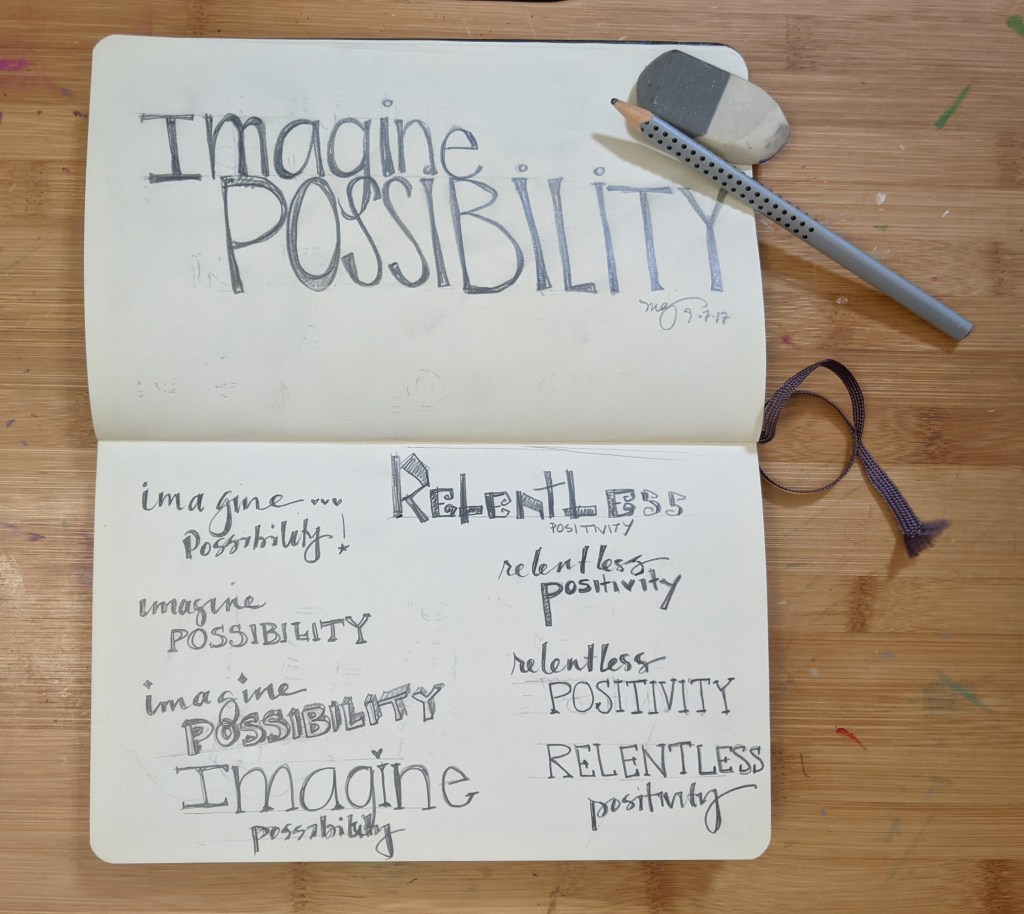
I’ve always admired people who are calligraphy stars, but haven’t yet found my groove with that. Hand-lettering is a different story. I enjoy it, and I’m pretty pleased with my ability.
I remember this hand-lettering adventure. Much like when my kindergartners learn handwriting, I worked to accurately replicate an already created font. It wasn’t simple. I needed to really look at the letters. I endeavored to notice shape, size, angles, relationships between the various components of the letter, and the general feel of the font. Then I took what I noticed, let it inspire me, and created my version of the font. I like it!
There’s a strong connection between my hand-lettering work, and the handwriting work my Kindergartners do. It’s important for me to acknowledge that, and even more important for me to share that with them.
I see at least two reasons to share it with them.
One is to encourage them to really look at the letters. I think sometimes the curiosity that might increase their learning, interest, and enjoyment, gets pushed aside for the rote “learn the steps” method.
The second reason I want to share this with them is to elevate their opinion and understanding of their own work. Rarely do our students see us struggle, practice, or learn new things. Perhaps even worse, the work we ask them to do — writing letters repeatedly — is often perceived as something only for children, or the less skilled. When we share the times our learning looks very much like theirs, we end up elevating their learning, work, and struggle. We normalize it as the way we all learn, become more proficient, and make things our own.
I think it would be amazing if we encouraged our students to create their own hand-lettering. It could be an extension of handwriting, and might even help them become more adept at forming the letters correctly.
Imagine the conversations you could have together about their created hand lettering. They could point out the things they noticed about the various letters, the things they kept the same, the things they emphasized or de-emphasized, what they were thinking, what was easy, what was hard, what they did to overcome various struggles, how they hoped to use the lettering they created, and much more. We could marvel at their noticing, thinking, and creativity. We could notice things about their lettering — how it resembles the handwriting letters, and how it doesn’t, how it makes us feel, and how it inspires us. We could even ask them to teach us how to make it. So much potential for amazing interactions, learning, and growth.
Back to my lettering. I remembered the joy of creating it, so I decided to let that be my ticket back into my inspirational journal. I wrote just one word:

Then I added a few bits of advice for myself. God is love. Be love. Be loved. Beloved. It’s sitting next to my chair, reminding me of the importance and place of love in my life. One might think it’s hard to forget about love. But, I think, sometimes, it’s pretty easy to forget. I want to stop forgetting, and really live love and all its remarkable power.
I flipped a few more pages in my old journal, and noticed this:

and then this:

Have I mentioned lately that I LOVE writing in pencil? Especially a wonderful pencil like the one in the photo — a Faber Castell graphite grip pencil. It is sweet! And no, I don’t receive any free pencils from Faber Castell for recommending them — but boy that would be pretty fabulous!
Again, my thoughts go to my Kindergartners. I understand there are reasons we ask our students to write with particular pencils. But if I love writing more when I use particular pencils, and I know I like my handwriting better with certain pens, mightn’t my students as well? And if they might, shouldn’t I sometimes give them the opportunity to write with tools they love? Yes, I should.
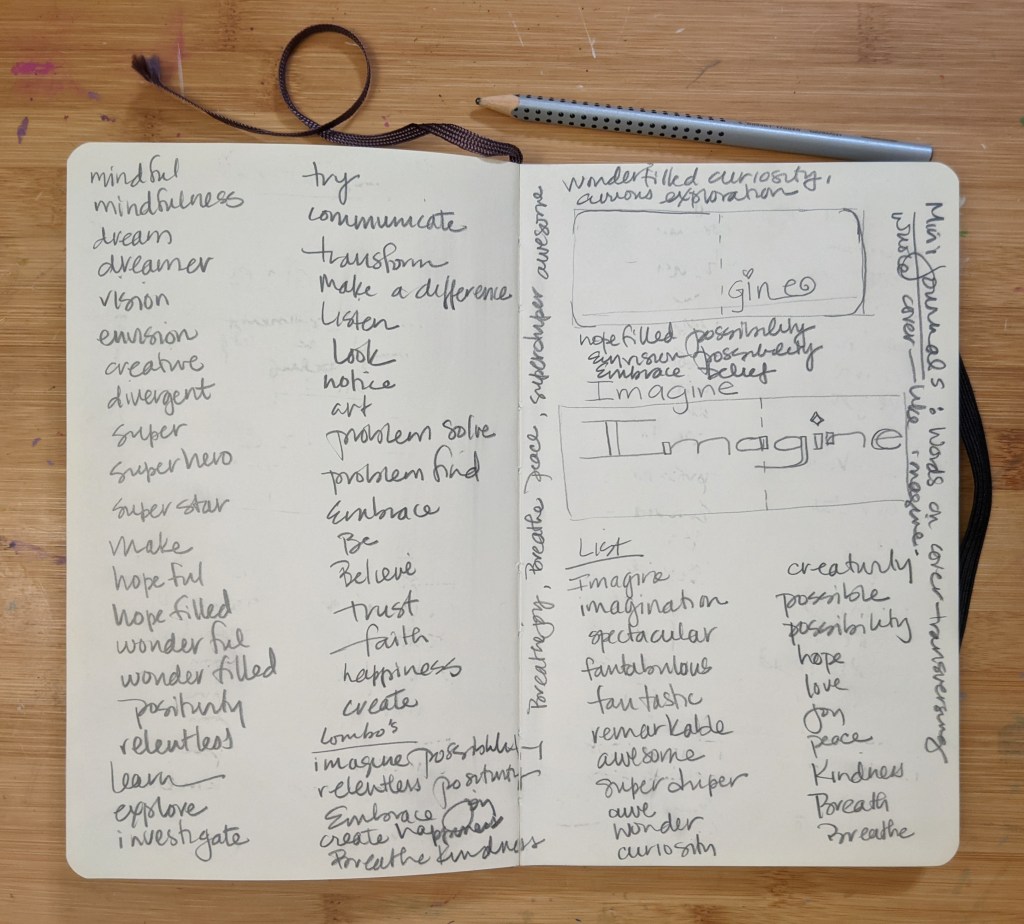
These two pages reminded me of another practice I’d like to incorporate into my day with my students. I like making lists of words — words that inspire me, words that are things I love, words that are things I want to do, or be, or feel. I find joy as I combine the words into phrases – in this case simple two word phrases that are easy to remember and might become mantras. And it’s fun to experiment with various combinations, and imagine things to create with them. Mmm. So good. Fantabulous, even!
So, I’m back on track with my inspirational journal. I am excited to continue my hand lettering work. I’m reminding myself to love, allow myself to be loved, and remember I am the beloved of a God who is love. And, I have some great ideas I want to bring to my fantabulous, big-beautiful-brained Kindergartners!
It’s a good day.
The most fortunate are those who have a wonderful capacity to appreciate again and again, freshly and naively, the basic goods of life, with awe, pleasure, wonder and even ecstasy. (Abraham H. Maslow)
What a great quote. I love the assertion that the basic goods of life can be appreciated and experienced with “awe, pleasure, wonder, and even ecstasy.” I love it, and yet as I think about it, I have two conflicting thoughts. The first is “Wow, wouldn’t that be an amazing way to live life? Constantly in awe, pleasure, wonder, and even ecstasy over the basic goods of life!” The other is “Oh come on, how is that even possible?”
Great question!
As I contemplate it in my own life I’m noticing several things that allow me to spend moments in that space of awe, pleasure, wonder, and even ecstasy.
I experience it most, I think, when I’m walking in the woods. And, I’m most able to experience it, even there, when I am:
…. mindfully present
… curious
… willing to be child-like, or as Maslow says, naive — which includes a openness to surprise, wonder, and awe.
When I’m truly present, rather than simply walking in the woods with my heart and mind somewhere else, the woods are a never ending source of surprise and amazement. I find myself constantly telling my brother “Oh! Look at that!” or “Wow! That’s so beautiful!”
Sometimes, I catch myself, laugh, and ask “Geez, do you ever want to slap me for saying – Oh, look at this – about the same thing when I see it again later on?” Thankfully he never does — partly because he’s super patient, partly because he, too, knows and lives with wonder and awe.
Here are some of the basic goods of life I encountered on our last walk that I experienced with awe, pleasure, wonder and even, a bit of ecstasy.


These days we traverse tons of leaves as we search out our favorite spots along the river. This day, one of them hitched a ride on my laces. It made me chuckle when I noticed it.

Instead of brushing it off, I let it stay with me at the river. I appreciated its texture and the way it looked against the river. I admired its ingenuity and courage, and imagined it enjoying its moment in the sun by the river.
Silly? Perhaps. Naive? Maybe. A moment of wonder, awe, joy, and even a bit of ecstasy? Absolutely.
Perhaps Maslow believed we are most fortunate in these moments, because he knew these moments open us to gratitude, and gratitude makes happiness possible.
PART ONE:
I love to sit on my back porch. I sit, sip delicious green tea, breathe, and look.
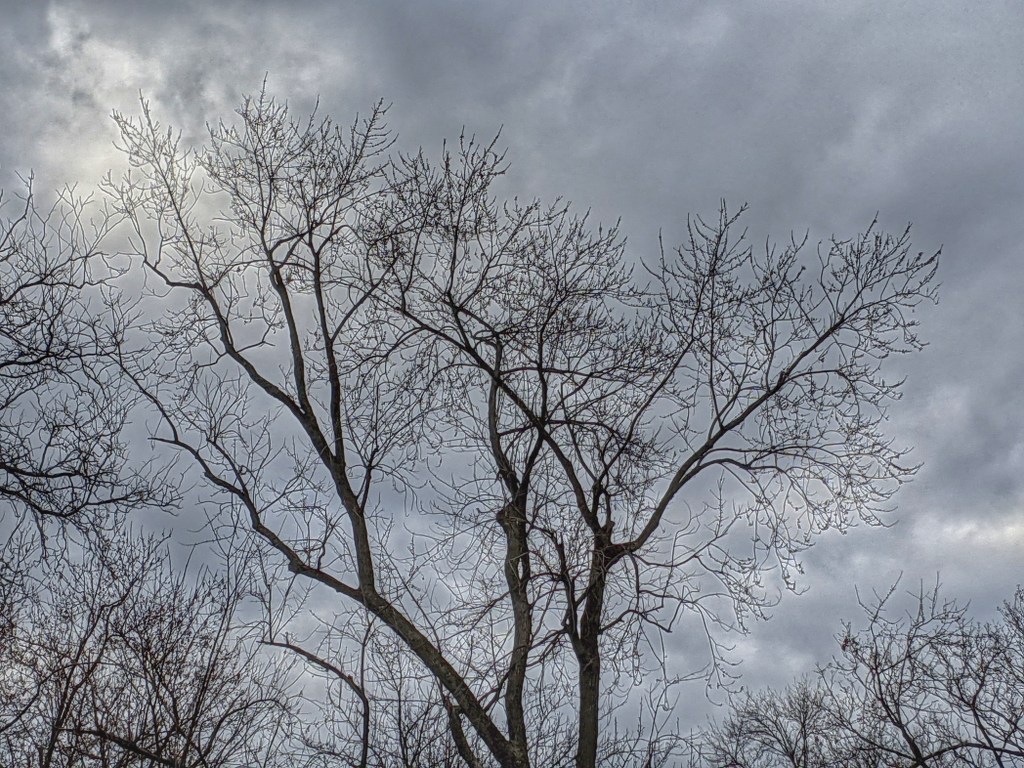
One tree is particularly attractive to me. It stands in my neighbor’s backyard, and greets me from above their fence. I first noticed it as its leaves turned from green to brilliant gold. Its trunk and branches stood in spectacularly stark contrast to the blazing leaves.
I began to wonder if I could capture it in art. Each time I’m on the porch, I look at this tree. I study it. I admire it. I imagine how I might capture its shape and structure. I wonder what colors and techniques I might use to create the fiery leaves glistening in the sun.
Then, one day, in a remarkably unexpected turn of events, I noticed the tree was bare. All its leaves had fallen to the ground …
… and I saw the sky.
Wow!
Same tree. Same sky.
And yet, completely new.
New perspective. New information. New understanding. New love.


It’s amazing isn’t it?
I’m contemplating doing a study of this tree and sky. Can you imagine? Each day, maybe more than once a day, I would capture this tree and sky in my journal. Every page the same, and yet wildly different! Even if two pages end up being the same, I will grow in my understanding of the tree, the sky, my materials, and my process. And, who’s to say I have to make the sky blue, or the clouds white? It’s my journal, my study, my discovery, my process, my learning, my joy!
I’m excited … and a bit nervous.
PART TWO:
While I wonder if I have a watercolor journal lying around, and where it actually might be, my thoughts turn to my Kindergartners.
Wouldn’t it be amazing if I did this tree and sky study, and then shared it with them? Not as an art project, but as a way to be, and as a powerful way to learn!
I should copyright and market this as a new pedagogical practice – The Sit, Sip, Breathe and Look, Method of Learning. Sit, Sip, Breathe, and Look — Increased learning through relaxation and curiosity. For short I could call it the SSBL Method of Learning.
I started writing the paragraph above with a chuckle. I thought, typed, deleted, and thought some more as I crated a title for my learning method. My chuckles — and clarity– increased as I typed the quick explanation and abbreviation. Naming it seemed to enhance the legitimacy of this as a fantabulous pedagogical practice! Hmmm. I think there’s an article, or some coaching possibilities here.
Until then, back to my students. How would I present my study and the SSBL Method to them? What would I want to them to know?
*It’s good — and important — to sit, sip, breathe, and look.
*Our brains learn best when we, and they, are relaxed.
*Noticing, thinking, and wondering are fascinating, fantabulous, and fun.
*Be curious.
*Be open to more — more noticing, more thinking, more wondering.
*Look, and then look again.
*Even when you think you know something, look again.
*Especially when you think you know something, look again.
*Be willing to be surprised. Expect it, even!
*It’s ok to not know, yet. It’s actually kind of exciting!
*It’s ok to be a little nervous.
*Keep looking.
*Keep learning.
*Be inspired by others.
*Share your noticing, wondering, thinking, ideas, with others.
*Create a study.
*You can do it.
And, there’s no point in telling them all of this, if I don’t also help them do it.
So what might I do to help them embrace the SSBL method of learning?
*Create the infrastructure they need to be successful.
*Talk with their parents and invite them into the SSBL method and concept of learning.
*Explain some of the brain science the supports this method of learning.
*Encourage the parents to create opportunities for the children to sit, sip, breathe, and look.
*Inspire the parents to join their children in their sit, sip, breathe, and look sessions.
*Gift parents with their own study journal.
*Incorporate this form of inquiry and learning as a regular part of our school day.
*Provide time for students to sit, sip, breathe, and look — for their own interests, and curricular purposes.
*Create journals for them to use to record their studies.
*Teach them how to make journals that they can make for their studies.
*Join them in their studies, and invite them into mine.
*Model curiosity, wonder, and awe.
*Value their study and make time to let them share it with others.
I can’t wait to give this a bit more thought, and then give it a go with my girls! Oh, (wink) and market it!
Last week this happened.


I had my 6 month infusion, and after 6 hours in the chair, I was able to ring the bell.
The infusion itself was exhausting – physically, mentally, and emotionally. And ringing the bell? That was a swirl of all sorts of emotions. I had finished at the infusion center, but my last month of at home meds started the next day. Phew.
I’ve been expecting this last month to be easy. I was mistaken.
The level of difficulty has me feeling distressed, and a tad bit guilty. Perhaps that’s a lack of humility. Or perhaps it’s a misunderstanding of the process and gravity of it all. I’m the queen of relentless positivity and possibility. That’s good — fantabulous even. But, sometimes I need to remember that the positivity and possibility are happening against a backdrop of struggle, and endurance.
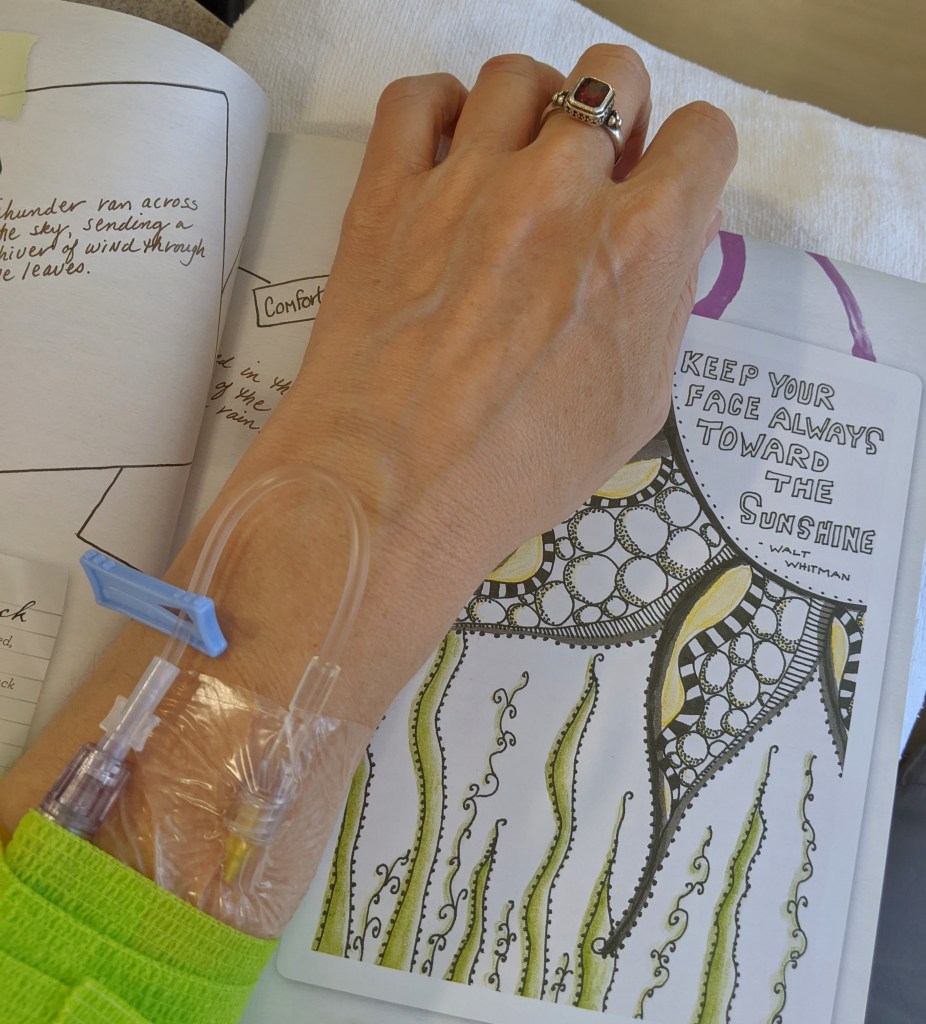
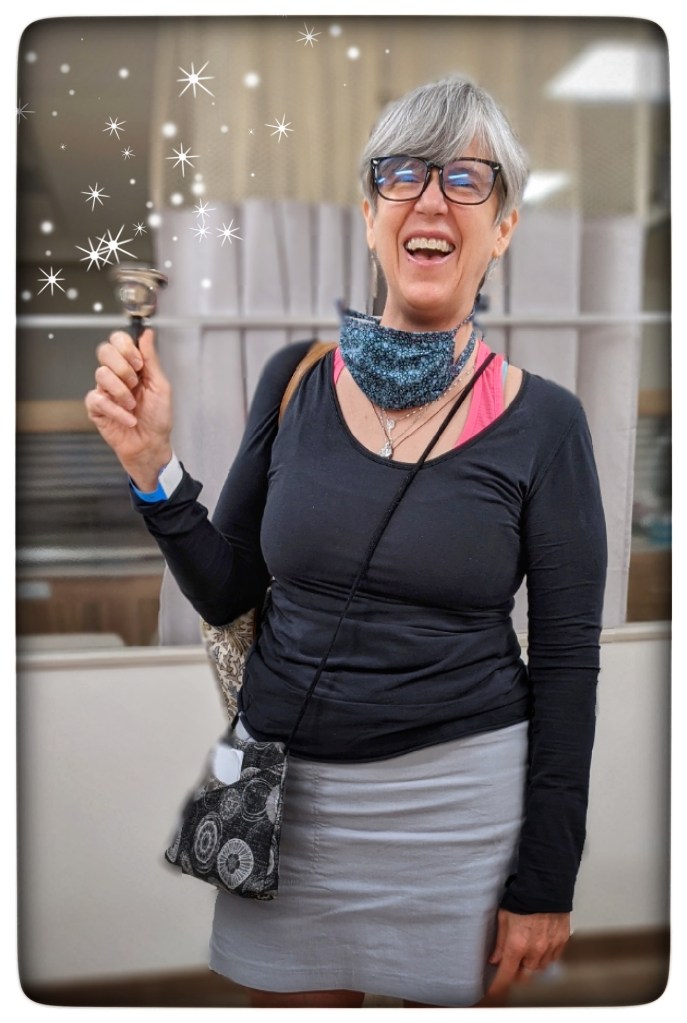
Those two photos speak to me of this dicotomy.
I purposefully captured the struggle amidst the positivity in the first photo. My face is to the sun — and the Son. Simultaneously an IV is pumping a plethora of medications into my vein. That is fantabulous and awful. Fantabulous because they are helping me crush the cancer. Awful because they are pummeling my body, mind, and spirit. It’s often remarkably difficult to keep them from vanquishing me.
In the second, I am ringing the bell — indicating the end of my infusion treatment. I’m laughing with my awesome nurse, as she and others cheer me on. Immediately after, we embraced in tears. It was a moment of exhilaration, joy, and relief; as well as a moment of exhaustion, sadness, trepidation, and some disconnect.
Perhaps that sounds odd. Why wouldn’t I just be relieved and happy?
I was! But, those infusions, and those remarkably wonderful, brilliant, and caring nurses have become part of my life. There’s an intense comfort knowing those fantabulous nurses are waiting for me each time I go in. There is security knowing their expertise, and those meds they give me, are keeping me alive and helping me thrive. It’s difficult to leave them, and nearly impossible to express my depth of gratitude.
Add to that the current status of my cancer as incurable, and the emotions intensify. That nagging negative voice in the back of my head complains and points out that it’s not really the end. There will be more.
It is only now, over a week later, that I can take a breath, acknowledge the truth the voice raises, and remind it that even so, for the moment, I am done with the infusions, and that is good.
Meanwhile, I push on with my home medications. They are working their own particular magic. They press on against my cancer, giving it no rest. For that I couldn’t be more grateful. And yet, they continue to press on me as well, and that is not pleasant. Thankfully, they too will soon end, at least for this session. And that too will be a victory worth celebrating. They are no easier, and no less important than the infusions, so their conclusion shall be celebrated as well. (smile)
As I sit here with an pounding head, aching chest, and overall malaise, I chuckle thinking, “Perhaps we should all do more daily bell ringing!”
We took the time to meditate and pray? Ring a bell!
We pause for some breathing and positive thoughts? Ring a bell!
We see the beauty in the little things? Ring a bell!
We are the recipient of unexpected kindness? Ring a bell!
We have patience, and don’t crank at the person who accidentally stepped on our last nerve? Ring a bell!
We notice the miracles and gifts of every day? Ring a bell!
We don’t vomit — even though we feel like we might? Ring many bells! (laughter)
When my last infusion was finally finished, and my nurse excitedly said “Wait! You get to ring the bell! Give me your phone, I’ll take a photo!” I chuckled. The photographer in me thought “Where shall we take it?” I momentarily considered good backgrounds. Then my aching head and ridiculous exhaustion got the better of me, and my thoughts morphed into “Oh my gosh, let’s just take it anywhere!”
In hindsight, the background is perfect. Behind me are all the little infusion pods. Behind me are my six months of infusions.
BEHIND me.
They are behind me. Finished.
At least for now.
They are behind me. Making me cancer lighter.
That is miraculous
They are behind me. Exhausting me.
That’s something I have to remind myself.
These 6 months have not been easy. My body, mind, and spirit have worked hard, and had more bad days than good. They have been pummeled. They are fantabulous for sure, but they are going to take a bit of time to recover. When I talked with my Dana Farber oncologist in October he said “You should be feeling great (pause) by sometime in January.”
Sometime in JANUARY?!?!?!??? Eee gads. If I recall correctly, I thought to myself “Yeah, yeah, yeah. Did he just meet me?!?!” But, now, I realize the wisdom of his words. This isn’t a little sprint. This isn’t an easy workout. This is an endurance event. And no matter how fantabulous I am, as with every endurance event there is preparation, execution, and recovery.
Now I need to respect the final push, and the recovery.
With that in mind, I remind myself this final push of medications and side effects, as well as my recovery are supported by all the things I do in the background.
Where I am, and who is there with me — in person, prayer, and spirit — matters!


How I eat supports me and all my work.


The things I do, and the ways I think, fuel me.


I always tell my Kindergartners about the importance of the struggle in our lives and learning. One year, one of them reminded me with great conviction “The struggle is real, Ms. James, and it’s important!”
Yes, my sweet, courageous, determined, girl — you are right. The struggle is real and supremely important. So too are these things. They overflow with life, energy, hope, joy, possibility, and power. They enable me to endure, survive, advance, and thrive.
So, with a big breath, I remind myself (and perhaps you) sometimes angst is just part of the process. But guilt? Guilt is inappropriate. Patience, peace, and acknowledgement of all I am, all I do, and all I have accomplished (with the help of so many) — that is appropriate. Let the bell ringing continue.
But first, I must collapse for a nap.
Today’s calendar journal entry.

The image and letters are from some junk mail — hence they lost a bit of color as I worked with them. It’s funny how irritating I find that. And yet, it fits with the quote — erase discouragement and keep going.
The brown image behind the words is the cross section of a tree. I find trees to be some of the least discouraged individuals. If there’s a rock in the way, they work on growing around it or over it. Another tree falls on them? No problem, they adjust and grow on. And what about autumn? Each year, the trees appear to die as they drop their leaves. But even in apparent defeat they are brazenly defiant, surrendering only after putting on a spectacular show of color. And of course, come spring they burst forth in victorious life.
Wouldn’t it be amazing if we erased discouragement — not only from our dictionary but from our lives? And imagine how remarkable it would be be if we helped erase it from the dictionaries and lives of our students! Of course there will be difficulties and struggles. But, might we approach them like a tree?
“Drat a rock. That’s not what I was planning. Hmmm, how might I continue and grow, even though this rock is in my way. Ohhhh, I wonder — might I use this rock to my advantage?”
Oh my! I love this. I’m imagining all the students — and teachers — out exploring, looking for their favorite tree. What will they choose? Will they choose one that is already tall and strong? Or, might a smaller tree that is struggling speak to them? What will they notice, wonder, learn, and think? The opportunities for growth, and the possibilities for curriculum integration, social emotional learning, and STEAM related activities are unending.
BE LIKE A TREE
Speak the truth. This rock’s in my way.
Acknowledge the dilemma and feeling. This wasn’t the plan. This might not be easy. Ugh.
Speak more truth. I want to ______.
Think creatively, and explore possibility. What might I do now? Is all lost? What do I know? What have I learned?
Embrace my strength and keep going.
I’m on it. How about you?
I hope you’re in the mood for some PIE (Picturebook Inspiration and Encouragement). Today’s PIE comes courtesy of author Byrd Baylor and artist Peter Parnall in their book Everybody Needs A Rock.
It’s such an unassuming little book — paper back with illustrations that are black, white, and earth tones. But don’t let that fool you. Byrd and Peter have crafted a piece of PIE rich with possibility and depth. You just have to take the time to sit, breathe, look, think, and find your perfect nugget.

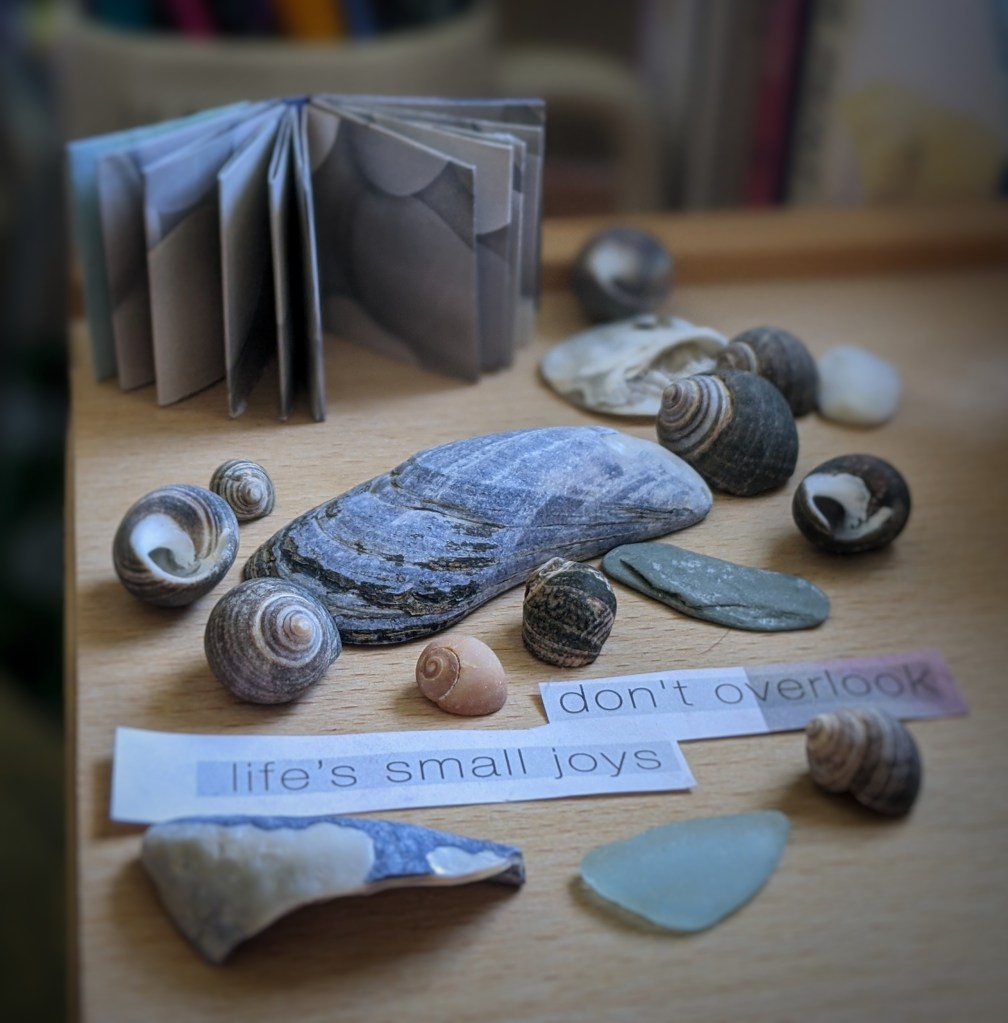
I was gifted this book by friends who knew my penchant for collecting rocks while hiking — especially when hiking near water. I love the way the water smoothed stones feel in my hands. When I hold them, I am transported back to the places, sensations, and experiences of searching, finding, and choosing them. My collection of rocks sometimes expands to include shells, and other bits that fascinate me or increase my joy .


I keep them close by — at home and at work. Two of my favorite rocks sit on my drying rack desk at school. Many a kindergartner has become a lover of rocks after eyeing, and handling, those two perfectly river-smoothed rocks.
In Everybody Needs A Rock, Byrd Baylor shares her 10 rules for finding “a special rock that you find yourself and keep as long as you can — maybe forever.”
She talks of perfect rock finding spaces, but then assures the reader that really any place will do. I agree. I sometimes find the best rocks in the most unassuming places — nestled under other rocks, hidden by leaves, or somehow overlooked until I slow down and sit for a while. What seems to matter more than the place is me. I find the best treasures when I am most mindful and open to being surprised and gifted with wonder and awe.
Byrd encourages agency, exploration, and deep noticing. I particularly love her suggestion to get down close to the rock and “look it right in the eye.”
I’m reminded of the poem about kindness that my Kindergartners wrote last year. Do you see me? Really see me? That’s what Byrd wants you to do. Don’t just see the rock. Really see it. She suggests you squint. I suggest you give the rock a look when it’s wet, dry, in the sun, and in the shade. You might be surprised by the nuances each setting brings out in the rock.
I laughed out loud when Byrd suggested “If your rock is going to be special it should look good by itself in the bathtub.” But, it’s true! There should be something special about the rock, even when it’s all alone, no longer in the environment where you noticed and found it.
Byrd reminds us to go beyond what we see with our eyes. We should consider how the rock feels in our hands, our pocket — and I would add — in our heart and mind. Often, when I’m rock hunting, there is something about the rock that speaks to me in my heart. It’s something more than what it looks like, it’s how it makes me feel.
As I reread the book to share it with you as PIE, I was struck by how Byrd’s rules for finding and choosing the perfect rock are fantabulous rules for choosing friends — and not just any friends, but friends that you keep as long as you can — maybe forever. I’m not certain if that’s what Byrd intended, but I see it there for sure.
Just like finding the perfect rock – finding the perfect friend takes time. It helps to slow down, squint, look them in the eye, and notice them in different situations. How do I feel when I am with them? How does their hand feel in my hand? How does my mind feel with their mind, and my heart feel with their heart?
A super powerful nugget for me is Byrd’s recommendation to look without worry — or as I tell my Kindergartners, without fretting. We’ll find it, and when we do, we’ll know it’s the rock or friend for us. We just need to take some time, squint, look, and really see.
I like that advice for finding friends. I love the agency and the encouragement it gives to all of us — but I’m thinking especially of my Kindergartners — to trust our hearts, our minds, our decisions. Even if the friend, or the rock, isn’t the best looking, or the most popular, that’s ok. If our hearts, minds, hands, and lives, feel good and safe in theirs, then choose away, without worrying about others’ opinions.
Sometimes the rock that was hiding on the edge of the shore, under a pile of seaweed or leaves, turns out to be the most spectacular rock of all.
My creativity, positivity, and art challenge this week is to use things found in some sort of print form — magazines, papers, letters, cards, coloring books, even junk mail is fair game — in my calendar journal posts.
Today I grabbed an old Bella Grace magazine for inspiration . As I flipped through the magazine I was drawn to two pages with images filled with words. I decided to do a riff on a black out poem.
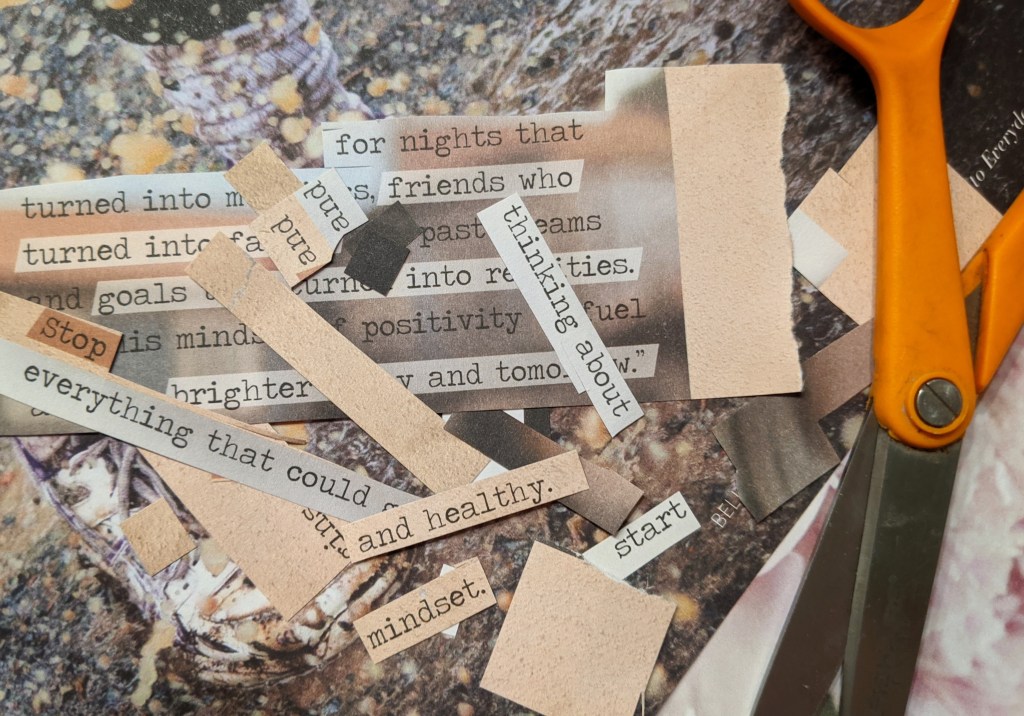
I clipped words and phrases that meant something to me. I looked for words within words. I cut and rearranged the words to create new phrases and thoughts.

These are some of the words, I didn’t use. I didn’t see any connections that struck me so I stashed them in a bag for future use. Now, I see phrases that eluded me as I worked the first time. Here are two: Positivity is healthy, and Turn goals into friends.
I enjoy the black out poetry process, and see more possibility, when I cut the piece apart, rather than use the typical method. I think it’s the ability to see things together, and apart, as well as the increased opportunity to move the words around. Seeing the words from different angles — even upside down — increases my brain’s ability to concoct new phrases, see as yet unseen connections, and have aha moments.
It reminds me of Edward DeBono’s concept of lateral thinking. The easiest way to explain lateral thinking is to imagine looking at something from the side. When you do, you see a completely new item. For instance, a rectangular sheet of paper suddenly becomes a line. And, depending on which side you look at, it could be long line, a short line, or even a line with a point somewhere in the between the two ends. Oh, and if the paper doesn’t stay perfectly straight you can see all sorts of other shapes.
But, back to my cut out poem.
I arranged and rearranged the words in today’s space. I returned to the pile of cut papers and searched out other words. Every once in awhile, I spoke the words out loud to see if I liked the phrasing, meter, and emphasis.
I always kept in mind the vibe I hoped to create, and the story I wanted to tell. The general tone and direction remained the same, but the words themselves changed as I pondered and noticed new possibilities.
Finally pleasantly satisfied, I glued them to the page.

Other than some fab advice in my journal, what are my take aways? As the lead learner in my classroom what did I learn? What do I want to bring to my learners and incorporate into my teaching practice?
Remember, use, and teach about lateral thinking.
It’s good to be inspired by others.
If you take the ideas of others and make them your own it’s not copying, it’s not cheating. It’s collaborating, creating, and being inspired!
Look for things you know.
Look for things that are unique, unusual, or that surprise you.
Take time.
Play.
Breathe.
Enjoy.
Be open to new ways.
Connections are important. Search for them, see them, and make them — especially ones that surprise or entertain you
See possibility
Wonder about the connections and possibility you noticed, as well as those you didn’t.
Embrace the importance of your story
Explore and enjoy the sound of words and phrasing
Search for the best but enjoy the rest
Iterate, iterate, iterate.
Remember there is always tomorrow rich with possibility and new opportunities to go again.
Sometimes it’s tough to maintain one’s sense of hope, positivity, and peace. Lately I’ve felt weighed down by the struggles around and within me, and discouraged by the remarkably large number of people suggesting there’s no hope, and all is lost.
I cannot abide that kind of thinking. I find suggesting hopelessness amazingly wrong and dangerous. It’s one thing to feel hopeless, it’s a completely different thing to suggest it’s the truth.
So, I’ve decided to combat hopelessness by serving up some fantabulous PIE! Luscious, life-changing PIE.
“Pie??!!” you say?
“Indeed!!!” I respond. “PIE – Picture-book Inspiration and Encouragement.”
Today’s delicious piece of PIE comes to us from the awesome team of Susan Verde and Peter H. Reynolds.
I AM ONE: A Book of Action

I Am One is full of hope and possibility. Hope and possibility that begins with one — one person, one action, one kind word, one gentle conversation. Sometimes the one is acting alone, sometimes the one inspires others to join in, or to begin their own world changing journey of one.
I Am One encourages belief in oneself and others, an understanding that no one is too small, and the certainty that the power of one is really quite strong. The words are simple, and well chosen. It’s the kind of writing that is easy to read, and even memorize, yet still full of awesomeness and strength. The illustrations seem simple — at first — but given a second a third look, or even a really good first look, they add richness and meaning to the story.
If you’re feeling like you could use a lift, or some encouragement to take action, this book is for you. If you have little ones in your life who need to be affirmed in their understanding of their own power and awesomeness, this is a book to share.
I am one. You are one. We matter. We — alone and together — can find one thing, one thought, one word, one deed, one something, to help beauty, goodness, kindness, peace, joy, love, and respect increase in this world.
I am here.
You are here.
Hope is here.
Always.