The Blank Page Revisited

I’ve written several times about the blank page – once about my own experience and then another time about my Kindergartners working to overcome the blank page.

Even so, I still struggle with the blank page. It fascinates and attracts me – enticing me with its beauty and possibility — while simultaneously intimidating and mocking me!

I love making art – letting other’s art inspire me, exploring new mediums, or creating beautiful things for myself and others. I’m pretty talented. But again, wow, sometimes I’m stymied by the blank page. It pokes at me — like a sneaky bully — with angst and doubt, and keeps me from doing what I might.

My mind is always searching for connections between seemingly unconnected things, and the other day that trait helped me have an epiphany that helps me overcome my own blank pages.

The first part of the connection is a note and bracelet gifted me by one of my K students:

18358854_10213109961403212_319141400384157403_o

I love that note and bracelet. I am even thinking how I might have a more permanent bracelet made that says “Imagine possibility!”

The second part of the connection was a quote on a friend’s Facebook post:

“Stop worrying about what might go wrong and get excited about what might go right!”

Ding, ding, ding!!! All of a sudden I got it!

I AM good at imagining. I imagine wonderful opportunities and ways of accomplishing them when I’m building with my kids. When I’m imagining art possibilities, I revel in all sorts of fabulous, positive possibilities. I enjoy imagining things I might make, as well as new ways to do things.

But when gazing upon the blankness of the page my imagining begins to change. Instead of the joy-filled optimistic possibility thinking, or the enthusiastic fun of trying new things, I imagine all the things that could go wrong. And, just like my more hopeful, lighthearted imagination, my fretting, angst-ridden imagination is powerful and thinks of many possibilities. Only problem is, these possibilities include the numerous things I do not want to happen!

This epiphany helped me as I worked on the door design I am creating. I did research. I prototyped. I discarded methods and color combinations that didn’t work. I refined the methods and color combinations until I was quite pleased. Finally, I mustered up my courage and took control of my own thinking.

Instead of allowing my imagination to travel down the dark path of doubt, doing it’s beautiful creative process to imagine all that could go wrong – destroying my hours and hours of work – I chose to get excited about what might go right! I imagined the fantabulous things that might occur – in my learning and in my actual product.

Sometimes I’m not able to come up with the actual possibilities because my thoughts of what might go wrong are so strong. In those times, I determine to embrace the excitement and possibility of what MIGHT go right — even if I’m not sure what they might be.

So one day, as sat in my workshop space, my door stared at me, daring me — or begging me, depending on your perspective — to come continue to work. With determined resoluteness, I accepted the challenge! I pulled out the colors, chose my brushes and began working.

It was a bit stressful for a moment, but as I worked, the stress eased and I developed a process that worked well. After just one flower was painted, my imagination was freed! I began to imagine — and believe — all the things that might go right. It was remarkable how interesting — intoxicating even — it was!

20170728_112528-1-01

I am now super excited to be in the process, and see where this will end up. I’ve made mistakes. But, I’ve chosen to breathe through them and let my imagination and process make good things happen. My fingers are crossed this will stay with me for future blank pages.

I’m wondering — imagining — how I will use this information with my students. I am certain there is something profound to share with them. My mind is already at work.

Now to await the marvelous, mysterious connections sure to come, and to become excited about all that may go right — for myself and my students.

Creating and Curating Their Own Creativity

We frequently visit our school art gallery. We go armed with sketch books and pencils — ready to sketch anything we can see from within the gallery. Sometimes this is art, sometimes each other, and sometimes things we notice through the windows.

Most days our conversation goes like this:

Them: “Miss James, can we take off our shoes?”

Me: “You may — as long as you understand if we have a fire drill you are going outside without your shoes.”

They always agree, and I always cross my fingers that we don’t have a fire drill! Typically, once their shoes are off, they stow them under a shelf in the gallery and happily get to work sketching.

On this particular visit, the removal of their socks and shoes fueled their imagination and provided a unique medium for their creativity.

As I walked about the gallery. I came upon this …

20170216_132710

Returning a few moments later, I found this …

20170216_132720

And, finally, a bit later, this …

20170216_132842

I love their creativity, collaboration and inclusion. Did you notice the number of shoes and socks increased in each photo? Each time someone asked to join, the original artists expanded their work to include their friends.

In the last photo, they are working together to collect the signatures of all the artists who contributed to their “double-flower art.”

I love that the freedom I gave them — to take off their shoes and wander the gallery in bare feet  — resulted in such beautiful, examples of their powerful and joy-filled agency and creativity! I never cease to be amazed how such simple things — though profound when you think about it — as time, space, freedom, trust, resources (bare feet, socks and shoes, pencils and sketch books) and agency, allow these young creatives to do their thing.

They are fantabulous.


Our Door

“I want my art to be sensitive and alert to changes in material, season and weather. Each work grows, stays, decays. Process and decay are implicit. Transience in my work reflects what I find in nature.” (Andy Goldsworthy)

I don’t know how Andy Goldsworthy does it – in a couple of ways! I have no idea how he makes the art he does. It’s quite spectacular. And, more importantly for my thoughts today, I have no idea how he deals with the transience of his work. It’s remarkable to work for so long on something just  to have to fade away.

I felt a bit of that as I took down the final vestiges of our supermarket build. The last thing to go was the door.

IMG_20170609_225845_processed

I kept it up a few days after the girls left. It seemed odd, in some ways, to feel such a connection to the door. But I did. Funny, even writing about it feels me with emotion.

That door was a part of our classroom for months – first in our thoughts, imagination and conversations. Then in uncompleted form, forgotten it would seem, on the side of our build. Still later, in our day-to-day exploration, experimentation, and work to build it. And finally, as a working door, providing the only access to the main part of our classroom.

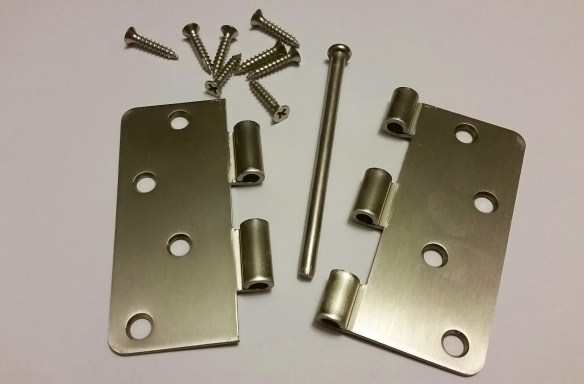
We went in and out of that door a zillion times! We marveled at it. We kibitzed with it – trying to make the hinges more stable, and prototyping different handles. And, we just lived with it.

Perhaps that’s it. Andy sees his art and creativity as a statement of transience. He creates it as such and in some way revels in the transient nature.

I, however, did not.

I knew the supermarket would only be up for a short period of time. But, I didn’t enter into the relationship with the girls and the build with transience as my goal, or even as my understanding. Each day we entered into the now of the build, the some time of our imaginations, and the ever deepening forever of our relationships with each other.

That door held deep meaning. It was the way we entered into a lovely, safe, joy-filled space in the classroom. Perhaps even more important, it was also a way we entered more deeply into relationship with each other. We imagined hard, thought hard and worked hard to get the door up and functioning – and that drew us together as a community.

I laughed at myself a bit as I looked at the door, standing alone in the classroom. What good is a door with no walls? Why would someone keep up a door to no where?

But, as I thought I chuckled. It isn’t so silly to be attached to this door. It’s not a  door to no where. It’s a door still open to all those moments, all those ideas, all that love, angst, joy, celebrating, collaboration, hope and possibility.  It’s a marvelous magical door, imbued with the spirits of all of us who worked on it, marveled at it and enjoyed it.

Perhaps after all, in some ways, our creativity is just like Andy’s. Our relationships, memories, hopes, and all the possibility that fills them, last forever. But, Kindergarten, is transient and brief. So too, is our build, and our remarkable door.

Thankfully, similar to Andy’s art, it lives on in our hearts, memories and photographs!


Creativity and Leadership

I recently had an article published entitled Cultivating Dynamic Leadership through Creativity.

I give three examples of leadership in a creative venue:

  • She leads through her curiosity and sensible risk taking, and all emerge with new understanding and innovative methods.
  • She leads with empathy, which drives her to connect and comfort others.
  • She leads through her belief in the power of possibility, discovery, research and experimentation.

When a friend of mine read the article, and these examples, she said “I wonder if people just read these examples, if they’d know who you are writing about.”

I wonder that, too!

So, who do you think she (or he) might be?

A teacher? An entrepreneur? An artist? An IT professional? A psychologist? A parent? A scientist? A researcher? A doctor?

While each are suitable guesses, they are not who I had in mind when I wrote.

I didn’t write of a professional, or even of an adult. Instead, I wrote of my kindergarten students.

build leadership sized

They are remarkable, strong, powerful children. While they are fantabulous, these characteristics are not unique to them. All children, have incredible strength, power and potential.

My teaching practice is informed by my belief in this profound power and potential of children. I try, as best I can, to allow my teaching, and my reflection, to be nourished and driven by the “joy, passion, wonder and conviction” of my understanding of the truth of the strong, powerful child. (Managing the Classroom for Creativity, James 2015)

Children are natural leaders. Placed in an environment that enables and encourages creativity, their innate leadership abilities germinate, increase and flourish.

Resources:

James, M. (2017). Cultivating Dynamic Leadership Through Creativity. KPS Voyager, 2017, 8.  (https://issuu.com/kentplace/docs/voyager2017_final?e=1889902/47525909)
James, M. (2015). Managing the Classroom for Creativity. Journal of Creative Education Vol. 6, No. 10, 1032-1043 (http://file.scirp.org/pdf/CE_2015061915593867.pdf)

Hinges in Kindergarten

20170501_204911-1-01

How will we make our own hinges? Hmmm …

The girls and I have been thinking about this for some time now. Last night I ran out to the hardware store and bought a hinge so we’d be able to look at the pieces, and problem solve together today.

Seems we have many problems to solve:

  1. We don’t have a way to screw in the hinge plates.
  2. We don’t have the remarkable stable structure of concrete walls.
  3. We don’t actually have hinges or hinge plates for our door.
  4. We don’t yet have the door completed.

How might we:

  1. Make our door more secure and stable? (Tomorrow we’re going to take a look at some door designs.)
  2. Create hinges, or hinge-like things, to hang our door?
  3. Create a stable structure to anchor our door?
  4. Make our door workable?

When I look at all the problems, and all the how might we questions, I’m a tad overwhelmed. But, then I see, in my minds eye, my girls, this morning.

I told them I had tubes that might work for the door. With a good deal of excitement, they asked if they could work on the door. “Sure, go ahead!” I replied.

When I popped my head in the makerspace, it was a remarkable scene. Four large columns were being constructed by four groups of girls. They were talking, pointing, sharing ideas, collaborating, and working hard. Some were standing on chairs (the door is much taller than they are). Some were straining their necks to see to the top of the door. All were engaged, empowered, invested, and joy-filled. It was AWESOME.

There is hope!


P.S.

Perhaps you are wondering:

  1. Why do you need to make hinges?
  2. You’re making a door?
  3. Why do you need a working door, doesn’t your classroom already have one?

We are making hinges and doors as part of our Social Studies supermarket build.

More on that later!


Hey, Kindergarten!

Our supermarket build is in full swing, and it is spectacular!

20170405_132525-01 (1)

In this build, perhaps even more than in our other builds, communication and collaboration are key!  (So too is breathing, lol, but that is for another blog post!)

As we prepped for the build, my builders, engineers and architects had tons of ideas, but they directed them only to me – the teacher – even though their peers were sitting with us. So many awesome ideas, and so much potential for collaboration and elaboration, were being wasted!

I couldn’t take it anymore! I said “Eee gads. May I say something!”

They looked at me. The looks on their faces said “Eee gads? Did you just say, Eee gads!?” but no one spoke, they just waited.

I continued, “You have so many fantabulous ideas. But, when I call on you, and you look at me, and tell ME, instead of telling EVERYONE, no one else realizes you want THEM to listen, too! But they should! Everyone needs to hear your ideas. That way we can talk about them, or change them, or use them just like you said them!!!”

I paused, just for a moment, to let that sink in. Then I said, “So, can we try something?”

“Yeah.” “Yes.” “Sure.”

“Ok, so, if you have something to say, and you want only me to listen, say Hey Miss James! But, if you want everyone to listen, say Hey, Kindergarten!

They seemed excited by the plan. They asked, “So we say Hey, Kindergarten! if we have an idea of how to do something, or if we something we want to tell everyone?”

“Yup,” I responded. “And when we hear it, we’ll stop what we’re doing, look at you and say Hey (your name)! Then you can tell us your idea. OK?”

“Ok!”

explore (1)

We had at least 8 announcements of “Hey Kindergarten!” in that 30 minute building period. It was a bit overwhelming (at least for me, lol). I thought I might have to figure out something to say to rein them in. But, as the days went by, they began using it more judiciously all on their own.

Sometimes I forget and just say “Kindergarten” or some other attention getting rhyme we have established, and get no response. Then one of them says “You should try saying ‘Hey, Kindergarten,’ Miss James!”

The first time they said that I laughed out loud and said “You’re right! I should!!!” So, I did, and they responded immediately  – “Hey, Miss James!” It was awesome.

There are so many things I like about “Hey, Kindergarten!”

  • I love that they are teaching each other by sharing their ideas, reflections and wonderings.
  • I love that they are listening to each other.
  • I love that “Hey, Kindergarten!” shares classroom control with them.
  • I love the joy they express when using it.
  • I love hearing them say it, and responding along with their peers.

But, i think what I love most is how it empowers them. Their ideas are being told, heard, respected and valued. And, THEY are calling their friends — and teacher — to listen. We are partners in this learning journey. I’m glad to give them a way to experience and express the partnership.

The things they have shared after saying “Hey, Kindergarten!” have been remarkable. I don’t think it is coincidental. I think they feel the value, power, liberty, and awesomeness of “Hey Kindergarten!” and it opens them.

Card Carrying Members!

If you read my blog with any regularity, you know I’m a fan of the cloud – blogging about it least 5 times! (In the Cloud with Uri Alon, The Cloud in the Classroom,  Yes And In the ClassroomLittle Tweaks Big ResultsThe Cloud Appreciation Society)

The reality of “the cloud” is super helpful to me as I think creatively, venture into new arenas, learn, create, and live.  About 2 weeks ago I blogged about being a proud card carrying member of the Cloud Appreciation Society!

Remarkably I realized I didn’t think my students were card carrying members of the Cloud Appreciation Society. Crazy, right? I love the cloud. I know it’s helpful. I believe Uri when he says the cloud “stands guard at the boundary between the known and the unknown.” I believe the cloud is a fundamental and essential part of learning.

WHY hadn’t I ever talked to my students about it?

I have no idea. But, I’ve changed all that!

20170401_182056-01

The other day I shared the secret of the cloud with them! I drew a cloud on the board and we talked about clouds and fog. Then I told them there are a lot of times when learning is all about being in the cloud, and being brave enough to stay there – even though we can’t quite see where we are going. I shared that I am often in the cloud when I am learning new things. I said I’m even in the cloud sometimes when I’m preparing a lesson for them!

Then, I told them I believed in them so much I was going to throw them right into the middle of the cloud!

I told them I was going to ask them to do some math, and not just any math, but math that is even hard for some adults! It’s a math puzzle called the Tower of Hanoi. (You can play it here if you’d like to give it a go.)

I grabbed 3 blocks and a 3 square template, and explained the rules. My kids asked some great questions – showing me they were already thinking of ways to solve the puzzle.

I assured them they would all be able to figure it out. It might  not be easy, but they could do it. If they got stuck they should just remember they were in the cloud – and that was GREAT! If they needed help to guide them a bit in the cloud they could talk with a teacher or a friend.

I challenged them to stay in the cloud. “If it’s hard, don’t fret. Stay in the cloud. Take a breath. Believe in yourself. Keep going. … If working with 3 blocks is easy, throw yourself back in the cloud by challenging yourself to do 4 blocks!”

It was FANTASTIC!!! It was hard for some of them. And the fact that it was hard, was frustrating and discombobulating to some who felt it shouldn’t have been hard.

I’m glad! That in itself is learning. Thinking is hard. Math is hard. But it’s also good, and possible, and fun … exhilarating even … as you struggle through the cloud.

We worked on the Towers for 3 days – reworking the ones we had figured out the day before, adding blocks and trying again. Each day we talked about the cloud. Each day I told them how spectacular it was to be in the cloud with them.

After our inaugural jump into the cloud, we each signed an “I love the cloud! I am a learning superhero!” sheet. On Friday, I presented each of them a laminated card (a reduced copy of their signed sheet) and welcomed them as “card carrying members” of the I love the Cloud Club. It was awesome.

One of the girls asked if she could make an announcement during closing circle on Friday. I said “Sure.”

Confident in her thoughts, but unsure what she would share, I listened attentively. I nearly melted as I heard her thoughts.

She extolled the greatness of being in the cloud, the joy of thinking you couldn’t do it, but then realizing you could.

It was amazing.

Seeing Spelling With New Eyes

IMG_20170318_201346_processed

IMG_20170318_201242_processed

I read this the other day. When I reached the end and read buttufele, I had an epiphany about spelling!

Spelling is a remarkably daring journey into  possibility thinking, creativity and design!

When trying to share our ideas, encode sounds and/or spell words we all go through the following steps:

Possibility thinking: How might we use what we already have/know in a new way? What letters or letter combinations are possible?

Creativity: We have to be brave and take risks.We use what we know to make something new and useful.

Design: We define a design challenge. ( For instance, write the word – beautifully.) We ideate. (butfoolee, beyuootefooly, beeyutyfuly, buttufele), and prototype (see illustration above). Then we test. (Can I read it? Can someone else read it? Can the person I wrote it for read it?) Our test provides us with data, and perhaps, new understanding. The process then begins again for this, or some other, word.

I love this understanding of spelling. It brings an element of play, and ease into the process of spelling. It embraces the fact that the spelling process, like all other design processes, often includes failing.

I’m wondering if approaching spelling this way, might make it easier for our students. Understanding they are choosing a design (spelling) challenge might empower them. Being creative might infuse joy into the process. Embracing failure as a natural part of spelling might diffuse some fear, and increase learning.

I’m going to work on my language and give it a go with my learners. I’m hopeful!

And just a note: Conventional spelling can also be approached as a design challenge. except now the challenge might be “Spell beautifully as it is found in library books, or on dictionary.com.”

Translation in case it is needed: She is very pretty. She is funny and she is goofy. She is a kind princess. She lives in Westfield. She sings songs beautifully.


Learning Like A Kindergartner


Mitch Resnickargues that the ‘kindergarten approach to learning’ – characterized by a spiraling cycle of Imagine, Create, Play, Share, Reflect, and back to Imagine – is ideally suited to the needs of the 21st century, helping learners develop the creative-thinking skills that are critical to success and satisfaction in today’s society.” 

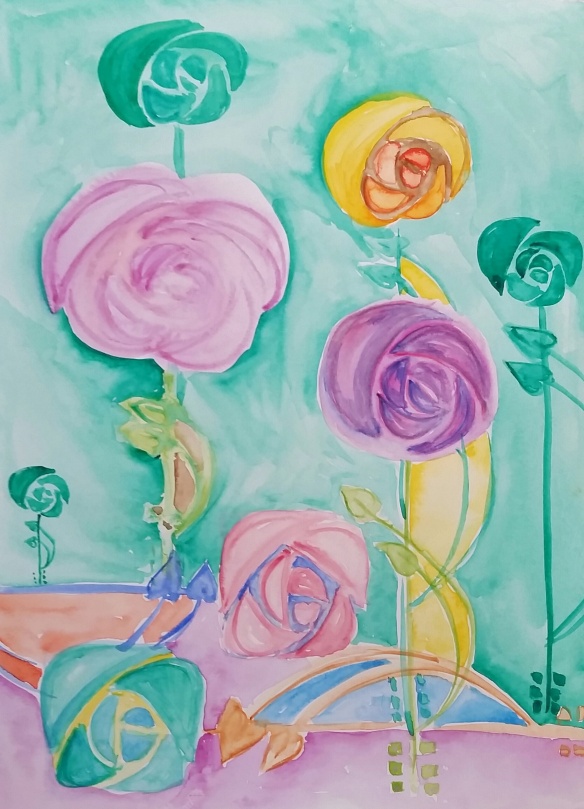
I’ve spent at least 4 hours today doing just that – imagining what might be, measuring, erasing, thinking, creating with various mediums, playing with watercolor and the rule of thirds, sharing my work and thoughts with my brother, reflecting on the process and product, and imagining what I might do next with this project and others.

I explored and learned about the remarkable, and often surprising, properties of water color. I experimented with wet on wet, wet on dry, overlapping, the golden ratio, the rule of thirds, contrasting colors, tones and hues of the same color, and lots more. It was super fun, and filled with discoveries and learning.

20170317_125625-1-01

My long creating jaunt made me think of another thing Mitch said GIVE P’S A CHANCE: PROJECTS, PEERS, PASSION, PLAY. (Cracks me up each time I read that title!). But, that reflection will have to wait for another time. I’m starving and need to step away from my play-filled learning, (Or is it learning-filled play?) and find some food!

Rest assured I’ll be thinking of ways to increase this type of learning in my classroom — working my innovator’s mindset — to innovate inside, and outside, the box!


Relationships and Inspiration


“Education is always about relationships. Great teachers are not just instructors and test administrators: They are mentors, coaches, motivators, and lifelong sources of inspiration to their students.” (Ken Robinson) I love this quote and try to live it everyday. 

There is an equally strong and powerful benefit for us as teachers. When we build relationships with our students, we are forever inspired by them as well.  

IMG_20170309_195838_processed


My kids and I do yoga together each week. We end each session with a ritual of gratitude and relationship. We go to each other – hands in the yoga prayer position – look each other in the eyes, and say:

Namaste (name). Thank you for practicing. You are awesome! 

It is a super powerful moment of relationship, caring, and affirmation.

As I affirm each child, I take their hands in mine  I want them to know they are important to me, and have my full attention. I want them to be assured I have them in my hands — now and always.

Several of my students have begun to take the lead in this ritual, and grasp my hands in theirs.

IMG_20170309_195945_processed

I love the symbolism. I am not the only one who values relationship. I am not the only one offering inspiration, or holding others in my hands and heart. My students – these 5 and 6 year olds — hold me in their hands and heart as well.

This reality — and the image of their small, but mighty hands, holding mine — inspires me every day.


Note: I’ve wanted to capture these moments in photographs for some time now, but couldn’t figure out how to have both of my hands held, and take a photo!  Today I realized, “Ask the hands that are holding you!” After yoga today, I asked my students to take some photos. These are two of the photos they took.