What Do You Think about Pre-K? Do You Love It?

We had a birthday celebration today in pre-K, and as the kids were enjoying the birthday treats, the birthday girl’s grandmother asked how I liked pre-K compared to Kindergarten. (I started teaching pre-K this year after 18 years in Kindergarten.) What a great question!

How do I like pre-K compared to Kindergarten? There is so much to love about Pre-K — so much possibility, so much joy, so much fantabulousness. There was a lot to love about Kindergarten too. It’s a gift to hold on to all of that awesomeness, and now have new opportunities, new teammates, new learners, new relationships, and new fantastic parents in pre-K.

So, what do I think about pre-K?

Oh my gosh I love the kids. They are brave, curious, joyful humans. They love to laugh, try things (sometimes with a bit of encouragement or a willingness to be with them). They are wide open to wonder, and awe. And they are always learning, making, and sharing.

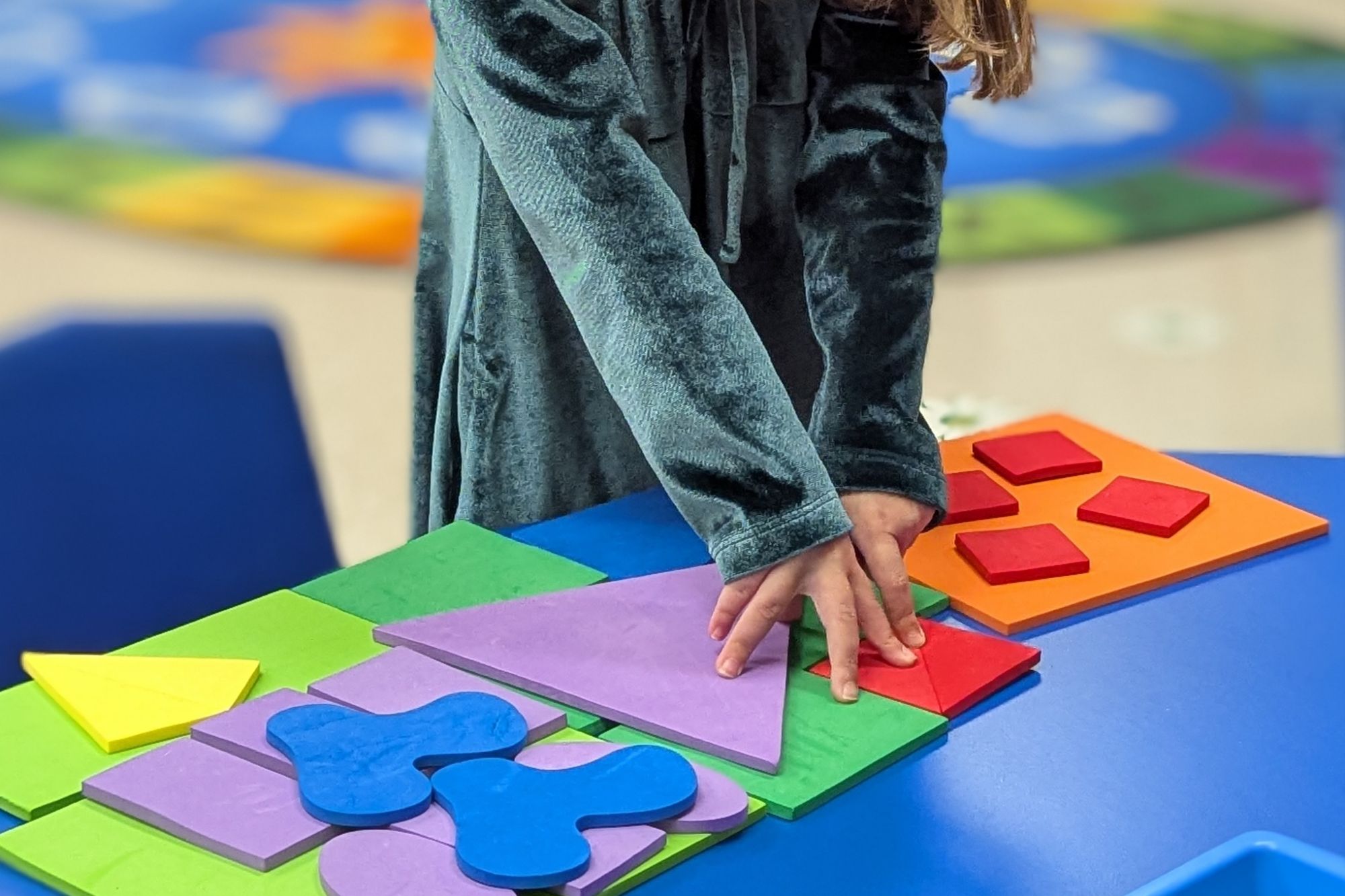
Today one of them asked if I’d come with her to our math center and make things with shapes. (Yes, please!) At one point, I asked her what she was doing. She had been giving me a running commentary, but had stopped. She replied, “I’m making it better. … See?!” Another friend joined in with equal enthusiasm.

The other day, we took an “Oh WOW! Walk” outside. The super scientists looked for things that tickled their fancy through one of their five senses. They collected these things to share with one another. One mighty pre-Ker showed me her stash as she tried to decide what to take home and what to leave in our science trolley. She had several rocks. One in particular seemed to be a treasure.

Me: “Can you tell me about that rock?”
C: “Oh! This rock has a belly button!”
Me: “Come on!!! A belly button??!! Get out!”
C” “Look!”
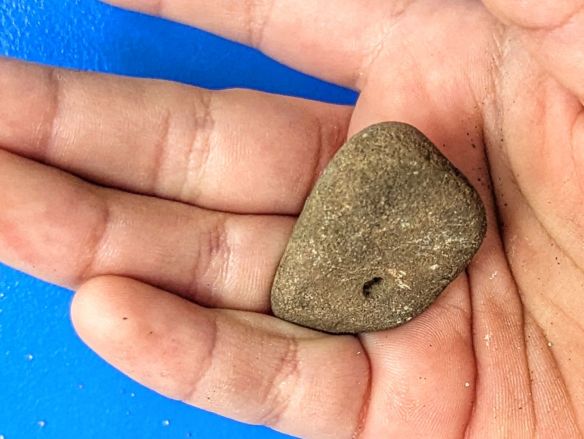
I laughed out loud! She was right. It was a rock with a belly button! It may sound silly to you. But, think about her thinking. She noticed similarities between this rock and a belly and belly button. She was able to use her imagination to put those noticings together. She found joy in her musings, and was courageous enough to share it with another. These are the skills, and habits of mind that are used when we problem solve and create things as yet unknown. Once again it is not the simple cuteness of the young, it is the beginnings of profound critical and creative thinking.

Another thing I’m grateful for in pre-K is time. I’m super grateful for, and really enjoy, the extra time there is to simply be in pre-Kindergarten. This gives us the opportunity to talk, share, develop relationships, play, explore, create. and learn. Today one of the girls was missing her mom. At the end of the day, she came over to me and told me. I asked her if there were anything I might do to help her. She said no, and just quietly stood next to me, her face devoid of joy. Then, she began to button the buttons on my denim jacket. She didn’t ask if she could do it, she just began to button them. Her sadness turned to determination and joy as she checked and buttoned each button — even rolling down my sleeves to button the cuffs. It was as if she felt and embodied the care and love of her mother, as she took care of me by buttoning my buttons.

Oh, and then there’s car line. When I first started teaching, we did Kindergarten car line in the morning and after school. It was something I loved because it allowed me to get to know the parents a bit, and interact with them and their children together. We stopped doing it in Kindergarten a few years ago, and it was something I’ve always missed. Well, in Pre-K we get to do it again. I’m happy to be back interacting with parents each time I have the opportunity to do carline.

And, oh my gosh, Jr. Pre-Kers! They are a joy to get to know. Since I’m in Pre-K, I get to help take the JP-Kers out of the cars, and sometimes see them before and after school. We’re working on learning each other’s names, and as they remember mine, they joyfully call, “Ms. James! I know your name!” I love the joy, the connection, and the feelings of accomplishment – for them and me.

So, to answer that Grandmother’s question as clearly as I can. Do I miss Kindergarten? I do. But, do I love PK? Yes, I do! Are the kids fantabulous? Yes, they are! Are the parents marvelous? Yup, they sure are! Are my teammates amazing? Indeed! Are the possibilities awesome and limitless? Yes! So, I breathe on, learn, grow, love, be me, and enjoy it all.

Empowering Young Artists: A Holistic Approach to Art Education

Someone asked me if I planned my art for the show. I asked what they meant. They continued “Well, do you choose specific artists and pieces knowing the show is at the end of the year?” I told her, “Not really. I just pay attention to what sparks joy in my Kinders and in me. I notice things we are interested in and want to experiment with, and I keep in mind what I think will work for us as artists. The Kinderes and their art just make the show amazing.”

After the show, a grateful parent commented, “This must have take hours to set up!” In reality it took me and an amazing alum mom more than two days to set up and hang the show. And prior to that, It took my girls nearly 9 months to create the art!

As I thought about those nine months and the set up hours, and looked at photos of the Kindergarten artists working on their creations, my mind returned to that original question. Do I plan my artwork — what I teach — knowing we will have the end of year celebration of Kindergarten art?

After some reflection, I’d like to change my answer. Yes, I do, but in a very organic holistic way. I plan the art with a vision of the artists and our celebration of them in mind.

I choose artists and art pieces, and teach them the way I do for two reasons — to encourage, empower and teach these young artists and to hang a show that illustrates their power, talent, and fantabulousness.

To encourage, empower and teach these young artists I choose artists and artwork that:

  • allow my young artist to experience many different mediums and art modalities.
  • help the Kinders know they are creative humans and amazing artists!
  • present them challenges and teach them how capable they really are.
  • encourage them to engage with artistic struggle and self-doubt with confidence and joy.
  • hone their artistic sensibilities and decision making abilities.
  • give them the opportunity to make artistic decisions, make mistakes, learn from their mistakes and make beautiful things!

To hang a show that illustrates their power, talent, and fantabulousness, I choose artists and artwork and hang the show in a way that:

  • highlights the K-artists’ courage, joy, exuberance, and talent.
  • tells the story of our artistic process and journey.
  • illustrates ways our lives and learning are expressed through our art.
  • demonstrates the ways we have used our art to learn, speak our truths, and make a difference in the world.
  • is aesthetically pleasing and interesting.
  • elevates my Kinders’ thinking, work, and art pieces to make clear the remarkable, courage, work and talent of these young artists.
  • that brings me joy, and will hopefully make my young artists and their families feel awestruck by their work and the care taken to display it.

That was a really great question!

Built Up By My Kinders

My Kinders’ art, love, and affirmations are powerful.

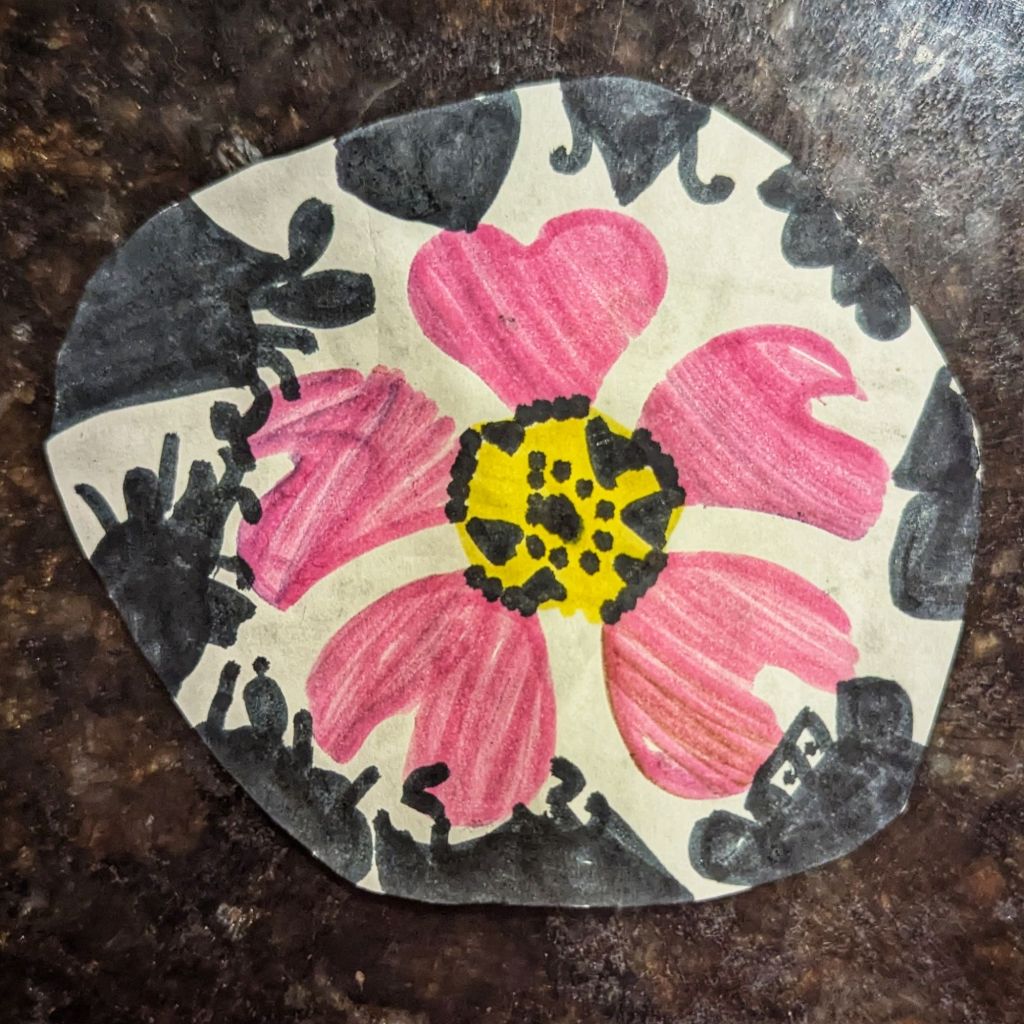
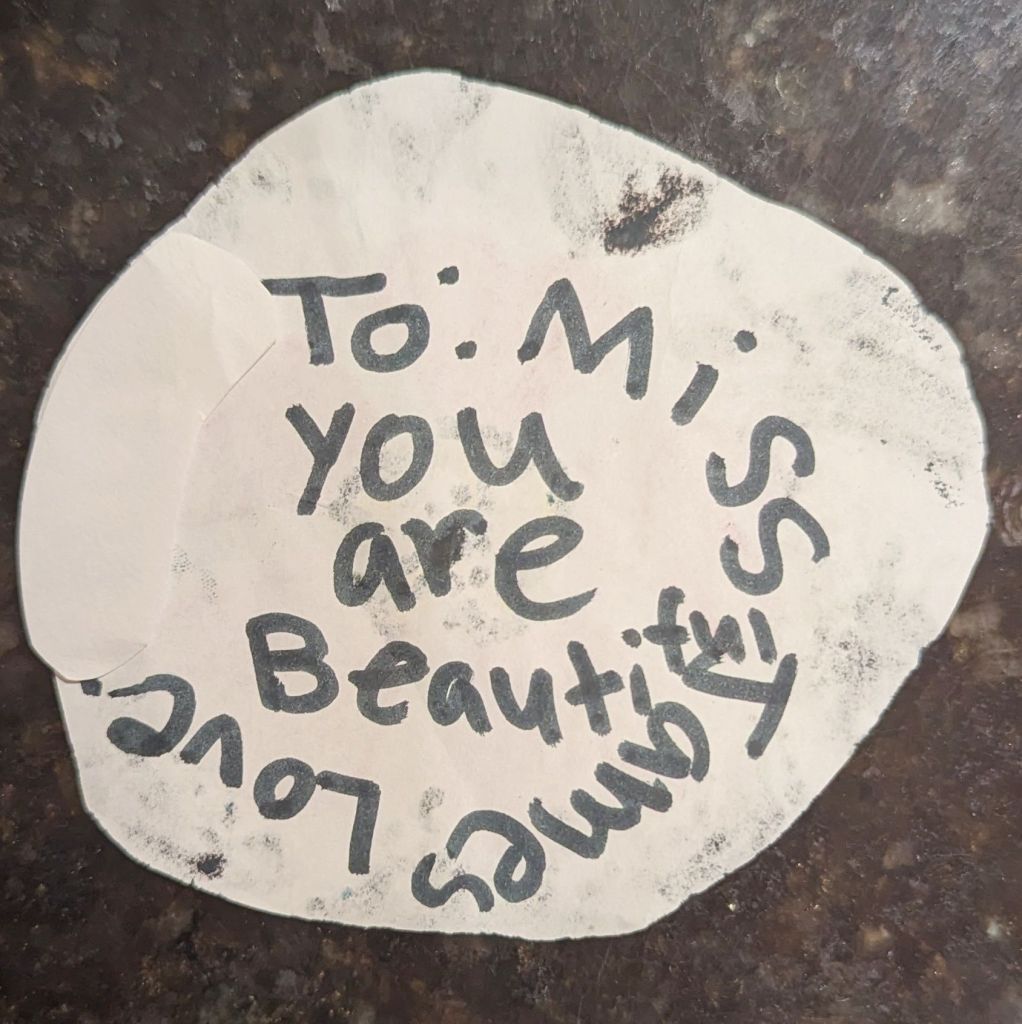
This was given to me months ago. I misplaced it a few days later, and with very pleasant surprise, found it today.

It never ceases to amaze me how much power is in a child’s affirmation!

It touched me when I received it and when I look at it now. I’m nearly 62 years old, and still, the words of a 6 year old have the power to touch my heart and mind, and remind me of a truth about myself. I am beautiful. Perhaps part of my beauty is that I can set aside my own angst and perfectionism and learn from a 6 year old.

Maybe you too need to be reminded about the truth of who you are. My Kinders’ would gladly bless you with their love and affirmations. Feel free to substitute your name for mine.

You are beautiful! Love, Kindergarten James

The Power of Children’s Writing: Notes With a Purpose

Some of my favorite things are notes from my Kindergartners. Often they are notes of love, at other times, they are notes requesting I do something for them.

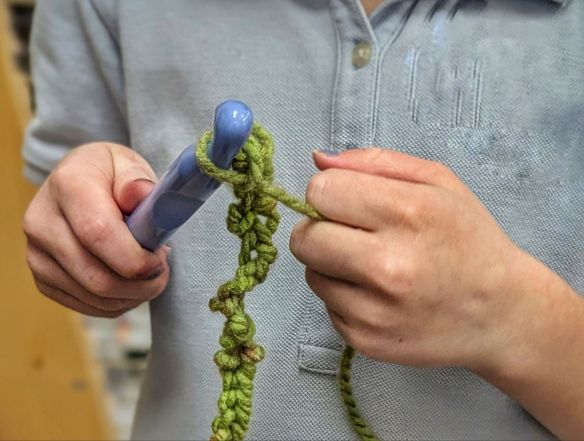
This one was delivered after winter break. She told me her grandmother taught her to crochet over break.

Me: “Wow! That’s amazing. Was it fun?”

Her: “Yeah! Can I show you?”

Me: “Absolutely!”

Her: “Do you have a crochet needle?”

Me: “I do. But not here. I have some at home.”

Her: “Can you bring it in?”

Me; “Sure! Would you write me a note to remind me?”

Her: “A note? (pause) Yeah, I can write one.”

A few minutes later she returned with this note.

How absolutely amazing is this?! Yes, there are some reversals, but look at all the fantabulousness.

  • My name is spelled correctly.
  • Please has the correct vowel team! This means she talked with a friend who knew about vowel teams and they worked together.
  • Crow shay. That has to be my favorite spelling. It’s not conventional, but it tells me all I need to know.

And, perhaps most importantly, she has — with her own beautiful brain, and amazing hand — used writing for her own purpose. She wants a crochet hook, and she knows this will get her one.

I brought in two crochet hooks the next day. She, and others, have been using then happily ever since.

Celebrating Little Moments: A Kinder’s Art of Noticing

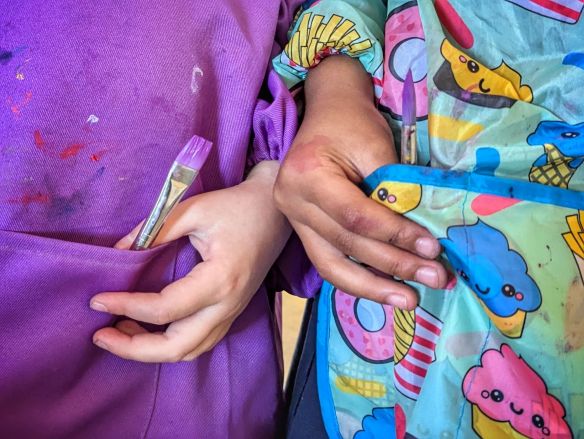
The other day two of my Kindergarten artists were moving excitedly to a new spot in our learning space — paint brushes in hand. Paint brushes that were dripping with lovely purple watercolor paint.

Me: “Careful with the paint brushes. Maybe you can leave the here while you go there.”

Them: “Ok.”

They didn’t drop them off with me. Instead, a few moments later, as I wondered where they and their paint filled brushes were, I heard squeals of delight as the two of them hurried back to me.

Them: “POCKETS! Miss James, we have POCKETS!”

Me: (laughing out loud) “Indeed you do. What a great way to use them!”

Little things. Are there really any little things? Or is it simply the way we look at them.

Pockets — when I don’t need them or notice them — become small insignificant things. But when noticed, found, needed, and used, they become wonderous things to celebrate.

I’ve been wanting to bring more joy, positivity and hope into my life these days. I think this is an answer — notice and celebrate the little things.

Oh! How fantabulous is this?!?! I’ve also been looking for ways to encourage my Kinders to reflect and write. Perhaps a little-things-noticing ritual with a lovely handmade little-things-noticing journal is the answer! Art, writing, and mindfulness all wrapped up in one. This can be a beautiful ritual that allows us to slow down, take a moment, notice, celebrate, and keep track of the lovely little things. I think I can find a bit of time in the morning and afternoon for us to note one little — wonderful — thing.

Fingers crossed I’ll keep you posted.

Here’s a few of mine for right now:

  • sunshine
  • naps
  • sprouts growing
  • birds chirping
  • my flute
  • greeted by name by a kind soul
  • conversations with old friends
  • delicious green tea
  • my inhale-exhale mug
  • a blog post

I wonder how the Kinders will experience this ritual of reflection and writing. I will have to think how I might structure it — the journal, the time, the selling — to help them experience it’s power.

My experience? I found that seeing one thing brought another, and another to mind. Occasionally I felt a bit of reticence — thinking other might find my ritual silly, I think. But, as I brushed that away, I found more things to note.

Let us all learn from my Kindergartners. Let’s notice, celebrate and share the little moments — even when we think others might think us silly.

I’ll go first … “A nap! I got a nap!”

Play, Paint, and Learn

Lately, I’ve been painting in a 6.5 inch square watercolor sketchbook. I’m able to do a good bit of playing and still finish in a comfortable amount of time. When I feel like doing more, I use both sides of the page to create a 6.5 x 13 inch spread. I like having the option of the two sizes, as well as my previous art for provoking ideas and bringing me joy.

I played with circles the last few days. I did the one with the colored shapes first. It was a multi-day process:

  • Tape the edges and paint the circles.
  • Look, enjoy, and wonder, “What might I add?”
  • Draw the flowers.
  • Add the splatters of paint.

I unintentionally got paint on the other page of the spread. It’s what happens when you forget to cover it before splattering paint. It was, at first, a bit annoying. When I let go of the annoyance I saw the opportunity to play.

  • How else might I make circles?
  • How might I use my mistake in a new piece?
  • How would it look to add a border and paint the inside with payne’s gray?

I’m pleased with how the two images look. There’s something quite satisfying and entertaining to have them next to each other, supported by the round-ish rocks gathered on a previous hiking trip.

My playing, painting, and thinking — was fantabulous and fruitful. I’m struck by how important my playful exploration was to me as a creative, a thinker, a watercolorist, a designer, an educator, and a learner!

  • How I hold my brush makes a big difference in the quality of my painting.
  • Even though I’ve painted for quite some time, I continue to experiment, notice, learn, and perfect how I hold the brush.
  • The very same paint yields wildly different results depending on the combination of water and paint.
  • As I play I develop and deepen my relationship with the paint, the paper, the brush, myself, my brain, and what’s possible.

As I played and reflected, I thought of my young learners. I want to create space, time, opportunities, routines and rituals that afford them the same opportunities I have as I sit at my kitchen table, or out on my patio, with plenty of paint, paper, markers, pencils and time at my disposal.

Here are some things I’m wondering about:

  • How else might we store and use our sketchbooks, markers, paint.
  • How might we integrate art (painting, clay, drawing) writing and reading.
  • How might we engage in intentional reflection — self reflection and reflection together — about our noticing, thinking, and playing.
  • How might I make time to regularly join my Kindergartners in these things.

Stale or Absolutely Perfect?

I have two tall white cabinets in my learning space. I use the white fronts for many things. Sometimes, things get stale. Yes, stale, just like dry, old bread. They lose their appeal. To be brutal, they are ready to be thrown away. Now, if they are student work, I don’t throw them away. But for emphasis sake, I use that phrase.

I recently removed some of that stale work from those cabinets. Naked — as my learners would say — their stark white color stood out, urging me to repurpose them for something beautiful and created by the children. For a few days, I let their urging ferment in my brain.

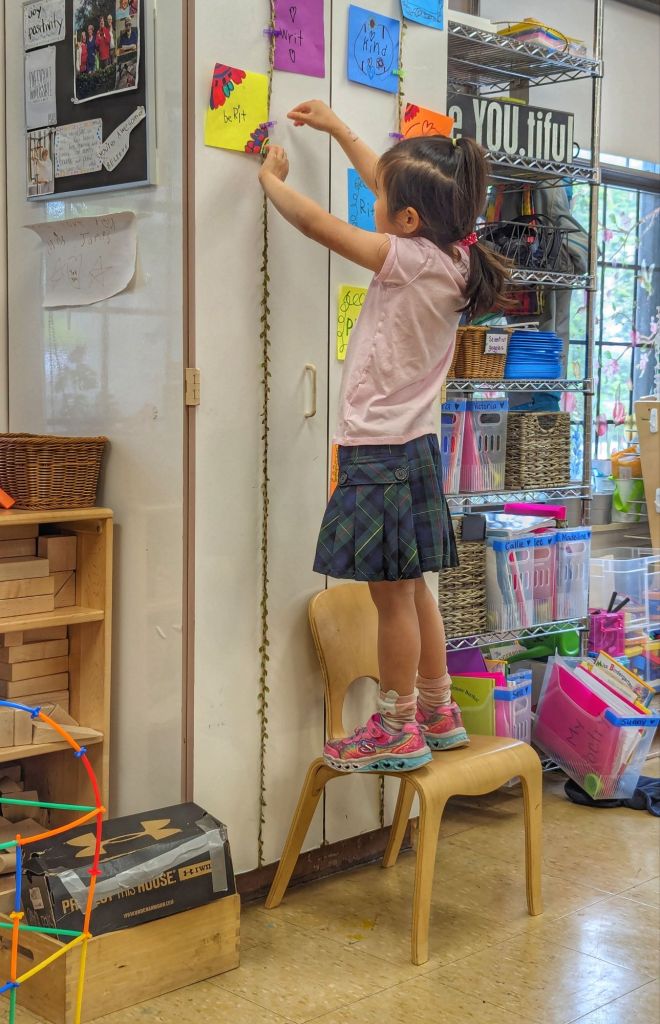
This week I decided to end the year as we began it: with real-life writing. On one cabinet, I wrote: We are … On the other I wrote: We can … I cut 6-inch square pieces of construction paper and left them out for our Investigate and Explore Time with the provocation to cover our naked cabinets with positive things that are true for us. The Kindergarten writers were into it, and quickly filled the covered the bare cabinets with beautiful affirmations of themselves.

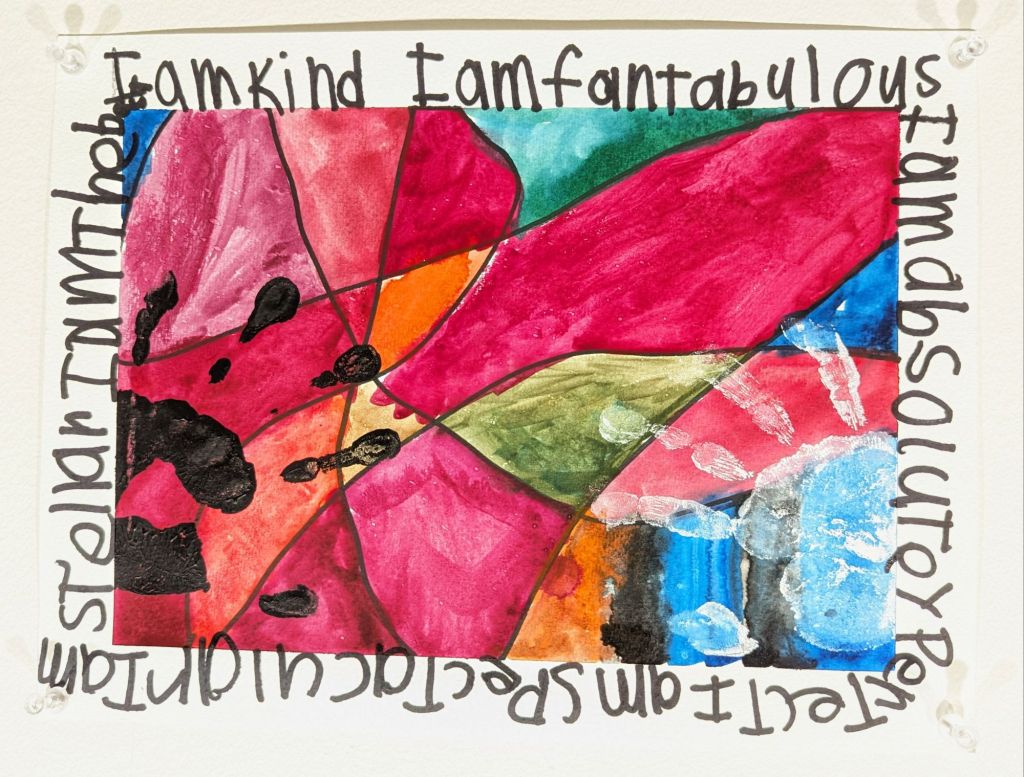
The process was great. I enjoyed watching from afar — drawing near only to help when it was requested and necessary. Otherwise, I allowed the Kindergarteners to complete it on their own. Each day I noticed a new entry which filled my heart with joy. Then I saw this one.

Wow! Even though they have things to learn and ways to grow, and times when they are sad or mad and aren’t their best selves, they can still say “We are absolutely perfect.” I love that. I want them to know they are absolutely perfect. This will give the courage to learn, be, and change the world.

One student had not yet added her affirmations to her abstract art handprint piece. I asked her to finish it, and without hesitation, she sat down in front of the We are cabinet and began writing. Outstanding!

The cabinets adorned with the kindergartners’ thoughts, writing, and doodles add beauty to our room, serve as writing idea resources, and provide positive reminders. Well done, kindergartners!

Be Brave and Kind

Yesterday morning I was listening to Simon Sinek talk with French biochemist Jessie Inchauspé. They didn’t just talk about reducing our glucose spikes. They talked about passion, profound work, and caring a lot. I dug what she said about dietary hacks to help reduce glucose spikes, was amazed by the various benefits, and have already started using her hacks. But, I think the most incredible outcome was the stream of consciousness I had after listening, and then the clarity I found as my brain continued to mull over the ideas as I drove home this evening. Do you ever notice your brain working on things without your conscious help? It’s wild.

I was reminded of the way I end the yoga practice with my Kindergartners. We take each other’s hands (one at a time) make good eye contact and then express gratitude and acknowledgement of each other’s awesomeness. I love those moments with my Kindergartners. I’m not doing yoga as often as I’d like, hence we’re not doing as much thanking and affirming.

After listening to Simon and Jessie I knew I wanted to add it back in, but how? I decided to do it as my dismissal ritual. I tried it yesterday but stumbled on the words as I wasn’t sure what important thing I wanted to affirm. It was good, it was modeling, it was affirmation, but it wasn’t a great sound bite yet.

Then on my way home, my mind was wandering among many things and at some point I thought — Brave and kind! Bravery and kindness are my jam — or at least what I strive and hope for — and they encompass so many other marvelous things about which I am passionate.

Be brave and be kind! If we are brave step boldly in the world We are creative. We apologize when we are wrong. We ask for help when we need it and forge ahead even if we aren’t positive we can do it. We problem find and problem solve. We are curious and imaginative. We lead, and we follow. If we are kind we live and lead as our best selves. We see others, touch hearts, and change the world.

Today I posted this message under our white board, next to our meeting carpet. I say it all the time, now it’s written and there for all to see. At dismissal, I will take each of my Kindergartners hands in mine, look them in the eyes, and very intentionally speak the words I want them to hear after a long day of thinking, doing, learning, and being. “Thank you for being brave and kind. You are fantabulous!”

Carry Kindnes

I had a new idea this week!

Typically I talk with my Kindergartners about being real life super heroes. This year, that didn’t seem to reach them, so, early on, I changed my teaching point to kindness. Our whiteboard declared “Kindness is Powerful!” We posted photographs of ways we are kind at home — helping with the dishes, playing cards with our sister, making dinner with our grandma. Then the Kinders drew images of ways they are kind in our school and classroom. Our kindness exploration, noticing, naming, and celebrated continued through the year in various moments of our day.

Since our focused moved from super heroes to kindness I needed to rethink our end of year art project. While it added a bit to my feelings of stress, it also gave me the opportunity to rethink, reimagine, and try new things. I wanted the project to include sewing, and give them something to wear or carry with them.

A friend had gifted me thick white felt at the beginning of the year. it sat on my top shelf waiting for me to figure out how to use it. For most of the year I wondered if there were any way for me to use it. Now, with the new opportunity and challenge, my eyes and mind returned to the felt. Might I use it to create a everyday kindness carrying bag?

I spent a few days thinking of the art materials I have, and the various ways we might use them — and other things — to create and decorate the bags. I wanted to find the simplest –and at the same time most beautiful and impactful — way for the Kindergartners to work with the material. It needed to be accessible to them, bring them joy, and include ideas and thoughts of kindness. After a good bit of time and some experimentation, I decided the Kindergarten artist could create a beautiful piece of art using acrylic paints and paint markers. We could then sew this into a purse/bag.

Yesterday, I taped the pieces of felt to their desks. Their curiosity was piqued and they did their best to wait patiently as I taped the last pieces of felt. As they grabbed their smocks out of the cubbies, I gathered paint brushes, acrylic paint tubes, and paper plates. Kindergartners surrounded me asking for my help with their smocks. Each request was answered the same way — “Find a friend who can help you.” Not only did I not have enough hands, I wanted them to keep learning that they are capable and kind. If they asked for help, they would receive it. If they were asked for help they would give it. Finally we were ready.I

Joining them at our cluster of desks, I shared the project.

Me: Hey, Kindergarten artists!

K Artists: Hey, Miss James, artist!

Me: You all have been so patient! I love how curious you are. You’ve shared some great wondering and given some remarkable ideas of what we might be doing. Thanks! Do you want to know what we’re doing?

K Artists: YES!!

Me: We’re going to make a purse. (Insert gasps from the artists.) But not just any purse. We’re going to make a kindness carrying purse.

Their excitement warmed my heart. I continued with a few instructions and rules. One of the biggest change I shared was that they would be able to get more paint as they needed it. I shared my trust and knowledge that they could be careful and kind. I told them I knew they would only take a small amount paint at a time, and would be patient, kind, and helpful to their fellow artists. I’m happy to report they were all of those things.

I joined them in the process which meant I didn’t get photos of them making their pieces. But, I was able to reinforce the truth that we are all artists — I have practiced for far longer than they have but none-the-less we are all artists. We each worked with joy and purpose and completed our acrylic painted purse bases. They are spectacular. I’m excited to see and share the rest of the process and product with you as it happens and is created.

As I cut the pieces today — preparing them for the next step in the process — I was struck by the realization that the acrylic paint and felt combination felt very fabric-like. I have altered my conversation with my artists to include this fact. I talk, not about their art, but the fabric they have designed and created.

Juicy Sentences

Once you’re comfy, peel its gentle skin like you would a clementine … dig your thumb at the bottom of each juicy section and pop the piece out.

Kwame Alexander – How to Read a book

Kwame’s book is beautiful. The words are wonderful, and the images are stunning. This quote is one my Kindergartners and I come back to with great frequency. They have been thinking about scrumptious clementine pieces that are so juicy they burst when you bite them, sending clementine juice down your chin, and surrounding you with clementine fragrance.

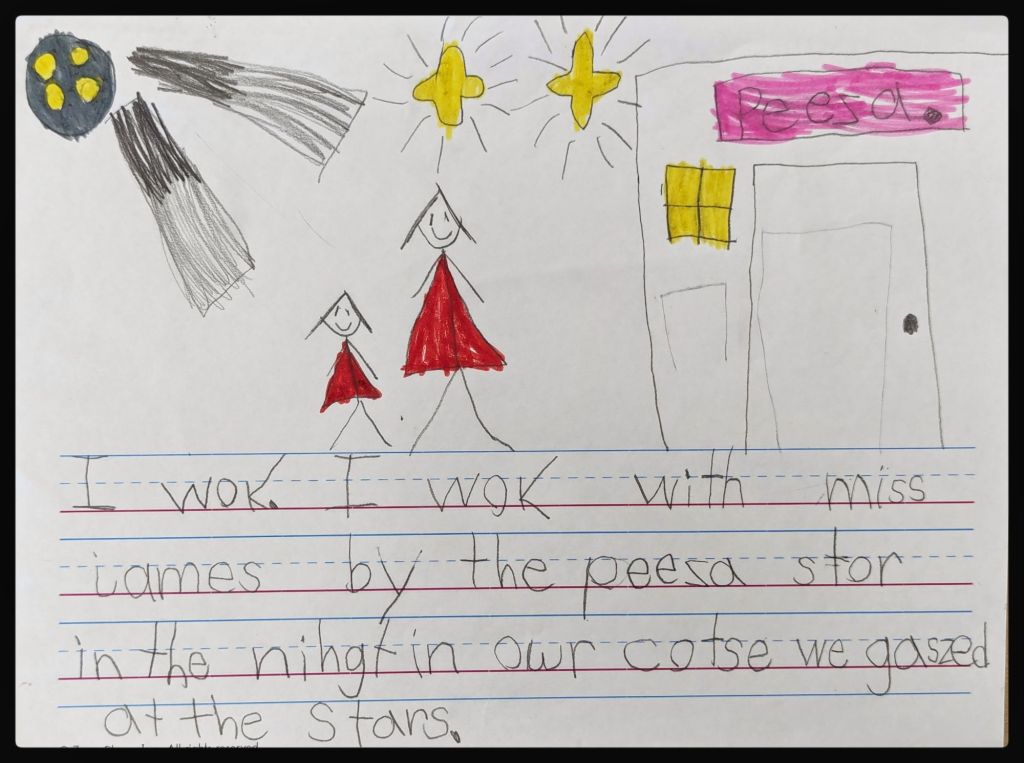
The Kinders are crafting their own juicy sentences. They start with the driest of sentences, and tell only “Who, did what.” Then they use their imagination to say more about the who and the did what?

The juice, flavor, and fragrance of this one got me.

So much to love — her thinking, her writing, her ideas. We’re together, by the pizza store in our matching coats, gazing at the stars! It’s a great place to be.