Sharing Art Sharing Joy

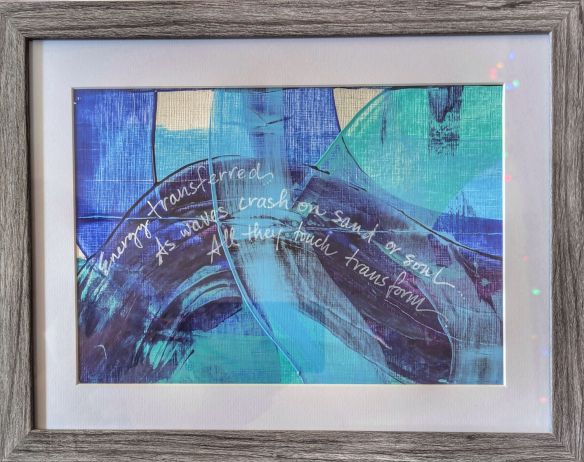
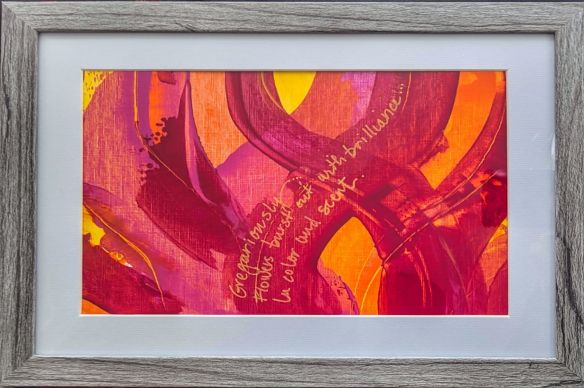
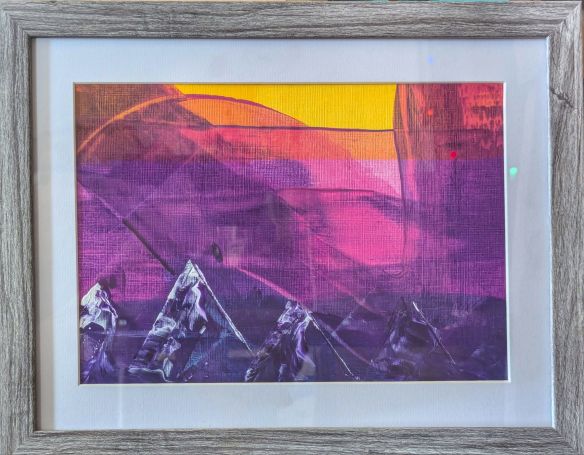
Looking for summer art inspiration I picked up Sarah J. Gardner’s book Share your Joy: Mixed Media Shareable Art. Just now, looking for a link to share with her book, I came upon Sarah’s website — complete with a blog, tutorials, learning possibilities and, as her book suggests, joy.

I have a zillion art books. A zillion? Perhaps not, but for sure a plethora of them. Is her book filled with brandy dandy new ideas I’ve never seen or imagined? Nope. Is it fantabulous and inspiring and bringing me joy? Yes, indeed it is!!!! There are so many beautiful things about her book — the colors, the photographs, Sarah’s spirit of joy and exploration, and the idea of sharing art in easy to manage, don’t fret too much, small art pieces.

It’s been just what I need for a hot summer that has felt stifling in many ways. I’m grateful that I found her book and her site. I’m creating small things, enjoying the process, and excited to send small art treasures to friends.

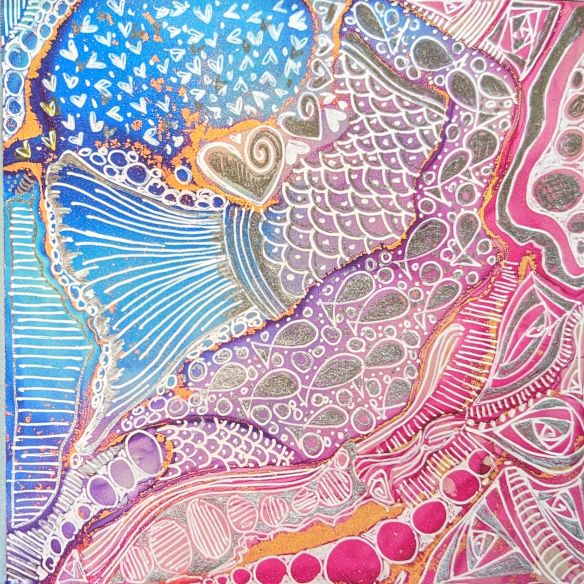
The other day I wandered the aisles of a local craft store. A gift card was burning a hole in my pocket but nothing struck me.Then I found a fab set of alcohol ink designed origami paper. Much like Sarah’s book, I bought it for beauty, joy and inspiration.

Back home, I wondered what to do with the paper. It seemed a bit of a waste to simply fold them. So much of their beauty would be hidden inside the folds. Flipping through the pages, admiring the colors and metallic designs of the ink, I grabbed my metallic pens and started tangling. At first I added strings, but as I did more pages I began to look for inspiration in the shapes on the page. It was a blast — relaxing, creative, enjoyable.

After tangling, I folded a paper crane, and sent it off to a friend in need of a bit of joy.

I made another and set it on my art desk along with a decorated but unfolded piece of paper. Passing it one evening I thought, “Oh!I have the perfect person for that crane!” She’s a fantabulous human who values creativity and joy. She’s had a bit of a rough time these past few months, so sharing joy and art seemed perfect. The package grew to include an unfolded piece of decorated paper along with the folded crane. Then, while brushing my hair I thought “Oh! I should send her an undecorated piece of paper, too! That way the joy is three fold — a finished piece, and two unfolded pieces — one decorated and one not — that she can use for anything she wants.” Can’t wait for her to get it.

Oh wait! I just had a thought. The joy is 5 fold because I get joy of making and sharing! YAY!

Empowering Young Artists: A Holistic Approach to Art Education

Someone asked me if I planned my art for the show. I asked what they meant. They continued “Well, do you choose specific artists and pieces knowing the show is at the end of the year?” I told her, “Not really. I just pay attention to what sparks joy in my Kinders and in me. I notice things we are interested in and want to experiment with, and I keep in mind what I think will work for us as artists. The Kinderes and their art just make the show amazing.”

After the show, a grateful parent commented, “This must have take hours to set up!” In reality it took me and an amazing alum mom more than two days to set up and hang the show. And prior to that, It took my girls nearly 9 months to create the art!

As I thought about those nine months and the set up hours, and looked at photos of the Kindergarten artists working on their creations, my mind returned to that original question. Do I plan my artwork — what I teach — knowing we will have the end of year celebration of Kindergarten art?

After some reflection, I’d like to change my answer. Yes, I do, but in a very organic holistic way. I plan the art with a vision of the artists and our celebration of them in mind.

I choose artists and art pieces, and teach them the way I do for two reasons — to encourage, empower and teach these young artists and to hang a show that illustrates their power, talent, and fantabulousness.

To encourage, empower and teach these young artists I choose artists and artwork that:

  • allow my young artist to experience many different mediums and art modalities.
  • help the Kinders know they are creative humans and amazing artists!
  • present them challenges and teach them how capable they really are.
  • encourage them to engage with artistic struggle and self-doubt with confidence and joy.
  • hone their artistic sensibilities and decision making abilities.
  • give them the opportunity to make artistic decisions, make mistakes, learn from their mistakes and make beautiful things!

To hang a show that illustrates their power, talent, and fantabulousness, I choose artists and artwork and hang the show in a way that:

  • highlights the K-artists’ courage, joy, exuberance, and talent.
  • tells the story of our artistic process and journey.
  • illustrates ways our lives and learning are expressed through our art.
  • demonstrates the ways we have used our art to learn, speak our truths, and make a difference in the world.
  • is aesthetically pleasing and interesting.
  • elevates my Kinders’ thinking, work, and art pieces to make clear the remarkable, courage, work and talent of these young artists.
  • that brings me joy, and will hopefully make my young artists and their families feel awestruck by their work and the care taken to display it.

That was a really great question!

Celebrating Little Moments: A Kinder’s Art of Noticing

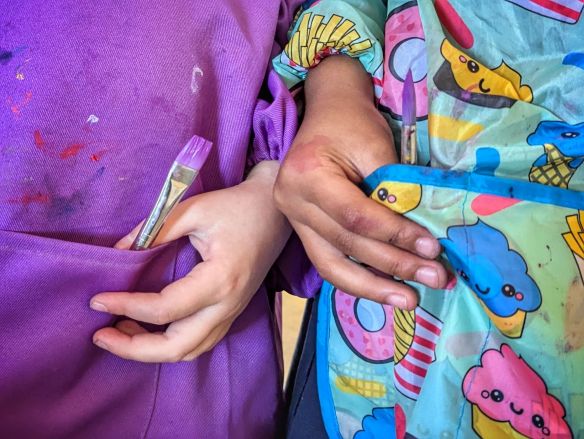
The other day two of my Kindergarten artists were moving excitedly to a new spot in our learning space — paint brushes in hand. Paint brushes that were dripping with lovely purple watercolor paint.

Me: “Careful with the paint brushes. Maybe you can leave the here while you go there.”

Them: “Ok.”

They didn’t drop them off with me. Instead, a few moments later, as I wondered where they and their paint filled brushes were, I heard squeals of delight as the two of them hurried back to me.

Them: “POCKETS! Miss James, we have POCKETS!”

Me: (laughing out loud) “Indeed you do. What a great way to use them!”

Little things. Are there really any little things? Or is it simply the way we look at them.

Pockets — when I don’t need them or notice them — become small insignificant things. But when noticed, found, needed, and used, they become wonderous things to celebrate.

I’ve been wanting to bring more joy, positivity and hope into my life these days. I think this is an answer — notice and celebrate the little things.

Oh! How fantabulous is this?!?! I’ve also been looking for ways to encourage my Kinders to reflect and write. Perhaps a little-things-noticing ritual with a lovely handmade little-things-noticing journal is the answer! Art, writing, and mindfulness all wrapped up in one. This can be a beautiful ritual that allows us to slow down, take a moment, notice, celebrate, and keep track of the lovely little things. I think I can find a bit of time in the morning and afternoon for us to note one little — wonderful — thing.

Fingers crossed I’ll keep you posted.

Here’s a few of mine for right now:

  • sunshine
  • naps
  • sprouts growing
  • birds chirping
  • my flute
  • greeted by name by a kind soul
  • conversations with old friends
  • delicious green tea
  • my inhale-exhale mug
  • a blog post

I wonder how the Kinders will experience this ritual of reflection and writing. I will have to think how I might structure it — the journal, the time, the selling — to help them experience it’s power.

My experience? I found that seeing one thing brought another, and another to mind. Occasionally I felt a bit of reticence — thinking other might find my ritual silly, I think. But, as I brushed that away, I found more things to note.

Let us all learn from my Kindergartners. Let’s notice, celebrate and share the little moments — even when we think others might think us silly.

I’ll go first … “A nap! I got a nap!”

Play, Paint, and Learn

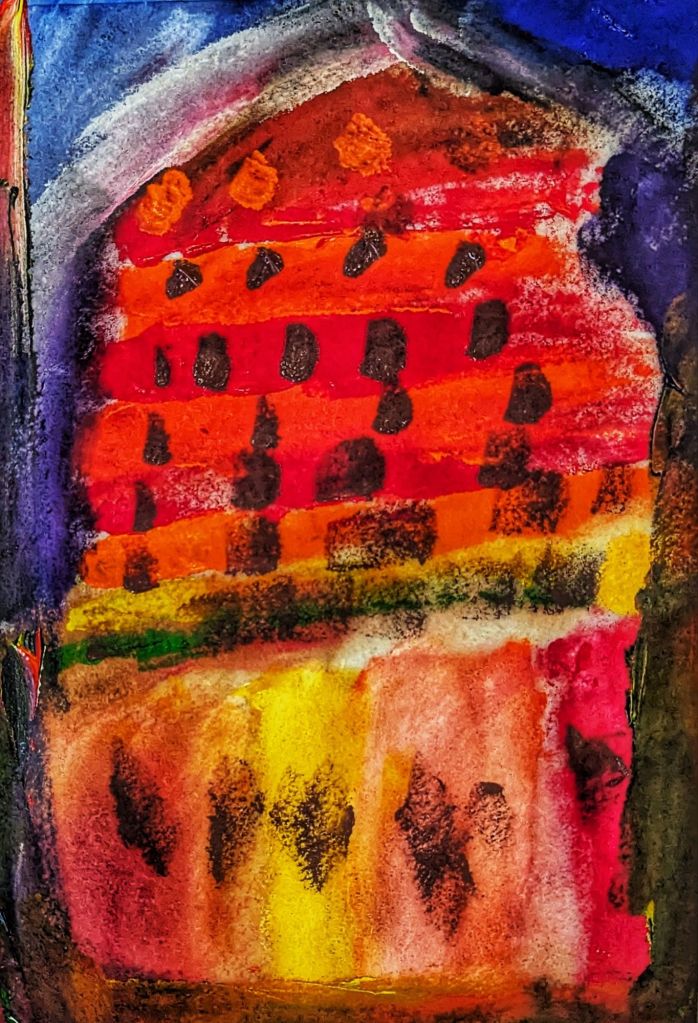
Lately, I’ve been painting in a 6.5 inch square watercolor sketchbook. I’m able to do a good bit of playing and still finish in a comfortable amount of time. When I feel like doing more, I use both sides of the page to create a 6.5 x 13 inch spread. I like having the option of the two sizes, as well as my previous art for provoking ideas and bringing me joy.

I played with circles the last few days. I did the one with the colored shapes first. It was a multi-day process:

  • Tape the edges and paint the circles.
  • Look, enjoy, and wonder, “What might I add?”
  • Draw the flowers.
  • Add the splatters of paint.

I unintentionally got paint on the other page of the spread. It’s what happens when you forget to cover it before splattering paint. It was, at first, a bit annoying. When I let go of the annoyance I saw the opportunity to play.

  • How else might I make circles?
  • How might I use my mistake in a new piece?
  • How would it look to add a border and paint the inside with payne’s gray?

I’m pleased with how the two images look. There’s something quite satisfying and entertaining to have them next to each other, supported by the round-ish rocks gathered on a previous hiking trip.

My playing, painting, and thinking — was fantabulous and fruitful. I’m struck by how important my playful exploration was to me as a creative, a thinker, a watercolorist, a designer, an educator, and a learner!

  • How I hold my brush makes a big difference in the quality of my painting.
  • Even though I’ve painted for quite some time, I continue to experiment, notice, learn, and perfect how I hold the brush.
  • The very same paint yields wildly different results depending on the combination of water and paint.
  • As I play I develop and deepen my relationship with the paint, the paper, the brush, myself, my brain, and what’s possible.

As I played and reflected, I thought of my young learners. I want to create space, time, opportunities, routines and rituals that afford them the same opportunities I have as I sit at my kitchen table, or out on my patio, with plenty of paint, paper, markers, pencils and time at my disposal.

Here are some things I’m wondering about:

  • How else might we store and use our sketchbooks, markers, paint.
  • How might we integrate art (painting, clay, drawing) writing and reading.
  • How might we engage in intentional reflection — self reflection and reflection together — about our noticing, thinking, and playing.
  • How might I make time to regularly join my Kindergartners in these things.

Carry Kindnes

I had a new idea this week!

Typically I talk with my Kindergartners about being real life super heroes. This year, that didn’t seem to reach them, so, early on, I changed my teaching point to kindness. Our whiteboard declared “Kindness is Powerful!” We posted photographs of ways we are kind at home — helping with the dishes, playing cards with our sister, making dinner with our grandma. Then the Kinders drew images of ways they are kind in our school and classroom. Our kindness exploration, noticing, naming, and celebrated continued through the year in various moments of our day.

Since our focused moved from super heroes to kindness I needed to rethink our end of year art project. While it added a bit to my feelings of stress, it also gave me the opportunity to rethink, reimagine, and try new things. I wanted the project to include sewing, and give them something to wear or carry with them.

A friend had gifted me thick white felt at the beginning of the year. it sat on my top shelf waiting for me to figure out how to use it. For most of the year I wondered if there were any way for me to use it. Now, with the new opportunity and challenge, my eyes and mind returned to the felt. Might I use it to create a everyday kindness carrying bag?

I spent a few days thinking of the art materials I have, and the various ways we might use them — and other things — to create and decorate the bags. I wanted to find the simplest –and at the same time most beautiful and impactful — way for the Kindergartners to work with the material. It needed to be accessible to them, bring them joy, and include ideas and thoughts of kindness. After a good bit of time and some experimentation, I decided the Kindergarten artist could create a beautiful piece of art using acrylic paints and paint markers. We could then sew this into a purse/bag.

Yesterday, I taped the pieces of felt to their desks. Their curiosity was piqued and they did their best to wait patiently as I taped the last pieces of felt. As they grabbed their smocks out of the cubbies, I gathered paint brushes, acrylic paint tubes, and paper plates. Kindergartners surrounded me asking for my help with their smocks. Each request was answered the same way — “Find a friend who can help you.” Not only did I not have enough hands, I wanted them to keep learning that they are capable and kind. If they asked for help, they would receive it. If they were asked for help they would give it. Finally we were ready.I

Joining them at our cluster of desks, I shared the project.

Me: Hey, Kindergarten artists!

K Artists: Hey, Miss James, artist!

Me: You all have been so patient! I love how curious you are. You’ve shared some great wondering and given some remarkable ideas of what we might be doing. Thanks! Do you want to know what we’re doing?

K Artists: YES!!

Me: We’re going to make a purse. (Insert gasps from the artists.) But not just any purse. We’re going to make a kindness carrying purse.

Their excitement warmed my heart. I continued with a few instructions and rules. One of the biggest change I shared was that they would be able to get more paint as they needed it. I shared my trust and knowledge that they could be careful and kind. I told them I knew they would only take a small amount paint at a time, and would be patient, kind, and helpful to their fellow artists. I’m happy to report they were all of those things.

I joined them in the process which meant I didn’t get photos of them making their pieces. But, I was able to reinforce the truth that we are all artists — I have practiced for far longer than they have but none-the-less we are all artists. We each worked with joy and purpose and completed our acrylic painted purse bases. They are spectacular. I’m excited to see and share the rest of the process and product with you as it happens and is created.

As I cut the pieces today — preparing them for the next step in the process — I was struck by the realization that the acrylic paint and felt combination felt very fabric-like. I have altered my conversation with my artists to include this fact. I talk, not about their art, but the fabric they have designed and created.

Juicy Sentences

Once you’re comfy, peel its gentle skin like you would a clementine … dig your thumb at the bottom of each juicy section and pop the piece out.

Kwame Alexander – How to Read a book

Kwame’s book is beautiful. The words are wonderful, and the images are stunning. This quote is one my Kindergartners and I come back to with great frequency. They have been thinking about scrumptious clementine pieces that are so juicy they burst when you bite them, sending clementine juice down your chin, and surrounding you with clementine fragrance.

The Kinders are crafting their own juicy sentences. They start with the driest of sentences, and tell only “Who, did what.” Then they use their imagination to say more about the who and the did what?

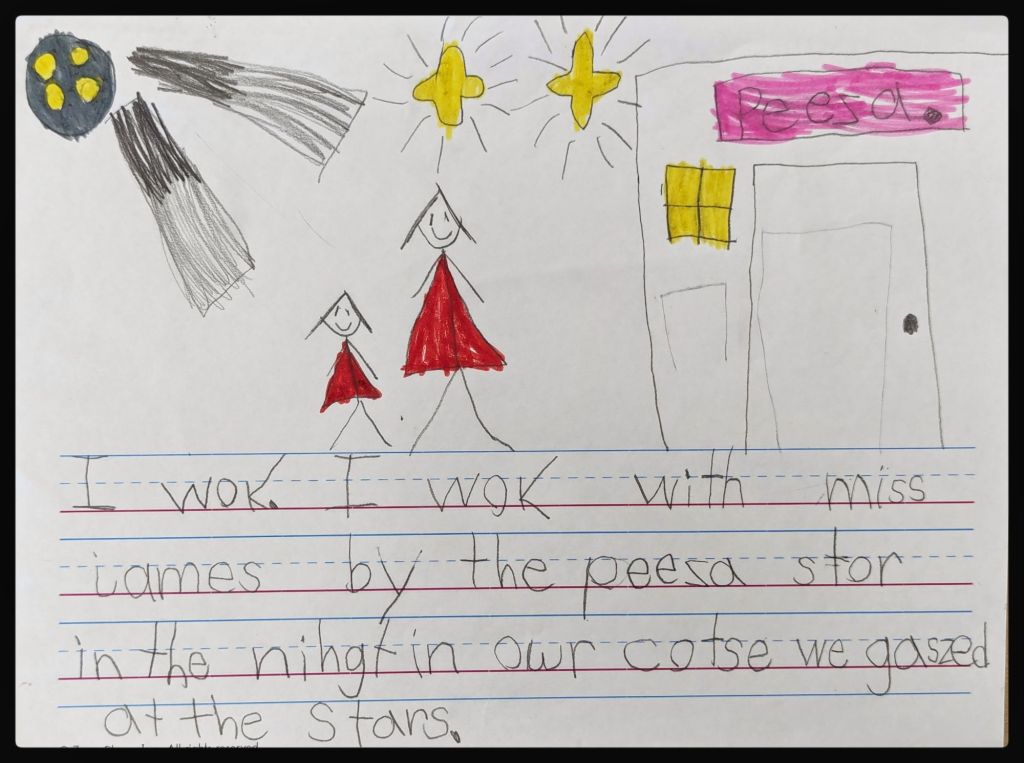
The juice, flavor, and fragrance of this one got me.

So much to love — her thinking, her writing, her ideas. We’re together, by the pizza store in our matching coats, gazing at the stars! It’s a great place to be.

Companions of Truth, Process, and Creativity

I don’t know about you, but I’ve been feeling weighed down by the demands and difficulties of life and work. I’ve been feeling exhausted, worn out, and unsure. Stress, tiredness, and burdens, are annoyingly loud and obnoxious companions on our journey. They constantly speak. At times they slap us in the face with their loudness, at other times they whisper incessantly. Like all deceivers, they sound like they’re speaking the truth — but they’re not.

The truth is I am weighed down, I am tired, I am feeling a bit unsure — AND I am strong, brave, and deeply loved, with a big beautiful brain, and awesome heart, and some life-giving creativity. So, I’ve been choosing to make time these days to rest, to restore, and to be creative.

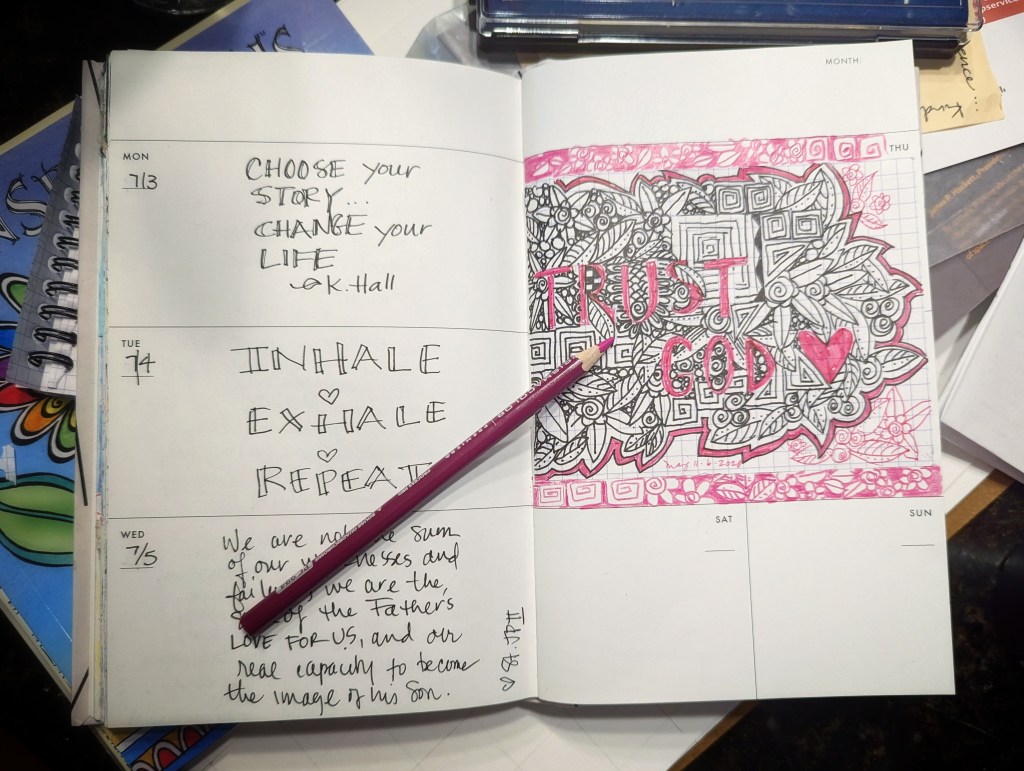
My affirmational art journaling continues this year. It’s helping me stay grounded in the truth. Each day I actively look for the story I want to tell myself. I search for the truths I want to save in my journal so I can read them now and in the future. And, I take time to create.

The entries look so different this year. I started in September with a compass, and a favorite pencil, eraser and fountain pen. I love using these tools, and the concentric circles are great canvases for ideas. It was interesting to watch as they developed individually and as a group. Each time I drew, constraints and possibilities greeted me. Sometimes I loved the results, other times not so much, but I always enjoyed the process. I’ve decided to keep the images black and white in order to emphasize design rather than color.

December I switched from concentric circles to ones that are separate or interlocked. My plan is to introduce color into the designs as well.

I did 66 different concentric circle designs. So far I have done 27 circle designs. Will I be able to think divergently — with fluency, flexibility, originality, and elaboration — and create many more circular designs? So far I see fluency, originality and elaboration. Now to allow myself to move from design elements I find pleasing, to discover other satisfying possibilities. No matter how many I make, or how divergently I am able to think, I continue the process and that is good.

I hope you too engage in a process that blesses you during these beautiful days of winter.

A Sweet Treat and Reflection

Life has been feeling a bit cluttered lately. A plethora of things are vying for my attention, and filling my to-do ta-da list. Still others are disturbing the peace of my physical space.

So, I breathe, try to do one thing at a time, and begin to tackle the things in my physical space. A vivid mental image of me literally tackling the stacks of things — knocking them to the ground in a feat of physical prowess and dominance, is wildly satisfying and amusing.

As I recycle, donate, and trash the things I no longer need or enjoy, I flip through many notebooks. In one, I find this sweet treat. I’m pretty sure I did it as I waited for a doctor, or got some sort of infusion.

It was a much needed reminder — from me to me — and as I looked at it, I thought, “I should take that out and put it somewhere I’d see it more often.” Funny enough, even as I was thinking what a great idea that was, I was also thinking, “Take it out? Are you nuts?”

I cannot exactly explain why I was thinking — or perhaps more accurately feeling — that angst. It didn’t make that much sense to my brain, but none-the-less the feeling was strong. I think it has to do with a fear of wrecking the piece, or making it less, or somehow lessening its value and impact for me.

I thought of several things I might do with it — including pasting it in my daily art affirmation and positivity journal. Still reluctant to rip it out, I instead ripped out a blank sheet as a template. I measured, thought, placed, and looked. I repeated the process many times. Finally I realized there were no rules that stated I had to make art in only one day’s space. It is my journal, my creation. I could place the piece wherever I wanted — even centering it over two days.

I considered adding washi tape on the top and bottom border, but couldn’t find it. So, I grabbed a colored pencil, and created my own washi-tape-esque border. I’m quite pleased with the result.

The washi-tape-esque border creating was meditative and zen-like. As I worked, my brain noticed, wondered, made connections and generated questions.

  • Our learners may feel and express things that don’t seem to make any sense. That doesn’t mean they can, or should, stop feeling it because we think it is unwarranted. And just like with my feelings and thoughts, talking to make me want to do it any more. It’s important to remember that sometimes encouraging, reasoning, and/or requiring doesn’t help.
  • Taking concrete steps helped! Making something — using my hands to think — enabled me to iterate, ideate, see new possibility, and create something new and even more impactful. I think an essential piece is that I used MY hands to think. I did the doing and the thinking.
  • How might I be an effective thought partner with my learners?
  • Taking the old art, and incorporating it into my life and art in a new way, required me to reexamine the old piece, find essential elements, and consider ways to incorporate these things on the new piece.
  • How might I incorporate this type of art into my Kindergartners art making experiences?
  • There’s so much to gain from this type of endeavor.
  • What are the connections to student art, learning, doing, and thinking?
  • How might I make help make these connections for and with my students?

I really like the truth that our ideas, art, thinking, writing, (perhaps everything) don’t need to be limited or confined to the original. They can be the fantabulous original, and they can also be fodder for something new and satisfying. Bringing forth something new is often — or is it always? — the purpose and power of ideas and creations. Sometimes the new is a feeling, an experience, or an understanding. Other times, it’s a new idea or creation. As I type, I’m asking myself, and you, if we will be ok when our new idea or thing requires the partial destruction of our original one. And, I’m wondering how we will help our students be ok when they are faced with the same situation.

The Intrigue of Leaves

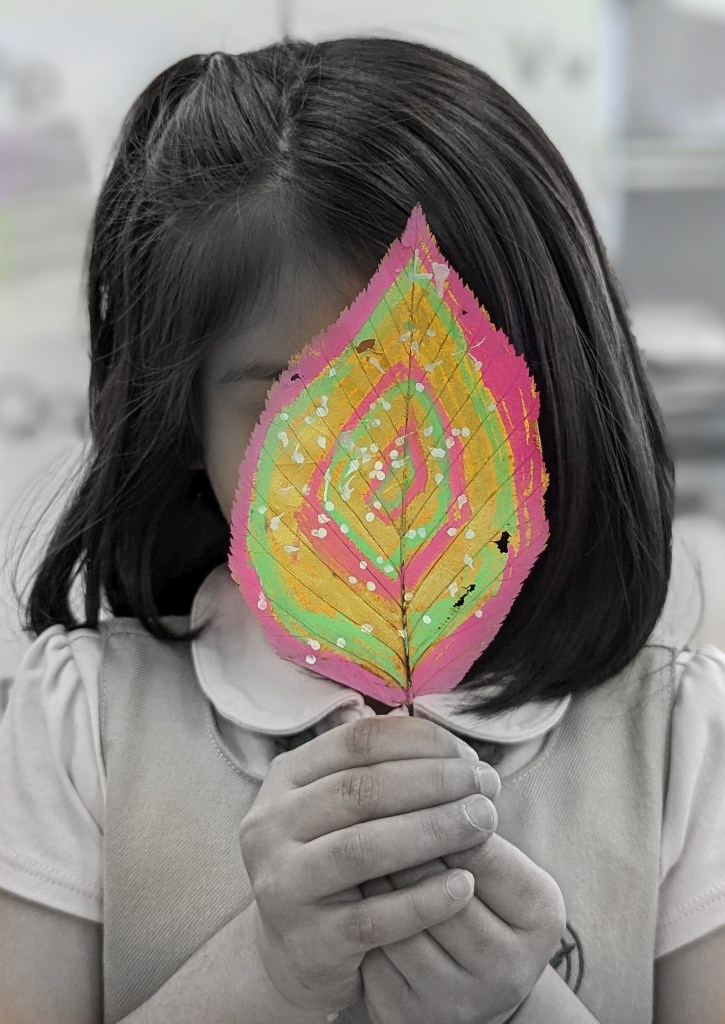
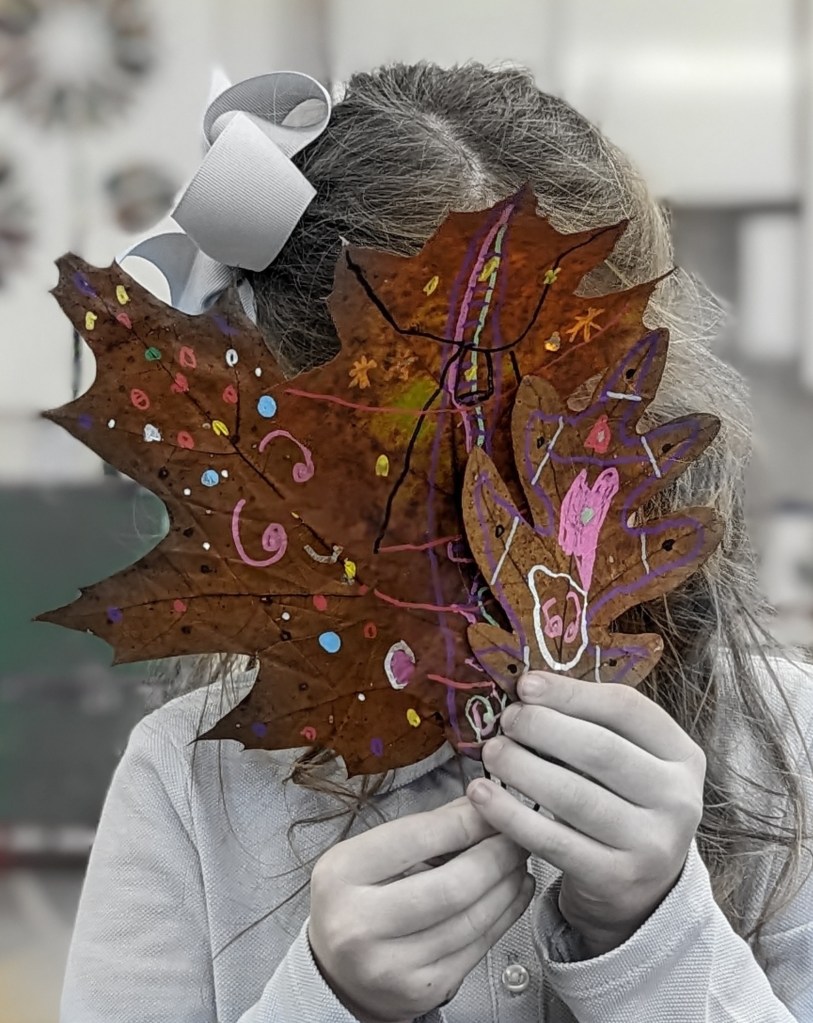
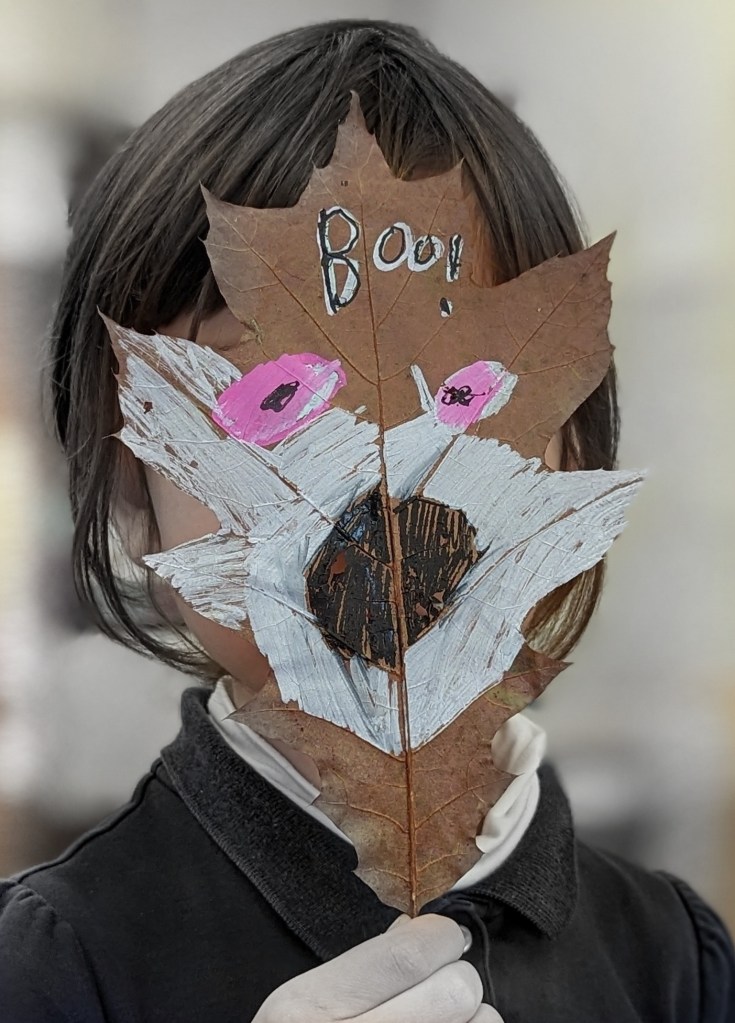
Leaves hold an amazing amount of intrigue for my Kindergarten artists — and for me! I love collecting leaves as I hike, especially knowing I’m going to share them with my artists. I purposefully look for leaves that have a lovely color, an interesting shape, or an exaggerated size (large or small).

When I come in with my stash of leaves, I am always greeted with a plethora of questions and comments.

  • Ooooh! Where’d you get those?
  • They’re so BIG (or small).
  • What are you going to do with them ?
  • Can I touch them?
  • Can I have this one?

    More questions, comments, oohs and aahhs, and claiming of leaves, come as I explain, “We’re going to paint them.”

The intrigue gets to a fever pitch as I pull out our antique paper press.

The circle of Kindergartners tighten in around me and the press. Their curiosity is peaked, and they have more questions.

  • Ooooh! What’s that?
  • What are you going to do with that?
  • Why are you doing that?
  • Can I do it?

I tell them it’s a press, and we’re going to use it to press the leaves so that they will dry flat instead of curled and wrinkly. I explain a few safety issues, and let everyone take a turn loading leaves and paper towels, and cranking the press tight. The burning question becomes: “Can we paint them NOW?” I respond: “Nope, they need to stay in the press until tomorrow.”

“This is going to be an exercise in patience.” I say only to myself.

Finally tomorrow arrives. We open the press and extract the leaves. The Kindergartners are mesmerized by the intense flatness of each leaf. The gently sort through the leaves and choose their favorites.

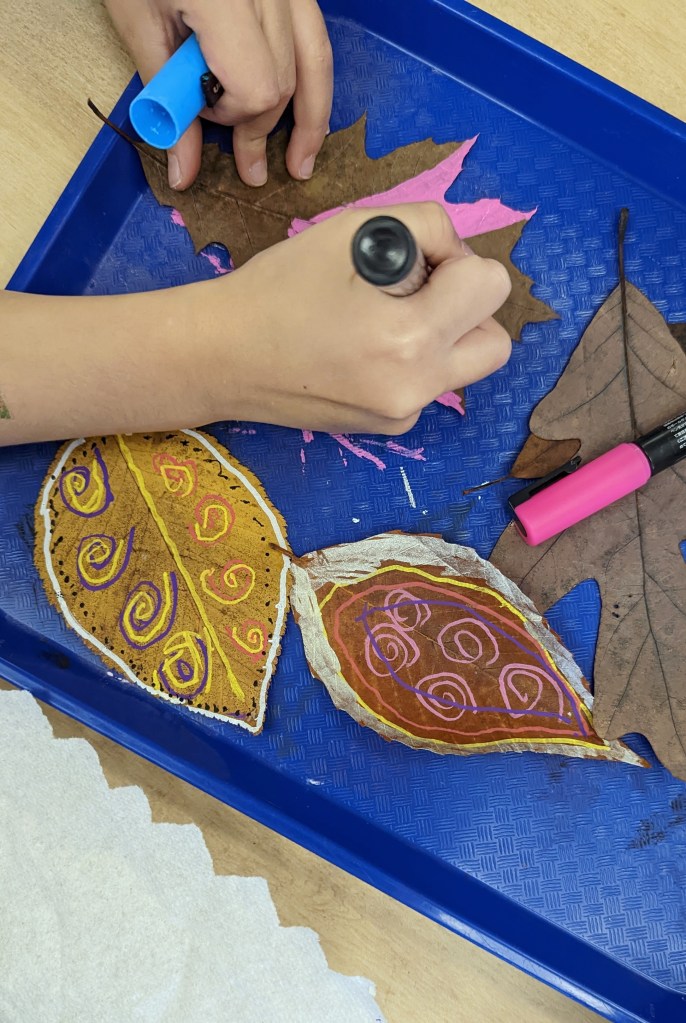
We paint the leaves using paint markers. The markers allow the artists to more easily add detail. I join them at the table with my own favorite leaf. Sometimes they are very talkative — admiring each others work. At other moments they are silent, eyes, mind, and hands intent on creating the perfect piece of leaf art. The structure of the leaf sometimes guides their design, at other times, they approach the leaf as more of a blank canvas. Always, the uniqueness of painting a leaf — versus a piece of paper — grabs their attention and interest.

I’m fascinated by the way photos — intentionally taken — remove the smallness of the Kindergartners. Instead their hands could the the hands of any aged artist. I love that.

I decided to take photos that highlighted their leaf art. I processed the photos to remove the saturation and color from the background leaving their leaves as the stars, while still including a bit of information about each artist.

When you have leaves available to you, give this a try. It’s a fun activity that is filled with opportunity for exploration, learning, trying, collaborating, creating, and growing as artists and a community. Oh! And if you ever have the change to pick up an old paper press on the cheap –grab it! The possibilities in the classroom are endless.

Art and Faith

The three wisemen have begun their trek to the manger and Jesus. Today they stopped to rest in front of an art piece of mine.

Today, as the Kings stopped to rest, I too paused, and looked at them, and the art.

I imagined their journey in real life. They must have had to pause, breathe and remind themselves of the possibility their faith told them lay before them. They chose to begin the journey, and I suspect they might have needed to affirm their choice more than once as they walked together.

I imagine walking with them and pausing before this giant graffitied wall. We encourage each other with the words we see “Inhale peace, exhale tension. Trust. Pray.” Waking after a long day, and a not so long night’s rest, we eat, pray, and do some much needed stretching. As the sun rises, I don my sunglasses to shield my eyes from its brilliant rays. I love the idea of rising and burning like the sun, so I encourage myself, and my brother Kings to burn bright like the sun. We set off in search of the amazing possibility of a child King. Our faith creates hope, and our hope feeds our faith.

As I breathe and type these thoughts, I’m struck — again — by the power of art, word, reflection and imagination. I make a mental note to keep beauty and encouraging words near at hand, and to travel with companions willing to burn like the sun together, grateful for the happiness in each present moment we encounter.