The Power of Relationships in Learning

Relationships are powerful and essential components of learning.

I’m not the only one who knows this is true. Many educators — from Vgotsky, to Frances and David Hawkins, Harvard Graduate School of Education, and Reggio Emilia (and RE inspired educators) — speak of the importance of relationships for learning, understanding, creating, and thinking.

Inspired by Reggio Emilia I value relationships between parent, teacher, learner, and the environment. – and do my best to cultivate them. And, not just my relationship with each of them, but their relationships with each other. Through these connections, learners develop relationships with:materials, thoughts and ideas – their own and others, themselves, play, other learners, and the importance and value of struggle.

I’m always reminded of relationships as the school year ends and my summer begins. My relationship with time, energy, rest, exploration, play, creativity and my own physicality are blessed with opportunity and possibility. And of course, my relationships with my current learners and parents transition and change.

I never cease to be amazed (and edified) as I experience the power, essentiality, and inspiration of these relationships from learners new and old. I never take for granted the gift it is to bump into a former student, or receive a note in my mailbox. Here are a few that touched and reminded me of the power of these relationships.

An 11th grader saw me moving things around in the classroom. It’s a normal part of my end of year routine — but not a normal one for her.

11th grader: “What are you doing, Miss James?”
Me: “I’m moving some of my things out of the classroom.”

A look of confusion, then shock and horror, crossed her face. She asked a string of questions in rapid fire: “Are you leaving, Miss James? You’re not leaving are you? You can’t leave! What will the Kindergartners do? What would we do? You can’t leave!”

I took a breath, as I looked into those loving and panicked eyes of hers, and said, “Nope. I’m not leaving. Just moving some of my things.”

She looked at me as though trying to decide if I had told her the truth. Then she took a breath and said, “Oh, good. We need you.”

Then a 7th grader left me an amazing letter in my mailbox telling me about how I — and the way I teach Kindergarten — has continued to impact her life and learning. “Even though it’s been a while since Kindergarten, I still remember how your creativity, kindness, and positive energy made learning so much fun. You helped build the foundation that inspired me to grow, explore and believe in my myself. I’ll always be grateful for the start you gave me.”

And then there’s my sweet Kindergartners. One mom emailed me to share her daughter had been asking when she might have a playdate with me! And then, I a letter in the mail from another KJer proclaimed “Miss James. I love you. I loved being in KJ. Thank you for a great year. You are the best teacher.”

I know they don’t have a lot to go on when they proclaim me the best teacher. I understand it means they have experienced goodness, kindness, and acceptance in me. It means they have experienced and know that I am their (to quote Rita Pierson’s TED talk) “champion, an adult who will never give up on them, who understands the power of connection, and insists that they become the best that they can possibly be.”

Never underestimate the power of love, joy, relationships, understanding, acceptance, and dogged determination that we should all be the best we can be.

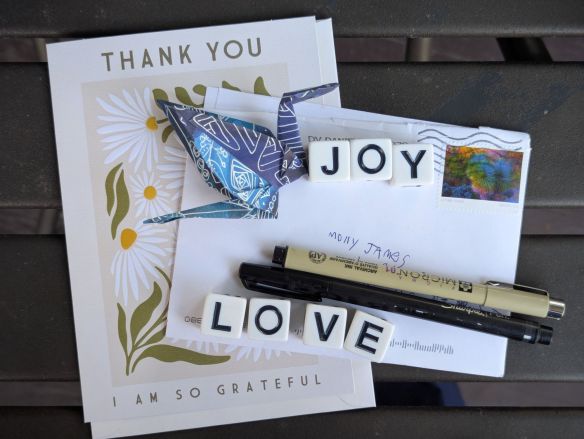
And (if you’ve read my previous post) never be afraid to share the joy of your art — cause we are all artists — with others. The crane’s flying soon!

The Power of Children’s Writing: Notes With a Purpose

Some of my favorite things are notes from my Kindergartners. Often they are notes of love, at other times, they are notes requesting I do something for them.

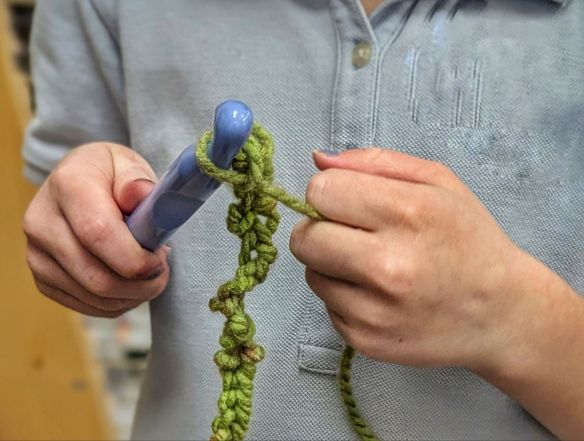
This one was delivered after winter break. She told me her grandmother taught her to crochet over break.

Me: “Wow! That’s amazing. Was it fun?”

Her: “Yeah! Can I show you?”

Me: “Absolutely!”

Her: “Do you have a crochet needle?”

Me: “I do. But not here. I have some at home.”

Her: “Can you bring it in?”

Me; “Sure! Would you write me a note to remind me?”

Her: “A note? (pause) Yeah, I can write one.”

A few minutes later she returned with this note.

How absolutely amazing is this?! Yes, there are some reversals, but look at all the fantabulousness.

  • My name is spelled correctly.
  • Please has the correct vowel team! This means she talked with a friend who knew about vowel teams and they worked together.
  • Crow shay. That has to be my favorite spelling. It’s not conventional, but it tells me all I need to know.

And, perhaps most importantly, she has — with her own beautiful brain, and amazing hand — used writing for her own purpose. She wants a crochet hook, and she knows this will get her one.

I brought in two crochet hooks the next day. She, and others, have been using then happily ever since.

Celebrating Little Moments: A Kinder’s Art of Noticing

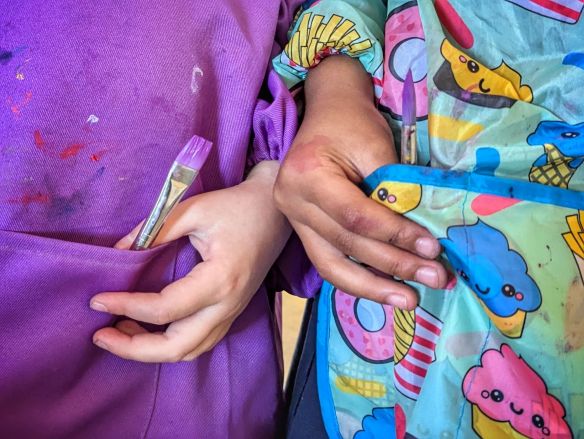
The other day two of my Kindergarten artists were moving excitedly to a new spot in our learning space — paint brushes in hand. Paint brushes that were dripping with lovely purple watercolor paint.

Me: “Careful with the paint brushes. Maybe you can leave the here while you go there.”

Them: “Ok.”

They didn’t drop them off with me. Instead, a few moments later, as I wondered where they and their paint filled brushes were, I heard squeals of delight as the two of them hurried back to me.

Them: “POCKETS! Miss James, we have POCKETS!”

Me: (laughing out loud) “Indeed you do. What a great way to use them!”

Little things. Are there really any little things? Or is it simply the way we look at them.

Pockets — when I don’t need them or notice them — become small insignificant things. But when noticed, found, needed, and used, they become wonderous things to celebrate.

I’ve been wanting to bring more joy, positivity and hope into my life these days. I think this is an answer — notice and celebrate the little things.

Oh! How fantabulous is this?!?! I’ve also been looking for ways to encourage my Kinders to reflect and write. Perhaps a little-things-noticing ritual with a lovely handmade little-things-noticing journal is the answer! Art, writing, and mindfulness all wrapped up in one. This can be a beautiful ritual that allows us to slow down, take a moment, notice, celebrate, and keep track of the lovely little things. I think I can find a bit of time in the morning and afternoon for us to note one little — wonderful — thing.

Fingers crossed I’ll keep you posted.

Here’s a few of mine for right now:

  • sunshine
  • naps
  • sprouts growing
  • birds chirping
  • my flute
  • greeted by name by a kind soul
  • conversations with old friends
  • delicious green tea
  • my inhale-exhale mug
  • a blog post

I wonder how the Kinders will experience this ritual of reflection and writing. I will have to think how I might structure it — the journal, the time, the selling — to help them experience it’s power.

My experience? I found that seeing one thing brought another, and another to mind. Occasionally I felt a bit of reticence — thinking other might find my ritual silly, I think. But, as I brushed that away, I found more things to note.

Let us all learn from my Kindergartners. Let’s notice, celebrate and share the little moments — even when we think others might think us silly.

I’ll go first … “A nap! I got a nap!”

A Tribe of Scribes

A couple months ago, I was invited to attend a writing retreat. I love the woman running the retreat. Ruth is kind, supportive, and funny. She has a big beautiful brain and an awesome heart, and she’s a great writer. So, I said yes.

I’ve been feeling tired, ill, and a bit off my game these last few weeks. Even though I was looking forward to it, I almost backed out of the retreat. I was in an exhausted funk.

Today, mid-funk, the mailman dropped off a package for me. I opened it to find this.

At first, I wondered what crazy person had sent me a book about murdering your darlings. Then I noticed the subtitle and he enclosed gift card. The card said “I’m looking forward to the retreat. Shine on!” The book was a gift from Ruth! Her gift and words were a beautiful balm for my heart and soul.

I’ve only read the cover, the dedication, the table of contents, and the introduction. But, I’m already hooked. I appreciate Roy’s sense of humor, honesty, and ideas. I can’t wait to read more. In Roy’s spirit of sharing, and to encourage you to read his work, here are a few fantabulous snippets:

  • DEDICATION: Roy dedicates the book to journalists, and reading and writing teachers. “You deserve medals as champions of literacy and democracy. Thank you for your service.” I feel seen and valued!
  • TABLE OF CONTENTS: There is just too much to comment on right now. Get your hands on a copy of Roy’s book and check it out for yourself.
  • INTRODUCTION: Roy’s comment about writing guides “… in rare but crucial cases spin my head around like an owl’s at an exorcism!” made me laugh out loud and nod in agreement about equally head-spinning ideas I’ve experienced. Later on, I cracked up reading his response to a question regarding how he managed to be such a prolific writer. He responded, “I write at faculty meetings.” Oh my gosh! Again, I cracked up.

Then I came upon this gem.

When an author writes a good writing guide that author is inviting you — in Frank Smith’s good phrase — to join a club. You may aspire to become a writer, but after reading their work on writing, you can better identify as one, feeling part of a community, a tribe of scribes. (Roy Peter Clark, p. 6)

Too bad I didn’t have a video recording of my response. I closed the book as I drew in my breath and fell back in my chair. I clasped the book to my heart, and gently stroked the cover.

That is what I want — as a human to be part of a club, a community, and as a writer to be part of a tribe of scribes! Thank you, Roy. Thank you, Ruth. Thank you to all the marvelous writers who have already accepted me into the tribe of scribes. I’m grateful and so glad to be here.

Stale or Absolutely Perfect?

I have two tall white cabinets in my learning space. I use the white fronts for many things. Sometimes, things get stale. Yes, stale, just like dry, old bread. They lose their appeal. To be brutal, they are ready to be thrown away. Now, if they are student work, I don’t throw them away. But for emphasis sake, I use that phrase.

I recently removed some of that stale work from those cabinets. Naked — as my learners would say — their stark white color stood out, urging me to repurpose them for something beautiful and created by the children. For a few days, I let their urging ferment in my brain.

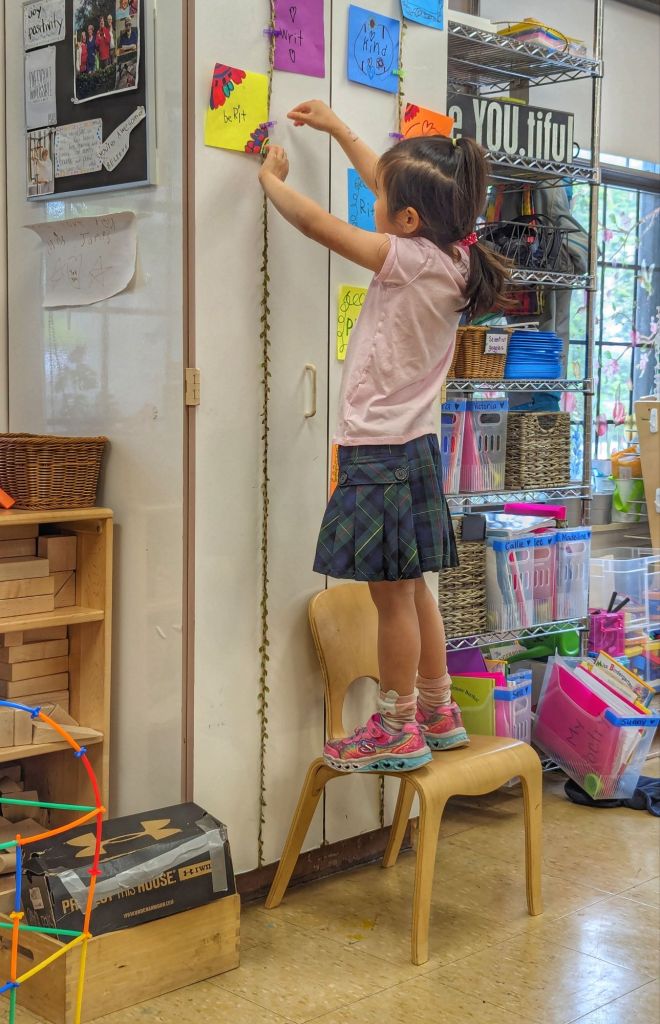
This week I decided to end the year as we began it: with real-life writing. On one cabinet, I wrote: We are … On the other I wrote: We can … I cut 6-inch square pieces of construction paper and left them out for our Investigate and Explore Time with the provocation to cover our naked cabinets with positive things that are true for us. The Kindergarten writers were into it, and quickly filled the covered the bare cabinets with beautiful affirmations of themselves.

The process was great. I enjoyed watching from afar — drawing near only to help when it was requested and necessary. Otherwise, I allowed the Kindergarteners to complete it on their own. Each day I noticed a new entry which filled my heart with joy. Then I saw this one.

Wow! Even though they have things to learn and ways to grow, and times when they are sad or mad and aren’t their best selves, they can still say “We are absolutely perfect.” I love that. I want them to know they are absolutely perfect. This will give the courage to learn, be, and change the world.

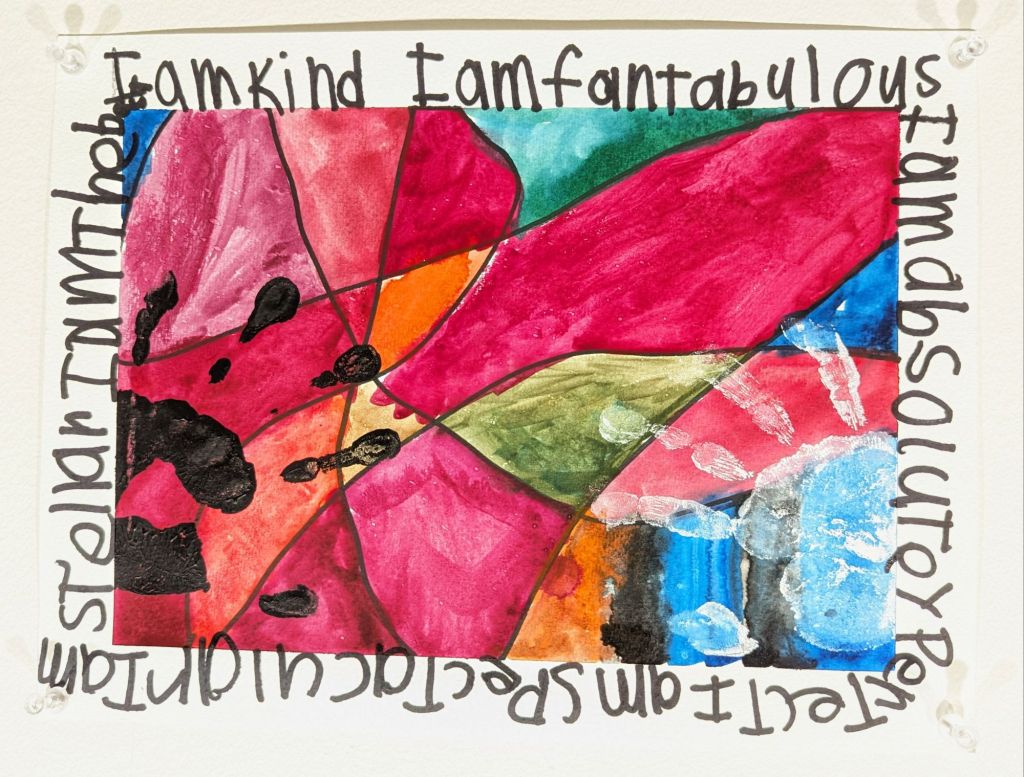
One student had not yet added her affirmations to her abstract art handprint piece. I asked her to finish it, and without hesitation, she sat down in front of the We are cabinet and began writing. Outstanding!

The cabinets adorned with the kindergartners’ thoughts, writing, and doodles add beauty to our room, serve as writing idea resources, and provide positive reminders. Well done, kindergartners!

Juicy Sentences

Once you’re comfy, peel its gentle skin like you would a clementine … dig your thumb at the bottom of each juicy section and pop the piece out.

Kwame Alexander – How to Read a book

Kwame’s book is beautiful. The words are wonderful, and the images are stunning. This quote is one my Kindergartners and I come back to with great frequency. They have been thinking about scrumptious clementine pieces that are so juicy they burst when you bite them, sending clementine juice down your chin, and surrounding you with clementine fragrance.

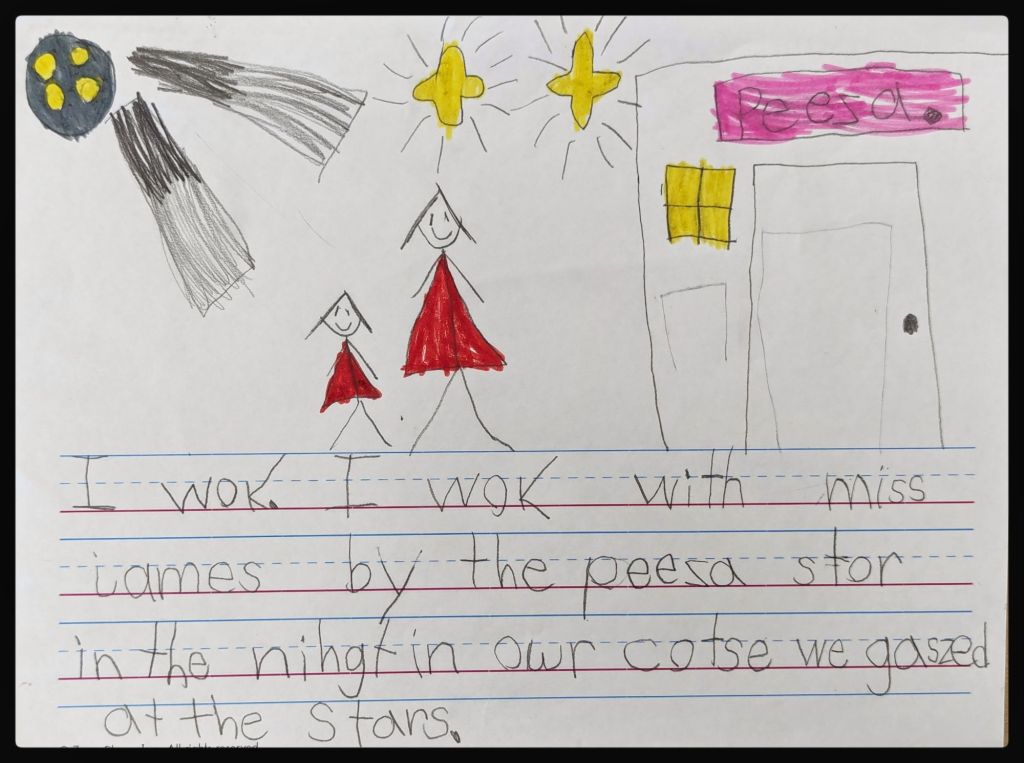
The Kinders are crafting their own juicy sentences. They start with the driest of sentences, and tell only “Who, did what.” Then they use their imagination to say more about the who and the did what?

The juice, flavor, and fragrance of this one got me.

So much to love — her thinking, her writing, her ideas. We’re together, by the pizza store in our matching coats, gazing at the stars! It’s a great place to be.

A Sweet Treat and Reflection

Life has been feeling a bit cluttered lately. A plethora of things are vying for my attention, and filling my to-do ta-da list. Still others are disturbing the peace of my physical space.

So, I breathe, try to do one thing at a time, and begin to tackle the things in my physical space. A vivid mental image of me literally tackling the stacks of things — knocking them to the ground in a feat of physical prowess and dominance, is wildly satisfying and amusing.

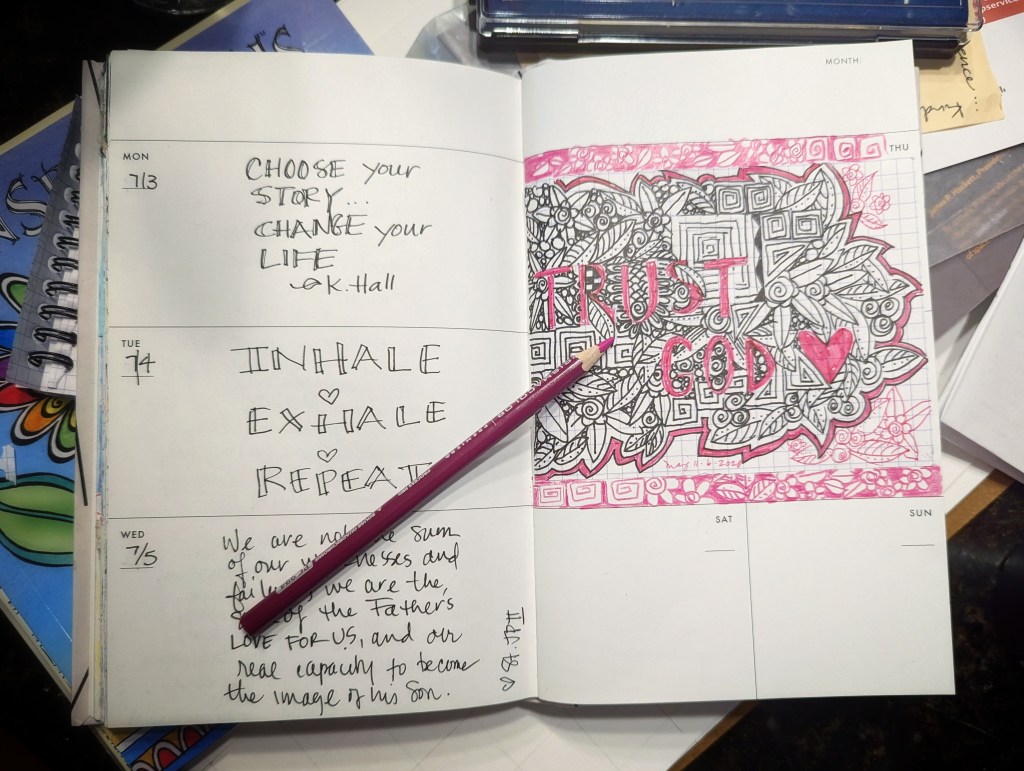
As I recycle, donate, and trash the things I no longer need or enjoy, I flip through many notebooks. In one, I find this sweet treat. I’m pretty sure I did it as I waited for a doctor, or got some sort of infusion.

It was a much needed reminder — from me to me — and as I looked at it, I thought, “I should take that out and put it somewhere I’d see it more often.” Funny enough, even as I was thinking what a great idea that was, I was also thinking, “Take it out? Are you nuts?”

I cannot exactly explain why I was thinking — or perhaps more accurately feeling — that angst. It didn’t make that much sense to my brain, but none-the-less the feeling was strong. I think it has to do with a fear of wrecking the piece, or making it less, or somehow lessening its value and impact for me.

I thought of several things I might do with it — including pasting it in my daily art affirmation and positivity journal. Still reluctant to rip it out, I instead ripped out a blank sheet as a template. I measured, thought, placed, and looked. I repeated the process many times. Finally I realized there were no rules that stated I had to make art in only one day’s space. It is my journal, my creation. I could place the piece wherever I wanted — even centering it over two days.

I considered adding washi tape on the top and bottom border, but couldn’t find it. So, I grabbed a colored pencil, and created my own washi-tape-esque border. I’m quite pleased with the result.

The washi-tape-esque border creating was meditative and zen-like. As I worked, my brain noticed, wondered, made connections and generated questions.

  • Our learners may feel and express things that don’t seem to make any sense. That doesn’t mean they can, or should, stop feeling it because we think it is unwarranted. And just like with my feelings and thoughts, talking to make me want to do it any more. It’s important to remember that sometimes encouraging, reasoning, and/or requiring doesn’t help.
  • Taking concrete steps helped! Making something — using my hands to think — enabled me to iterate, ideate, see new possibility, and create something new and even more impactful. I think an essential piece is that I used MY hands to think. I did the doing and the thinking.
  • How might I be an effective thought partner with my learners?
  • Taking the old art, and incorporating it into my life and art in a new way, required me to reexamine the old piece, find essential elements, and consider ways to incorporate these things on the new piece.
  • How might I incorporate this type of art into my Kindergartners art making experiences?
  • There’s so much to gain from this type of endeavor.
  • What are the connections to student art, learning, doing, and thinking?
  • How might I make help make these connections for and with my students?

I really like the truth that our ideas, art, thinking, writing, (perhaps everything) don’t need to be limited or confined to the original. They can be the fantabulous original, and they can also be fodder for something new and satisfying. Bringing forth something new is often — or is it always? — the purpose and power of ideas and creations. Sometimes the new is a feeling, an experience, or an understanding. Other times, it’s a new idea or creation. As I type, I’m asking myself, and you, if we will be ok when our new idea or thing requires the partial destruction of our original one. And, I’m wondering how we will help our students be ok when they are faced with the same situation.

Write More, Not Less

It’s amazing how difficult it can be to write sometimes. It’s been feeling super tough to write as the summer comes to an end and the school year starts up again. I was shocked when I looked at my blog and realized I haven’t posted in over a month!

It’s not that I don’t have anything to say, instead, I often have too much to say. With so many thoughts swirling in my brain and competing to get to my fingers as I write or type, I end up getting a bit discombobulated. I wonder how to fit everything together. My brain becomes a bird distracted by all the shiny things around me and I end up running off after a new idea. I lose the train of thought that brought me to writing.

This morning I had an epiphany. Perhaps I’m not giving myself the opportunity to say what I have to say. I haven’t developed a practice that allows me to get my thoughts out of my brain and onto the page with any regularity. It reminds me of the feeling I have when I see a friend I haven’t seen in ages and I seem to lose the ability to finish sentences. Instead I speak in fragments as my thoughts trip over each other in their rush to leave my brain and be birthed into our time together.

I need to write more often. Might it be possible for me to establish a practice of daily reflection?

I feel myself begin to break into a sweat. How will I put one more thing into my day? Eeee GADS! Now you want to be a writer and write EVERY DAY!?!?!?!

Yes, I am having a moment of panic.

But, taking a deep breath, I remind myself I AM a writer. I have things to say. I have things I want and need to say. Not every writing needs to be profound. It just needs to capture whatever has captured me in that day or moment.

I like that. I like the connection to joy and beauty and awe. I think this practice will bear fruit in many ways in my life.

Now to let it happen.


And, in the spirit of having a plethora of ideas. I’m wondering where might I carve time out of our K day for me and my Kindergartners to take a moment and just write — as fellow writers!

Communicate and Overflow

I’m reading All the Way to Heaven: The Selected Letters of Dorothy Day. Dorothy, founder of the Catholic Worker, was a writer in all senses of the word. She said:

The reason we write is to communicate ideas … We must overflow in writing about all the things we have been talking about and living … Writing is an act of community. It is a letter, it is comforting, consoling, helping, advising on our part, as well as asking it on yours. It is a part of our human association with each other. It is an expression of our love and concern for each other. *

Is that not fantabulous? It encourages me to, again, let my life overflow into my writing.

It’s been a week filled with emotion and anxiousness, but also prayer and blessings. Wednesday was my 12 year anniversary of being diagnosed with cancer.

It’s a beautiful anniversary, because without it, I would no longer be on the planet. But, it’s also a difficult anniversary. It was such an unexpected, glaring indication of my mortality. And, boy oh boy, a cancer diagnosis isn’t just dipping your toes into all of that. You are thrown into the deep end of the pool. The shock of hitting the water takes your breath away. You submerge. But then, face out of the water, you float, and slowly learn to swim.

This year I had a CAT scan scheduled for my anniversary. How’s that for good planning? (laughing) I didn’t choose the date, and I’m pretty sure I wouldn’t have chosen it had I been the scheduler. Still, in many ways it turned out to be the perfect date for the test.

Dorothy quotes Catherine of Sienna, “All the way to Heaven is heaven, because He said ‘I am the Way.’ “ Then she offers her wish — may heaven be in your heart today. *

The CAT scan, on my anniversary, heightened my fear and worry about the unknown. Out of necessity, I worked harder, surrendered more deeply, and prayed with greater fervor for heaven to be in my heart as I went about my day.

I was patient with the receptionist who seemed to be struggling with her own tiredness. I smiled under my mask and chuckled at my goofy comment to her. I chose to be peaceful as I waited — eyes closed, breathing with purpose and prayer. Then Miriam called me and walked with me to the CAT scan room. Miriam is a funny, talented nurse/tech — who knew what my brown scapular was. She laughed, talked, listened, and brought a bit of heaven to me, and boy oh boy am I grateful! Now I wait with hope.

I came home and crawled into bed for a much needed nap. I awoke to snow. I love snow! It’s beautiful and altogether magical. I fell asleep later that night to the delicate pings of the snowy mix against my windows.

The next morning, I bundled up and headed out to shovel. I remain easily fatigued, and not feeling totally well, but, how could I not go out into that cold, bright, beautiful, snow-filled day? Shovel in hand, I considered ignoring my fatigue and overall feelings of malaise. Thankfully my wiser self prevailed. I did slow, steady work, capturing ridiculously tiny amounts of snow in my shovel. And, I rested — a lot.

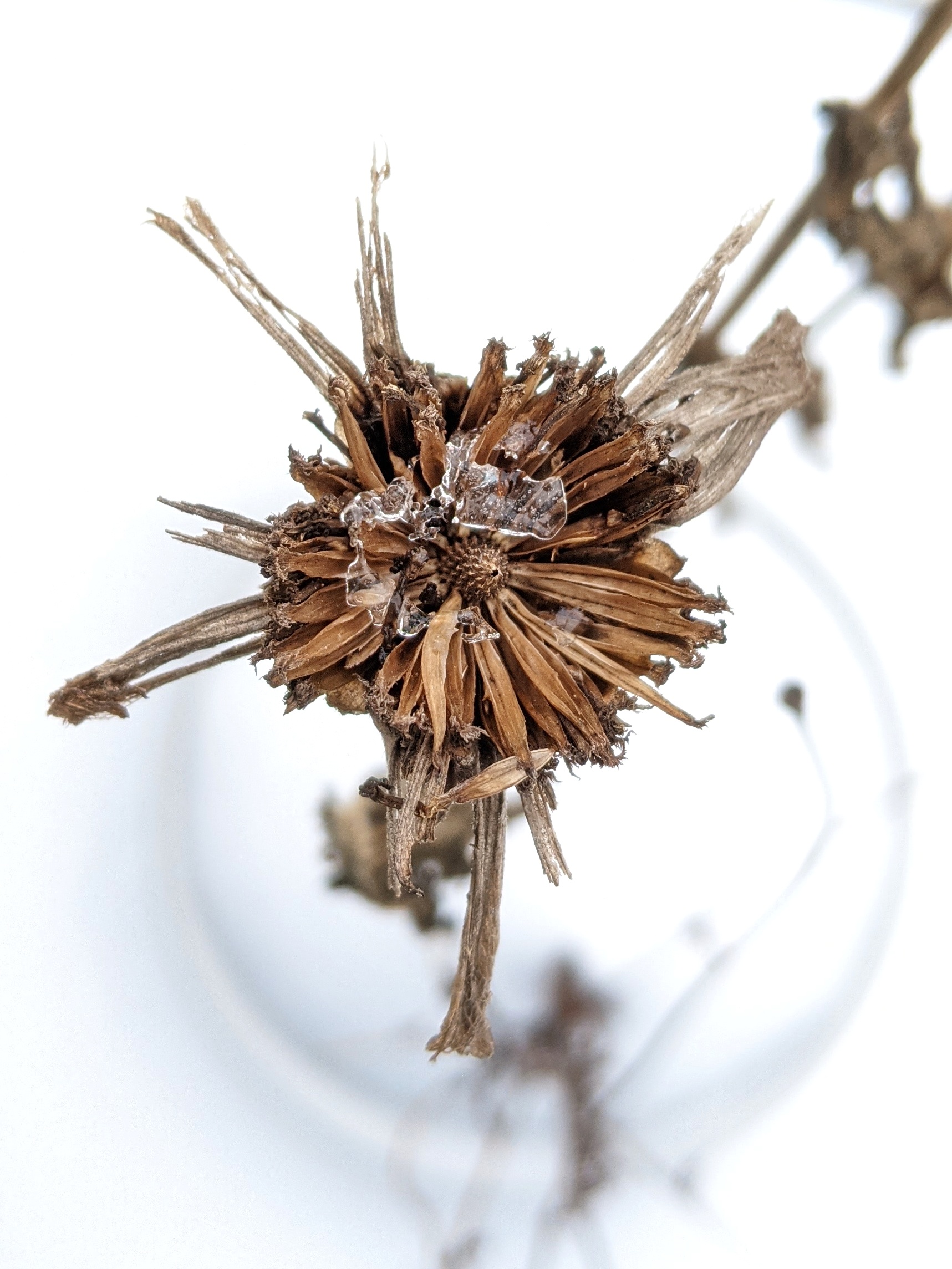
My work and rest routine turned out to be a great gift! The white of the snow was a perfect foil to the texture, shapes, and color of the grasses, berries, seed pods, branches, and flowers that surrounded me as I rested against the end of shovel. The seed pods and flowers provided pockets and pedestals for the ice to take shape. My stillness in the quiet enabled my ears to the hear the sounds of the bird’s flapping wings and chirping songs.

I gleefully snapped shots during each of my rests — sometimes resting more just to photograph. I purposefully chose brilliantly white snow-filled backgrounds with little extraneous visual noise.

When I finished, I sipped hot cocoa and crafted a poem. Hoping to encourage the feeling of soft peaceful silence, I used only lowercase letters. It was funnily jarring to change the uppercase I to lowercase. But, on my second or third read, I settled into it, appreciating the sense it gave that I am very small in this magnificent expanse of life, and snow.

_____________________

brilliant white snow
piercingly cold air
beautiful soft silence
broken only
by the birds’ wings
and sweet songs

shovel, rest, breathe

my breath deepens
my eyes
squinting in the light
see more
my ears
hear more

shovel, rest, breathe, look and listen

i notice a plethora of details
texture and structure
subtle changes in hue and tone
color where I thought there was none
always present
not always perceived

shovel, rest, breathe, look and listen, notice

i am in awe 
of the details
the beauty
and the gifts
of God and nature

shovel, rest, breathe, look and listen, notice, marvel

i try
to capture them 
with my
heart 
mind and 
camera

shovel, rest, breathe, look and listen, notice, marvel, photograph

i imagine and feel
sparkles of joy
with each gift
noticed with wonder
captured with gratitude

shovel, rest, breathe, look and listen, notice, marvel, photograph, be grateful

_____________________

It is incredibly important to fill my days with rest, breath, noticing, wonder, awe, and gratitude.

It is absolutely necessary to acknowledge my awesomeness and strength, as well as my tiredness.

It is essential to be kind and merciful to myself, and others.

As a human, sister, daughter, teacher, learner, writer, creative, artist, coach, and every other thing I am, and way I interact in this world, there is incredible value in silence, brilliant light, kindness, having heaven in my heart, and bringing it closer to others.

I join Dorothy in her wish for the world — May we all have heaven in our heart.

*Both quotes are from All the Way to Heaven: The Selected Letters of Dorothy Day by Robert Ellsberg

It’s a Good Day

I haven’t added anything to my inspirational art journal lately. For some reason I’ve been feeling uninspired, and frankly, unconfident. As I experienced this lack of inspiration and confidence, I thought of my Kindergarten girls and all I ask them to do. Sometimes they are uninspired and unconfident, too. I don’t let them stay in that uncomfortable spot, or use it as an excuse. So, I figured I wouldn’t let myself do that either.

I didn’t immediately make an entry, but at least I noticed what was what, and agreed to make one soon.

As I waited to make an entry, I distracted myself by sorting through my rather large collection of books. I found a few books I am ready to let go, a TON of books I want to read, and an old journal.

I flipped through the pages of the journal. This page stopped me mid-flip.

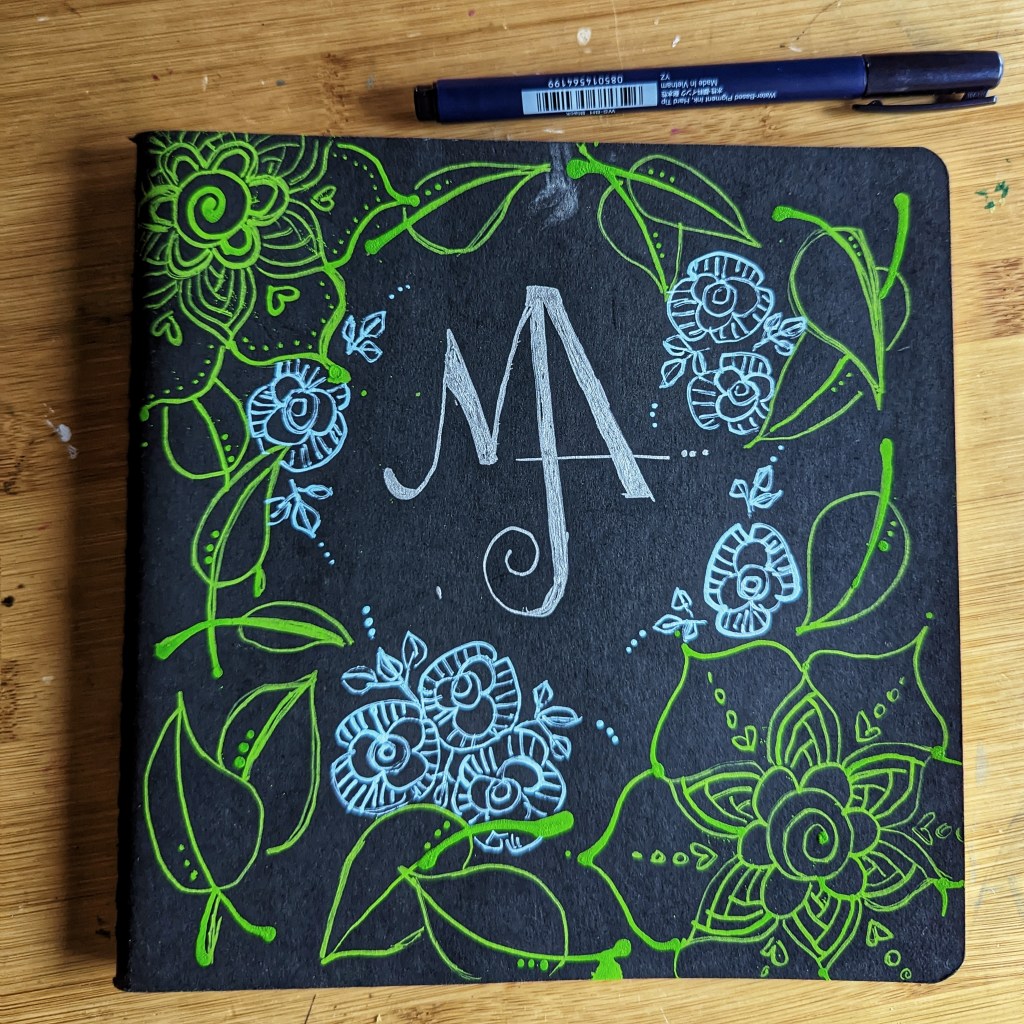
I’ve always admired people who are calligraphy stars, but haven’t yet found my groove with that. Hand-lettering is a different story. I enjoy it, and I’m pretty pleased with my ability.

I remember this hand-lettering adventure. Much like when my kindergartners learn handwriting, I worked to accurately replicate an already created font. It wasn’t simple. I needed to really look at the letters. I endeavored to notice shape, size, angles, relationships between the various components of the letter, and the general feel of the font. Then I took what I noticed, let it inspire me, and created my version of the font. I like it!

There’s a strong connection between my hand-lettering work, and the handwriting work my Kindergartners do. It’s important for me to acknowledge that, and even more important for me to share that with them.

I see at least two reasons to share it with them.

One is to encourage them to really look at the letters. I think sometimes the curiosity that might increase their learning, interest, and enjoyment, gets pushed aside for the rote “learn the steps” method.

The second reason I want to share this with them is to elevate their opinion and understanding of their own work. Rarely do our students see us struggle, practice, or learn new things. Perhaps even worse, the work we ask them to do — writing letters repeatedly — is often perceived as something only for children, or the less skilled. When we share the times our learning looks very much like theirs, we end up elevating their learning, work, and struggle. We normalize it as the way we all learn, become more proficient, and make things our own.

I think it would be amazing if we encouraged our students to create their own hand-lettering. It could be an extension of handwriting, and might even help them become more adept at forming the letters correctly.

Imagine the conversations you could have together about their created hand lettering. They could point out the things they noticed about the various letters, the things they kept the same, the things they emphasized or de-emphasized, what they were thinking, what was easy, what was hard, what they did to overcome various struggles, how they hoped to use the lettering they created, and much more. We could marvel at their noticing, thinking, and creativity. We could notice things about their lettering — how it resembles the handwriting letters, and how it doesn’t, how it makes us feel, and how it inspires us. We could even ask them to teach us how to make it. So much potential for amazing interactions, learning, and growth.

Back to my lettering. I remembered the joy of creating it, so I decided to let that be my ticket back into my inspirational journal. I wrote just one word:

Then I added a few bits of advice for myself. God is love. Be love. Be loved. Beloved. It’s sitting next to my chair, reminding me of the importance and place of love in my life. One might think it’s hard to forget about love. But, I think, sometimes, it’s pretty easy to forget. I want to stop forgetting, and really live love and all its remarkable power.

I flipped a few more pages in my old journal, and noticed this:

and then this:

Have I mentioned lately that I LOVE writing in pencil? Especially a wonderful pencil like the one in the photo — a Faber Castell graphite grip pencil. It is sweet! And no, I don’t receive any free pencils from Faber Castell for recommending them — but boy that would be pretty fabulous!

Again, my thoughts go to my Kindergartners. I understand there are reasons we ask our students to write with particular pencils. But if I love writing more when I use particular pencils, and I know I like my handwriting better with certain pens, mightn’t my students as well? And if they might, shouldn’t I sometimes give them the opportunity to write with tools they love? Yes, I should.

These two pages reminded me of another practice I’d like to incorporate into my day with my students. I like making lists of words — words that inspire me, words that are things I love, words that are things I want to do, or be, or feel. I find joy as I combine the words into phrases – in this case simple two word phrases that are easy to remember and might become mantras. And it’s fun to experiment with various combinations, and imagine things to create with them. Mmm. So good. Fantabulous, even!

So, I’m back on track with my inspirational journal. I am excited to continue my hand lettering work. I’m reminding myself to love, allow myself to be loved, and remember I am the beloved of a God who is love. And, I have some great ideas I want to bring to my fantabulous, big-beautiful-brained Kindergartners!

It’s a good day.