The Power of Relationships in Learning

Relationships are powerful and essential components of learning.

I’m not the only one who knows this is true. Many educators — from Vgotsky, to Frances and David Hawkins, Harvard Graduate School of Education, and Reggio Emilia (and RE inspired educators) — speak of the importance of relationships for learning, understanding, creating, and thinking.

Inspired by Reggio Emilia I value relationships between parent, teacher, learner, and the environment. – and do my best to cultivate them. And, not just my relationship with each of them, but their relationships with each other. Through these connections, learners develop relationships with:materials, thoughts and ideas – their own and others, themselves, play, other learners, and the importance and value of struggle.

I’m always reminded of relationships as the school year ends and my summer begins. My relationship with time, energy, rest, exploration, play, creativity and my own physicality are blessed with opportunity and possibility. And of course, my relationships with my current learners and parents transition and change.

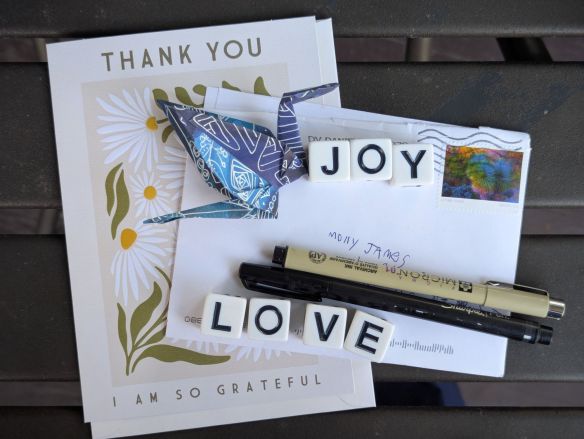
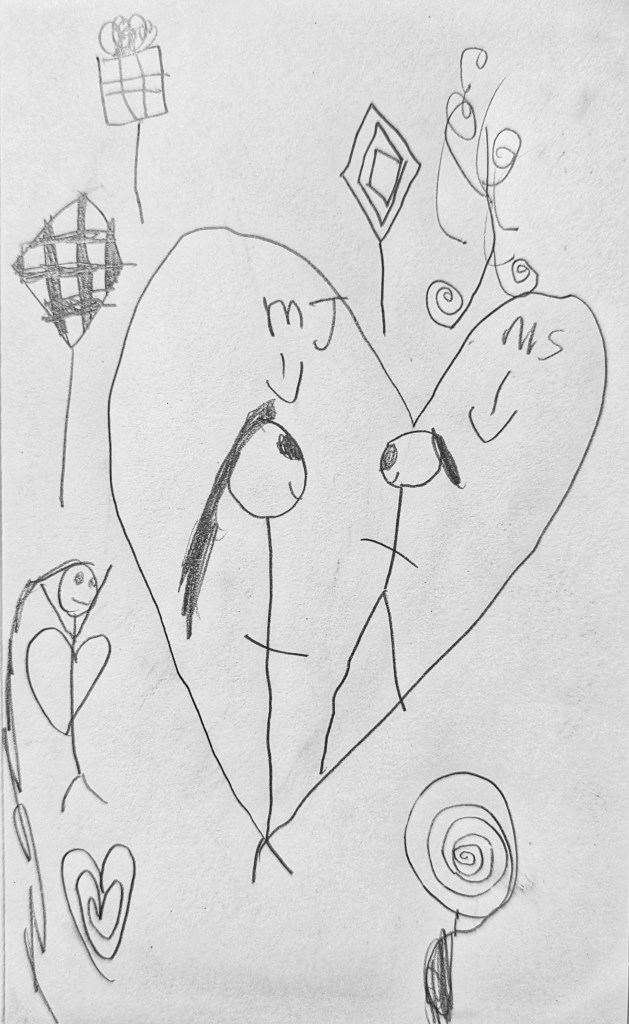
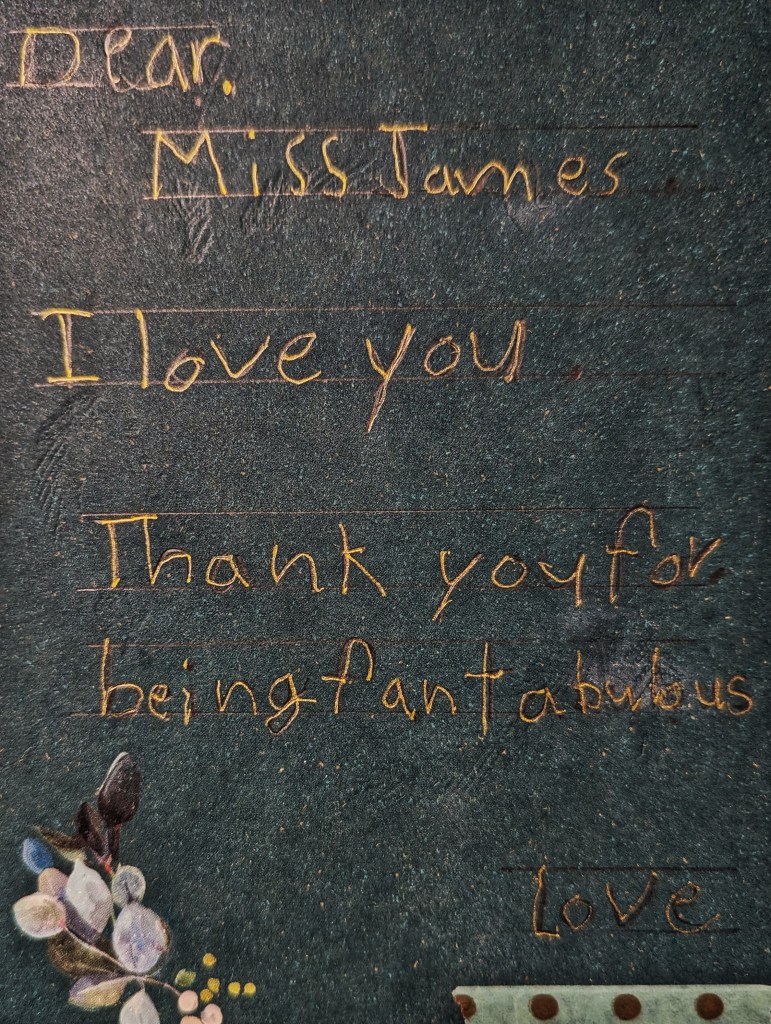
I never cease to be amazed (and edified) as I experience the power, essentiality, and inspiration of these relationships from learners new and old. I never take for granted the gift it is to bump into a former student, or receive a note in my mailbox. Here are a few that touched and reminded me of the power of these relationships.

An 11th grader saw me moving things around in the classroom. It’s a normal part of my end of year routine — but not a normal one for her.

11th grader: “What are you doing, Miss James?”
Me: “I’m moving some of my things out of the classroom.”

A look of confusion, then shock and horror, crossed her face. She asked a string of questions in rapid fire: “Are you leaving, Miss James? You’re not leaving are you? You can’t leave! What will the Kindergartners do? What would we do? You can’t leave!”

I took a breath, as I looked into those loving and panicked eyes of hers, and said, “Nope. I’m not leaving. Just moving some of my things.”

She looked at me as though trying to decide if I had told her the truth. Then she took a breath and said, “Oh, good. We need you.”

Then a 7th grader left me an amazing letter in my mailbox telling me about how I — and the way I teach Kindergarten — has continued to impact her life and learning. “Even though it’s been a while since Kindergarten, I still remember how your creativity, kindness, and positive energy made learning so much fun. You helped build the foundation that inspired me to grow, explore and believe in my myself. I’ll always be grateful for the start you gave me.”

And then there’s my sweet Kindergartners. One mom emailed me to share her daughter had been asking when she might have a playdate with me! And then, I a letter in the mail from another KJer proclaimed “Miss James. I love you. I loved being in KJ. Thank you for a great year. You are the best teacher.”

I know they don’t have a lot to go on when they proclaim me the best teacher. I understand it means they have experienced goodness, kindness, and acceptance in me. It means they have experienced and know that I am their (to quote Rita Pierson’s TED talk) “champion, an adult who will never give up on them, who understands the power of connection, and insists that they become the best that they can possibly be.”

Never underestimate the power of love, joy, relationships, understanding, acceptance, and dogged determination that we should all be the best we can be.

And (if you’ve read my previous post) never be afraid to share the joy of your art — cause we are all artists — with others. The crane’s flying soon!

You Love Us

The day before winter break I was surrounded by students as we talked about our upcoming performance and I opened various cards and gifts. One of my Kindergartners looked at me and asked “Miss James, why does everyone say you’re the best?” All eyes turned to me as they awaited my response. Genuinely curious I responded “Hmmm … why do you think people say that?”

There was some chatter amongst themselves and then they turned to me and said “Because you love us.”

I responded “Yeah, I do love you. Do you think that makes me the best?”

They responded “Yes.” 

It’s an answer that gets to the heart of the matter. I do many things. I am always thinking, changing, making, trying new things, talking, explaining, laughing, teaching, learning, guiding, and being with them. But at the center of it all is love. I love them.

What the educator does in teaching is to make it possible for the students to become themselves.

Paolo Fiere (https://civiceducator.org/paulo-freire-quotes/)

I trust my love makes it possible for my students to become themselves — their best truest selves. Yes, of course my diligence, my fantabulousness, my work, my thought, makes it possible, but mostly it’s my love. All that other stuff grows in strength, brilliance, and awesomeness because of love.

Funny, I thought this would be a quick post about the power of love in the classroom. But, as I wrote I was reminded of a conversation I had years ago with someone in the educational field who discounted the idea of love. They declared it was only a word and would fail at some point. I was aghast. Love only a word??? Love would fail! Never. Might I fail, yes. Might I be less than loving? Of course. But when I say I love you, I mean it in all the power it can hold. Love isn’t a sentiment. It’s a way of being. It’s a choice.

Anyway, that recollection urged me to look for a way to put into words what I mean when I say I love my students.

Andrea Bonier PhD wrote about healthy relationships in Psychology Today. When I read her article, I thought about my students, my love for them, and theirs for me. Here are her 11 elements of a healthy relationship (and one of mine). Perhaps they don’t contain the fullness of what my love for my students is, but, they are a concrete way to see the love I have for my students.

  • Trust – I operate from a place of trust. I trust in their word and their abilities. I live in a way that enables them to trust me. I encourage them to trust themselves and each other.
  • Communication with openness and honesty – We communicate a lot — sharing our feelings, our ideas, our wondering, our apologies, our needs and wants. I do my best to model the best form of communication — honest, respectful, and powerful.
  • Patience – Phew. Every relationship requires patience. Relationships in a classroom often seem to require more. I do my best, but when I fail, I apologize and try to do better. My students do the same.
  • Empathy, healthy conflict resolution, and individual boundaries – I’m always trying to increase our Emotional Intelligence. Are we self aware? Are we socially aware? What are we feeling? What might they be feeling? Have we talked with each other? Have we really listened to what is being said? What did I hear? How might I behave because of what I’ve heard and know.
  • Affection and Interest – Love is action, but there is also feeling, emotion, and affection — even in the classroom. Learning to navigate that is a huge part of loving well. And interest — oh my yes, we all want to share about ourselves. We want others to be curious, interested, even amazed. I always operate from the position that nothing they do or are can be relegated to the “Oh that’s so cute.” category. There’s always more — it’s hard work, it’s imaginative, it’s creative, it’s fantabulous, it’s worthy of my time and attention.
  • Flexibility – Whenever it’s possible I am flexible and give choice and wiggle room. For me it goes back to trust, empathy, and affection.
  • Appreciation and if I might add valuing – I appreciate and value my students and let them know. I appreciate and value their hard work, their humor, their thoughts, their courage, their love, their willingness to try, and much more.
  • Room for Growth – Gosh yes, this is a huge part of love. We always have to give others the room to grow and change. We are not who we were yesterday, or for that matter even a moment ago. Allow for growth and when appropriate, communicate about it.
  • Reciprocity – There are many opportunities for reciprocity in our learning space. Learning from one another, doing for and with one another, supporting one another. These are not just roles that I fill. I encourage my students to teach me, to show me, and I let them know that I’ve been inspired or learned from them. I accept their help with grace and gratitude, even when I know I can do things faster and or better than they can. I check in with them often, and I relish the moments they check in on me.

Magnets on the Trash Can

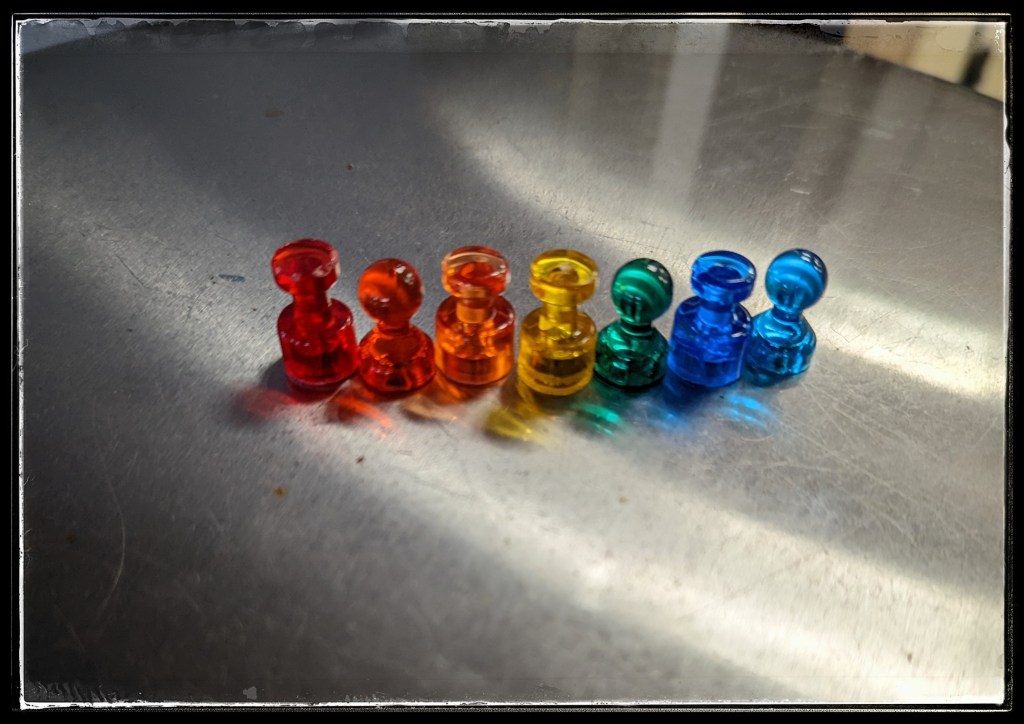
It’s a regular occurrence to find magnets on top of our classroom’s trash can. Sometimes they are arranged in rainbow order, sometimes they are grouped at various points on the lid. I often have to stop kind visitors who want to help by returning the magnets to the whiteboard.

“The Kindergartners put them there.” I comment. “When I need them, I take them, but for now, I let the Kindergartners store them on the trash can lid.”

Let me explain. The Kindergartners are exploring many things by having the magnets on the trash can lid rather than in their place on the whiteboard.

  • PHYSICS and ENGINEERING – How many magnets do you need to raise the lid without touching the lid or the foot pedal? Where is the best spot on the lid to put the magnets? What if you have a group that works and you separate the group into two smaller groups?
  • COLOR – What is the rainbow order? Where do the various shades fit in?
  • MAGNETIC POLES and PROPERTIES – Why don’t these two magnets stick together? Can I get the magnets to attract one another through my finger? Through all my fingers? What exactly are poles of a magnet?
  • COLLABORATION, SHARING, and PROBLEM SOLVING – “We need more magnets, Miss James!” they say. “That’s all we have right now. The others are holding up your math work.” A little while later, several Kindergartners are gathered around the whiteboard, gently moving magnets so that papers share the magnets thereby freeing some for their use!

I have no idea what new ideas and exploration may happen after winter break, but I’m excited to find out. I have other small magnetic bits, I may add them to the mix. We shall see.

Breathe, Pause, Look, and Know

As my day ended, I I was feeling less optimism than I like. I was looking, but not seeing the whole picture. I looked at my day and the week behind me, and saw moments of stress, and times where I lacked patience and reacted instead of responded. I noticed the times my students reacted instead of responded, and was pained by the reminders of the times they were unkind to one another, and the times they struggled with their learning and being.

Then, as I was heading out, I turned back to our learning space as to shut off the light. As I did I felt my inhale and my exhale. As I took that breath, I paused.

First my eyes fell on this bulletin board. My breath deepened as I saw the faces of each of my kindergartners — created by their own hands, using their big beautiful brains and awesome hearts. I was struck — as I so often am — by their awesomeness, their courage, their amazing willingness to try, and their remarkable ability to do.

As I turned once more towards the door, my gaze fell upon this white board. We read Herman and Rosie together earlier in the week, and — inspired — we created things we loved. We shared a bit about ourselves with this art.

Again, my breath deepened, and my heart filled with peace and joy as I saw — in my minds eye — each one of those beautiful humans working hard to find a way to place things they loved onto the paper, and share it with each other. We are fantabulous humans. We are doing remarkable things together. We are learning skills. We are developing and strengthening mindsets and thinking practices. We are breathing, and growing our awareness and understanding of self and others. We are existing together, taking risks, trying new things, sharing, learning, growing, and being us. Sometimes we make mistakes. Sometimes we are impatient and unkind. Sometimes we react instead of respond. But, we are also kind, and helpful, peaceful, thoughtful, and loved.

I was thinking about all of this the other day when I heard Nicole Avant say “It takes time.” I thought to myself, “It takes time. Yes! It takes time! Learning. Living. Being our best selves. Figuring things out. Being in community. It. Takes. Time.”

Wonderful things are happening in Kindergarten. Wonderful things are happening in my Kindergartners. Wonderful things are happening in me. It takes time, and each one of those moments in time is filled with opportunity, grace, and possibility.

Intent-based Leadership in Kindergarten

My brother just hipped me to the concept of Intent-based leadership. He sees value in adding it to our coaching practice. It sounds promising so I’ve started watching the plethora videos he suggested. As I watch I have to say I agree with him, and I’m thinking — “Wow! This isn’t just a good idea for our fencing team, this would be great to share with my Kindergartners!”

Leadership, responsibility, intent, learning, in Kindergarten
(created the photo art with goart.fotor.com)

Intent-based leadership looks like another awesome way for my Kindergartners to grow in their CASEL 5, as well as, academic excellence and joy. It will encourage my students to think about what they know, what they don’t know yet, what they’re doing, why they’re doing it, and what and how they’re learning. My hunch is it’s going to be a powerful tool in the classroom.

Intent-based leadership was developed by L. David Marquet, while a Captain in the US Navy as a Commander of the nuclear submarine Santa Fe. Two quotes on his website hooked me! (I’ve adapted them for the classroom.)

Imagine a school (work place) where everyone engages and contributes their full intellectual capacity. A school (place) where people are healthier and happier because they have more control over their work – a school (place) where everyone is a leader.

Teaching (Leadership) is communicating to students, colleagues, and parents (people) their worth and potential so clearly that they are inspired to see it in themselves.

How fantabulous is that? I’m still exploring and pondering, and there are a gazillion good ideas to consider, but here are five of my “OH!” and “AHA!” moments regarding using intent-based leadership in the classroom

#1 There isn’t one source of power, information, and leadership on the nuclear sub or in our classroom. Students and teachers share in the responsibility of learning and growing a fantabulous classroom community.

Do I have a lot of information as the teacher? Yes. Do I bear a large portion of the responsibility? Yes. Do I have a considerable amount of power? Yes.

However, do I have all the information as the teacher? No. Do I have all the responsibility? No. Do I have all the power? No. My students also have a considerable amount of information, responsibility, and power.

My Kindergartners are knowledgeable about many things — they understand what they love, what motivates them, what they think they know, what they think they don’t know, what they actually know and don’t know, what’s going on with them and their friends, what’s going on at home, and so much more.

Ask any of my students if they have any responsibilities in our classroom. Each will say yes. They have class jobs. They are responsible for how they behave, what they say, what they do or don’t do. It sometimes takes them a bit to realize just how responsible they are. Here’s a common conversation.

Student: “My mom forgot to put my folder in my bag, Miss James.”
Me: “Your mom forgot to put your folder in your bag?
Student: :Yes.”
Me: “Whose folder is it?”
Student: “Mine.”
Me: “Who forgot to pack it.”
Student “My mom.”
Repeat until ….
Me: “Who forgot to pack your folder?”
Student: “Me?”
Me: (with a big smile) “Yup! Hope you remember tomorrow!”
The folder always makes it in the next day.

My students are strong, rich, and powerful. Some understand that and use it well. Others don’t realize the power they have. Still others know they have power, but don’t always use it in the best way. I’m eager to help them recognize, embrace, and use their power well. The fantabulous humans in my Kindergarten and I are going to have a remarkable leadership journey together this year!

Our classroom community will flourish when we all co-exist as bearers of knowledge, responsible classroom citizens, and powerful leaders. As we step into our leadership opportunities, listen to one another, reflect upon what we hear, and value one another’s ideas, my Kindergartners will begin to blossom. They will experience and understand themselves as valuable and essential partners in our classroom community and in their learning journey.

If David is correct — and all the data suggests he is — this will reduce tension in the classroom while increasing productivity and happiness.

#2 It’s valuable to know what you intend to do, why you intend to do it, and how you intend to do it.
There are times my students need to do what I tell them to do. But there are other times when they are able to choose between various options. It would be amazing for them to be able to choose based on what is most valuable and helpful to themselves and their learning.

For instance, in reading they might listen to reading, read to someone, work on writing, or do some word work activity. How do they choose what to do? Do they simply follow a schedule I set up for them? If so, then they intend to follow directions. There is value in following directions that is true, but there are also times when it would be good for me to allow them to decide what they intend to do.

For instance perhaps they intend to — share a favorite book with a friend, or listen to reading so as to learn about snakes, or do word-work so they can learn their sight words and thereby grow as a reader. How awesome is that? They understand why they are doing what they are doing, and are working with intrinsic motivation.

I want them to know that even if they haven’t received specific directions from a teacher, they can still do wonderfully productive and fantabulous things. I want them to be confident in their ability to think, reflect, and make good decisions. And, I want them to actually make those good decisions.

This will require a good deal of trust on my part. I will need to trust myself, my students, and the process. And, I will have to be willing to take it one step at a time.

I know I will need do a good bit of frontloading, modeling, and scaffolding. We will have to build relationships, trust, and skill. There will be many discussions: What are we doing? Why are we doing it? What did we experience? What do we want to experience? What did we learn? How did we learn it? When might we do that again? Is there anything that might work better?

The process feels incredibly daunting, and, at the same time, amazingly powerful and exciting.

#3 Student: “I intend to …” Me “What am I thinking right now?”

When my students tell me what they are motivated to do, and what they intend to do, it will be important for me to engage in conversation with them. Sometimes it might be — tell me more. Sometimes it might be “What am I thinking right now?” These questions allow my students to take ownership of themselves and what they intend, while at the same time having the benefit of my thoughts, experiences, and sense of things.

Some of the things I’m thinking might be:
Is it safe? Convince me that it’s safe.
Is it productive? Convince me that it’s productive.
Is it the right thing to do? Convince me that it’s the right thing to do.
Is it kind? Convince me that it’s kind.

This type of exchange is a learning experience for my students and myself. I get to learn what they’re thinking, and why they’re thinking it. I discover areas that aren’t clear to them and that might benefit from greater explanation or experience. They get to think through the process, consider their actions, and remember the purpose of the particular learning moment.

Again, I’m struck by the enormity of the process. And yet, if my goal is to begin to help my students become their best, most brilliant selves, I must take the chance. If I hope to help create not just students who can do what I ask them to do, but humans who can make good decisions and impact themselves and others in powerful ways, then it’s time to give it a go.

#4 We are all leaders and all followers

This isn’t about anarchy. We are all leaders, and all followers. We cannot just choose to intend to do something that is against the guiding principles of the organization. We choose to be part of the organization — in my case, my students’ parents choose to have their children be part of our classroom community. After making that commitment there are certain ways we must comply. For instance we must do our best, be kind, and treat each other with respect. There are other ways we can exercise our leadership and creativity. It’s always about learning and growing and being our best possible selves as individuals and a community.

#5 You can do it, *Molly (*Insert your name here.)

In one of the leadership nudges, David suggests we use our name when encouraging ourselves. Instead of “I can do it.” I would say “Molly, you can do it.” At first it feels a bit silly, but after trying it, I like it. David posits that using the third person way of speaking to ourselves puts us in a bit of a less emotionally charged space. I experience it as though a kind friend is giving me the encouragement. I’m definitely going to suggest it to my Kindergartners. I think it will be valuable, and be worth a few chuckles.


So, there you have it. I intend to embark on the profound journey of intent based leadership with my Kindergartners this year. And, I intend to have a fantabulous year together. Wish me luck!


Here’s a bonus nugget so you can get a feel for intent-based leadership from David himself. The three name rule. I’m thinking about how to incorporate it into our classroom community.

A Slice of Life

It all depends on how you slice it. Pie, cake, quiche, and life. Cut it one way you have the remarkably crunchy crust. Slice it another way you get the creamy filling overflowing with delicious bits.

I’m really digging the idea that the stories we tell ourselves depend upon how we slice up that pie that is our big beautiful life. I’ve got a lot to appreciate, and it’s time I stopped overlooking those joys.


Slice of Life #1 – Glorious weather

The weather this past week has been glorious — warmer than usual. I’m not sure I’m ready for the heat of spring and summer, but for now I am enjoying the brilliant light and warmth of the sun.

Sun through the window
Warms my feet
As I sit and move
Balanced 
Upon the big red ball seat

Watercolor covered gesso 
Intrigues me
Paper protected
Colors running free
Possibility abounds

Slice of Life #2 – The woods were spectacular.

We set off on the hike with less layers, and no snow spikes. Amazingly enough, just a few feet into the woods, we encountered ankle deep snow covering the path for as far as the eye could see. Back to the car we went. Spikes strapped to our boots we set out again. 

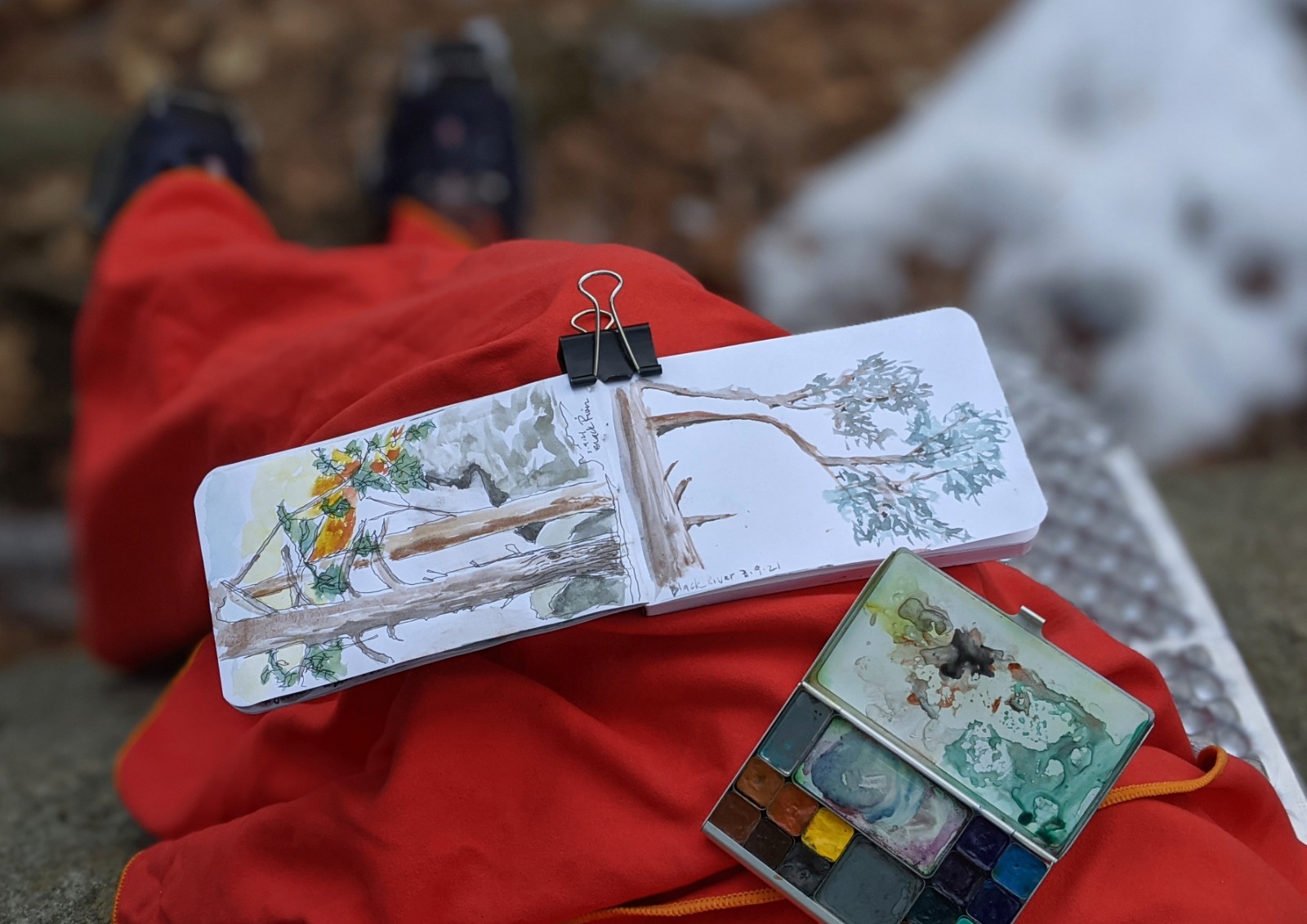
Walking in the snow was a struggle — slipping, sinking in, pole and spikes sometimes sticking. We chuckled about the struggle, reminded one another of our growing fitness and ever present grit, and continued towards a favorite spot to sit, chat, pray, and paint. Thankfully we’ve dialed in our hiking gear fairly well, so we’re able to spend a long time sitting before the cold starts to sink in.

Talk about small joys. The list is long: 

A thermarest sitting pad
Layers, lots of layers
Woolen Wright socks – warm and thin, my perfect combo
Easily carried and eaten snacks, which happen to be yummy and healthy
Watercolors
A fantabulous travel brush
My tiny watercolor journal
My even tinier art-toolkit palette
Sun
Snow (Have I mentioned lately that I love snow?)
Blue sky
Amazing shadows
Beautiful trees
Rushing water
Chirping birds
Us 

Slice of Life #3 – A Sprawling mess

This sprawling mess of tools is taking up a rather large area of the room. I must watch my step to miss the jigsaw blade, the gigantic screwdriver, and the twist of the extension cords. 

It’s a mess for sure, but a beautiful, joyfilled, awesome mess. Why? Let me count the ways. It means I have the opportunity to make, fix, do. I have power. I have tools. I have a space. I have a brother who helps me wield these tools in wonderful ways. And, I now have a working sliding door for my bathroom. YAY!!! 

Slice of Life #4 – Creativity

Creative artistic endeavors
Feed me and fill me with joy
Acrylic paint, papers, glue
Possibilities abound

Ugh and Ah 
In the span of a few moments
The change precipitated by a simple 
Flip of the page

My fingers 
Manipulate the pieces
Ripping, moving, changing
As my eyes and brain consider

Matching spots and pieces
My fingers glue
And coax the collage 
To take shape


I wouldn’t be me if my discoveries didn’t make me think about my teaching practice.

Wouldn’t it be great if we sliced things just right for our students and their parents?

When we talk to them, let’s point out and enjoy the delicious juicy bits. Let’s celebrate all the great ingredients we have at our disposal. Let’s collaborate to change the recipe to showcase the awesomeness of each particular pie. Let’s adjust the temperature on the oven so the last bits of egg custard are cooked beautifully.

Pie, cake, quiche, life, and learning. It’s all how you slice it.

Curiosity, Courage, and Creativity

Curiosity, courage, and creativity have been my constant companions these past few months. These three emotions, mindsets, and actions — they seem to be all three — help me survive and thrive with cancer; increase my experience of joy, awe, and wonder; and facilitate and strengthen my making and learning.

I’ve been making a lot of art lately. Perhaps because I have more time and opportunities for mindful engagement, I’ve had a uniquely fantabulous experience as I create. I seem to be able to watch myself make art — almost as though I were watching someone else. The closest I can get to explaining it is to say it’s like metacognition for art and creativity. I’m present, curious, and aware of what I’m doing, how I’m doing it, what I’m feeling, what I’m noticing, and what I’m thinking. I gotta say, it’s fascinating.  

I’ve been primarily studying and playing with watercolor and various kinds of sketching. The other day I watched a tutorial video with Liz Steele over at Art Toolkit. Wow, she has a beautiful process and product. I’m fascinated by her use of watercolor to lay down structure, and her balance between precise thinking and loose relaxed lines and painting.  Before I even finished the tutorial, I grabbed my watercolors, marker, and a black and white photo of a church I love, and set to work.

My curiosity  — Would her method work for me? How will it go? How will I feel?  Might I do that? Can I adopt her loose line method? Can watercolor really give me that structure? — combined with my love of making, gave me the courage to try.

Is it perfect? No. Was it fantabulous to try? Yes. Did I learn anything? Yes. Do I want to keep experimenting? Yes. Do I have more questions now than when I began? Indeed! Did I buy another journal to use for my urban and life sketching? You bet!

I’ve since subscribed to Liz’s blog, found Urban Sketchers, am waiting with anticipation for Liz’s book to make it out of quarantine, and am resisting the urge to buy any other books. There’s so much to learn!

My curiosity propels me, and, I’m noticing, helps me to engage with my process and art in an almost detached way. I’m less worried about trying new things, and when I make mistakes, I recognize them as opportunities rather than disasters.

Here’s an example. I’ve been making folded books to send to friends during the pandemic. As I flipped through one of the books, I saw the same quote on two consecutive pages – UGH! I didn’t want to redo the whole book, and I wanted to maintain the structure of a single sheet folded and cut in such a way as to create a folded book. What was I to do?  I took a breath and a moment to think and wonder “How might I … ?”

After a bit I realized I could cut the page, and paste in a piece of my collaging stash.

By approaching the mistake with curiosity, I was able to see it as an opportunity rich with potential and possibility. The problem opened my eyes to ideas I hadn’t previously considered, and encouraged me to make connections I hadn’t yet made. It turned out to be a happy mistake as I discovered a new way to create the books while adding color, interest, and a unique place for me to add art and inspiration!

Curiosity isn’t always all I need. There are times I am curious and still afraid. Just the other day I was working on my purposely wonky mandala-like designs. I had finished the design and inked in all the various elements. I loved it. My plan was to add color with the watercolor glazing technique — laying down light layers to create shades and depth of color. But, as I looked a the piece I hesitated. Dare I take the next step? Dare I follow through on my desire to try watercolor glazing? Dare I let curiosity lead me to take the risk of putting color to the paper — and possibly wrecking it. Eeee gads.

I did all those things, but not without first stirring up my courage. It’s remarkable, really, how much courage I sometimes need in order to do things, even, and perhaps especially, things I very much want to do. 

I made a few copies of my work so I could begin to experiment with the watercolors before placing them on my design. As I played with the colors, I noticed how they interacted with one another, and how they presented when placed together. It was fun, it taught me a lot, and it increased my confidence.

While experimenting and painting my actual piece, I was constantly stopping, looking, thinking, wondering. I looked from different angles — sometimes by changing the angle of the paper, and at others the angle of my head. I read an article that suggested the angled head posture is a sign of curiosity — trying to understand, to see in different ways, and to orient our ears in a way to gather more information. How cool is that? I laughed to myself thinking, ah, that is what I do when I’m listening or deep in concentration — nice to know it suggests I’m always curious and helps me learn.

My painting process was a blend of intuitive work and critical thinking. I was happy to have the time, quiet, and opportunity to experiment, notice, wonder, and learn. I was fascinated by my eyes growing ability to distinguish between very subtle differences in color. It was interesting to become aware of the things I saw, and didn’t see, each time I looked. It seemed my brain was able to perceive new things with each new look — things my eyes had already seen but my brain hadn’t been ready to process.

I’m super happy with my process, and product.

So, back to my wonderful companions — curiosity, courage, and creativity. 

Curiosity.

Curiosity encourages me to engage and persevere. The curious person is constantly asking questions, and looking to discover new things. I love when it opens the door to new ways of seeing by pushing me to ask questions like why? and why not?

Creativity.

Creativity births new ideas and opportunities as I problem-find and problem-solve. Creative thinking encourages me to make new connections and see possibility.  It encourages me to be open to new ideas, and enables me to create things and ideas that didn’t exist before. Creative thinking is crucial in our ever changing and increasingly complex world.

Courage.

Courage fosters my curiosity, creativity, and learning. With courage I am more willing and able to take risks, think, and learn.

My best work, learning, and enjoyment come when I am curious, courageous, and creative. If my best work, learning and enjoyment are championed by curiosity, courage, and creativity, so too for my students.

So I’m back to asking questions, and thinking about why, why not, and how might we?

Metacognition:

Do I encourage metacognition– even in Kindergarten? Do I teach them the word? What structures are in place in my learning environment that encourage my learners to value their own thinking — sometimes even over the solution?  When do they have the time to notice, think about, and document their own thinking? Perhaps even more powerful  — how do I discourage it? What are the subtle ways I value the end result over the process?

Curiosity:

Do I value and model curiosity? Am I teaching my students to wonder, ask questions, and strive for understanding? Do I provide time, opportunity, and my presence to their questions, wondering, learning, and understanding? And again, how might I unknowingly or unintentionally discourage questioning and self directed learning?

Courage:

Do I honor the fear my learners may feel — especially when they are deeply invested in learning or doing something? What strategies do I teach them to help them increase their own courage? Have I created an infrastructure in my learning space that can help them find the right level of challenge — neither too easy or too hard — so as to grow their courage? Do my learners and I celebrate mistakes, and actively search for learning and beauty within our mistakes? Am I courageous enough to allow my learners to fail? Am I creative and sensitive enough to help them learn from their mistakes and fail forward? How might I be foiling their attempts to strengthen their courage?

Creativity:

Do my students understand the power of creative thinking? Do I encourage dreaming, wondering, fantastical ideas? Is there time in the day for my learners to experiment, tinker,  and make? Am I encouraging creative thinking as well as doing? Are my learners empowered to find problems that mean something to them, and search for solutions? Am I patient, courageous, curious, and creative enough to find ways to allow my learners to find their own answers and way of doing things? Do I share my creativity without usurping theirs?

So much to consider. For now, I will let these thoughts ferment in the deep recesses of my mind. I’m on leave, and need to focus my energy on my health.

Possibility and Fantabulousness in Quarantine

The other day a colleague shared a link about how to force a copy to be made of a google doc, sheet, slide, or drawing, when you attempt to download it. What a great idea! Now no one has to remember to make a copy, or risk changing your original by mistake.

While I was on the Shake Up Learning site learning how to do that, I clicked on a few other things I found interesting. My absolute favorite was her magnetic poetry board that featured small white rectangles with black lettered words, waiting to be placed on a retro mint green refrigerator! Oh my GOSH!!! So good.

After playing for a bit, I noticed she had a free mini course about how to make the magnetic boards. I wasted no time clicking on that link.

I listened, played, and created a magnetic board for my Kindergartners. It was lovely, but a bit too complicated. Back to the drawing board I went.

Finally I decided I’d create a board that had space to create sentences in the middle, while holding the words on the top and bottom of the slide. This would allow the Kindergartners to create the sentences by clicking and dragging.

I shared it as an optional assignment.

…………………………………………………………………………………………………………………………………

When you are finished with your other projects, please consider teaming with me as an Official Tester of Our Kindergarten Virtual Magnetic Words Board.

I can’t come put magnets on your refrig, so I had to do it on the computer. I learned some new skills, and used them to make word “magnets” as well as a place for you to create sentences, poems, lists, or other things we haven’t yet imagined, on your computer.

This is the first time I’ve tried this, so I’m not sure how it will work for you on your device, or how much you will enjoy it. But I’d really like to know.

If you’re ready to be brave, resilient, I can do it Kindergartners, click here. Make a copy, and see what you can do. Try it for a few days. I’ll be waiting for your thoughts, and your sentences.

…………………………………………………………………………………………………………………………………

I was sure they would except the challenge. But, I had no idea what I’d get in return. I waited, with hopeful anticipation.

Slowly their responses began filling my email inbox. They were great! Each one showed me the spirit, resilience, and all around awesomeness of the student who did the work.

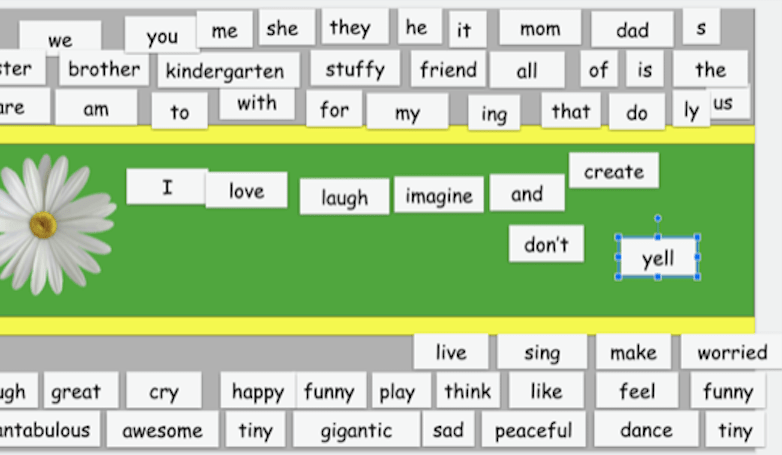
Their sentences speak volumes about who they are, how they see themselves, and what they are experiencing and thinking. I gotta say, they filled my heart with joy! Take a look at a few:

Yes, yes indeed, I do feel all the love!

Fantabulous, right? I included a few words in their word bank that were a little less than positive – yell, cry, worries. I added them to honor and validate the reality that we might want to yell, cry, or be worried. They didn’t choose them — except to suggest — after a long line of things they do — love, laugh, imagine, and create — they don’t yell. That actually made me laugh out loud.

Curious to consider, but true none-the-less, this fantabulousness happened because of the quarantine.

Because we’re home and not together in our school, I needed to rethink how to do what I would normally do in our classroom. How could I give them open ended opportunities to create with words? How could I allow them to share themselves and their ideas? How could I do some formative assessment?

Living during this pandemic I have a bit more time, and am experiencing a good deal more stress. So what could I do? I could try to follow my passion to learn and create. So when this opportunity to learn and get caught up in the flow of creativity came my way, I eagerly embraced it.

I think this fantabulousness also happened because of all the work we put in together pre-quarantine. Not just the work to develop skills, but the work to develop relationships.

Everything about our time together — even now — is about relationships. Relationships with arms, hearts, and big beautiful brains, wide open to embrace each other and all we bring to one another.

We say good morning, inquire how the other is, look each other in the eye, and share our thoughts ideas and feelings. We laugh, and sometimes we cry. Our relationship is based on trust, love, openness to possibility, wonder, willingness to risk, and mutual respect.

For sure, that relationship allowed me to take a risk, do something new, and ask my students and their parents to join me in my experiment. Undoubtedly it gave them courage and freedom as well.

We remain apart, but at the same time together — together in all our fantabulousness!

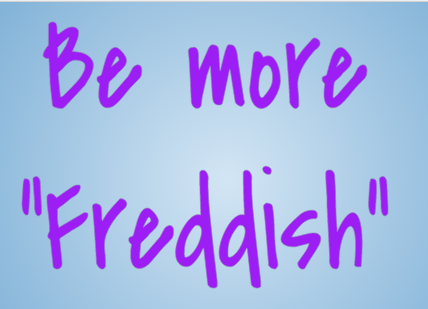
Be A Bit More “Freddish”

Just read this 2018 article in The Atlantic – Mr. Rogers Had a Simple Set of Rules for Talking to Children.

Mr. Rogers was something else. He was insightful, caring, intentional, thoughtful, and creative. I’m sure he was much more, but that’s what I took away from this article.

We could learn a lot from Mr. Rogers.

“He insisted that every word, whether spoken by a person or a puppet, be scrutinized closely …”

What if, in our classrooms, we had that same insistence regarding our choice of words?

Yes, a classroom is quite different from Mr. Rogers’ TV show. He had the luxury of a script he could study and edit, as well as writers who would help him perfect his words. We are often working in the moment, on the fly. That makes it harder, but not impossible!

We don’t have scripts and writers, but we do have plans and colleagues. We also have the opportunity to reflect and revise. What would our plans, lectures, mini-lessons, conferences, and conversations sound like if our minds, hearts, and language were a bit more “Freddish”?

They’d be pretty fantabulous, don’t you think? Let’s start a movement.

Screen Shot 2019-08-08 at 12.27.52 PM


*According to the Atlantic article,  Rogers’ team of writers coined the term “Freddish” as a way to describe Rogers’ on air language.


Wow! What an Experience!

Sometime tired, rainy days hold untold treasures! I was on vacation a couple weeks ago, deep into a tired and rainy day. Lazing about, and looking for something to do, I discovered the LPCA was offering a 3 hour watercolor class. I hoped for good things and secured my spot.

Sarah Yoeman — one of four artists featured in the LPCA The World Through Watercolor exhibit was the instructor. She is a talented watercolorist, and a superb teacher.

The workshop was filled with instruction, experimenting, playing, painting, conversation, laughter, and lots of learning. I learned about paint, paper, brushes, gravity, erasing, taking risks, value, shapes, moving paint, using water, and being in the moment. I took photos and notes. I experimented, kibitzed, taped, painted, and created watercolors I enjoy.

My brother joined me for the workshop. We spent a lot of time looking at Sarah’s art, and our own. We discussed the things we noticed. We talked about value and shape, and how she created various images.

It was a great afternoon. I left with increased skill, confidence and joy.
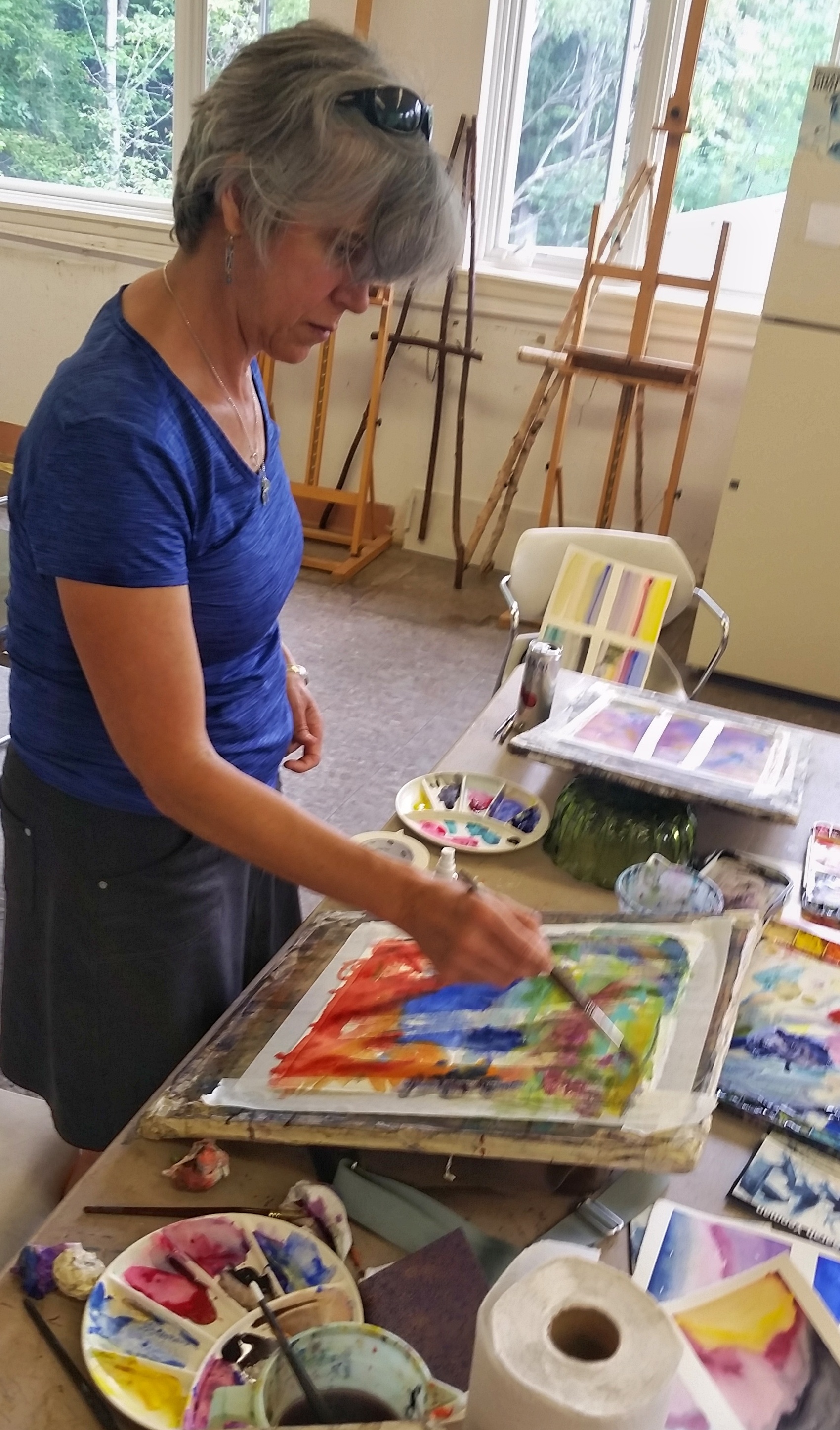
20180821_144836-01-01

When I looked at my notes that evening, I discovered I had inadvertently skipped a few pages in my journal. Eee gads. I wasn’t loving that mistake. I stared at the blank pages, wondering what to do. After a few moments, inspiration hit. Why not fill them with my reflections about the experience?!

My thoughts quickly filled those pages, and overflowed onto others. I was struck by my level of enjoyment, motivation, and ability to engage deeply with the process. It felt like I had experienced 3 hours of an optimal teaching-learning relationship.

With that thought, I excitedly thought of my paper — Managing the Classroom for Creativity. I wondered if I might find all the elements of my amended KEYS classroom management system in Sarah’s workshop. I pulled up the paper to remind myself of all 8 points in the system and compared them to my experience in the workshop.

—–

Freedom

Our goal for the workshop was to explore the world of watercolors and  let Sarah guide us in creating your own watercolor work or art.
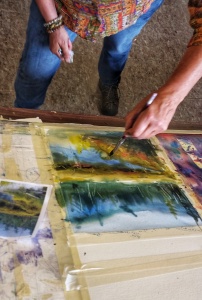
20180821_142039-01

Even the goal offers a great deal of freedom — a watercolor work or art. Sarah shared information, made suggestions, and demonstrated technique. Then she set us free to explore and experiment.

We were free to use one sheet of paper or more. We could section the paper into multiple sections, or keep it as one. If we didn’t like our piece we could try again on the back. She suggested we stand as we paint — giving us her reasons for doing so — but she allowed us to explore and choose what worked best for us. While she demonstrated various techniques, she didn’t require us to use any one in particular.  She encouraged us to experiment, be bold, and take risks.

Positive Challenge

The ideal level of challenge is one that engages without overwhelming. Sarah helped maintain this level of challenge by affording me the freedom to choose my challenge. But, interestingly enough, I found it was her presence and interaction with me that helped me maintain the optimal level of challenge. As I became overwhelmed, she offered help in the form of a thought, a suggestion, or simple encouragement. If I took too easy a route, she encouraged boldness. And, she normalized the struggle inherent in positive challenge by freely sharing her angst with her process and product.

Supervisory Encouragement

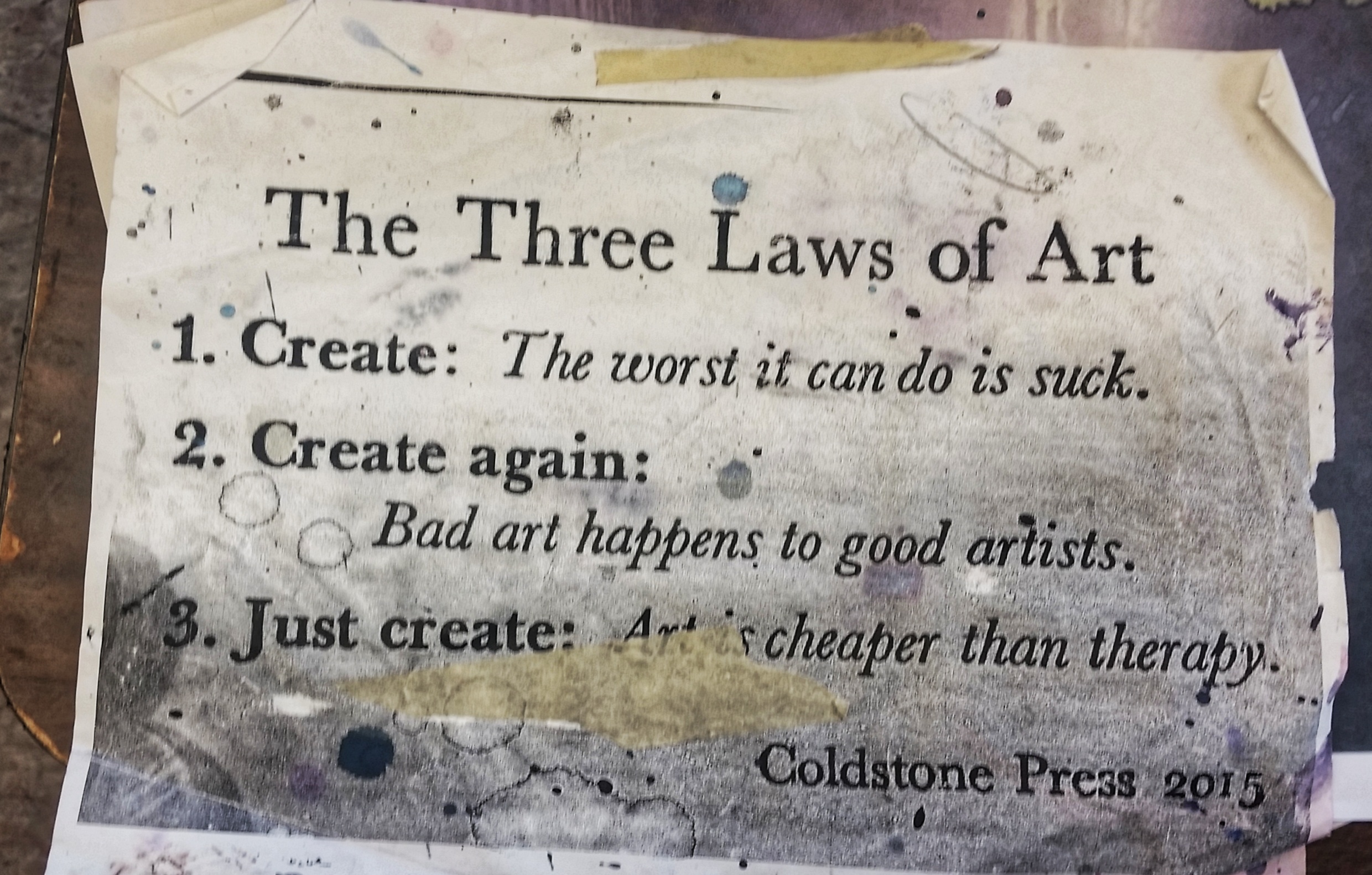
Right off the bat, Sarah shared The Three Laws of Art:
20180821_160840-02

They cracked everyone up and helped to establish an environment free from fear and worry. The laws suggested failure was to be expected, and helped us to accept it with a modicum of grace and ease.

Although Sarah was far more accomplished than us, she interacted with us as equals. It was clear she had more experience, expertise, talent, and knowledge. It was clear she was the teacher. But, or perhaps, because that was true, treating me as a colleague, a fellow artist, helped elevate my own sense of self, and consequently my thought, process, and product!

Sarah wandered about the room, observing, noticing, and commenting on our technique and product. She found things in everyone’s work to notice, praise, or share with the group. She pointed out the beauty she saw in entire paintings, color choice, shapes, expression of depth, or small portions of our work. Sometimes she encouraged new points of view by physically turning, or moving our paintings farther from us. By doing these things, she showed us the value of our work.

Work Group Support

Our group was diverse in experience and ability. Sarah’s banter and sharing of our work helped me to feel at ease. I began to appreciate my fellow painters expertise, courage, risk taking, and ideas. I was challenged by some of them, but always felt safe and secure.

Sufficient Resources

The materials we used in this workshop were excellent. We had unlimited access to lovely paper, juicy, pigment-rich paint, and professional level brushes of various sizes. This spoke to the importance of our work, and elevated us to the level of “real” artists. I appreciated that tremendously!

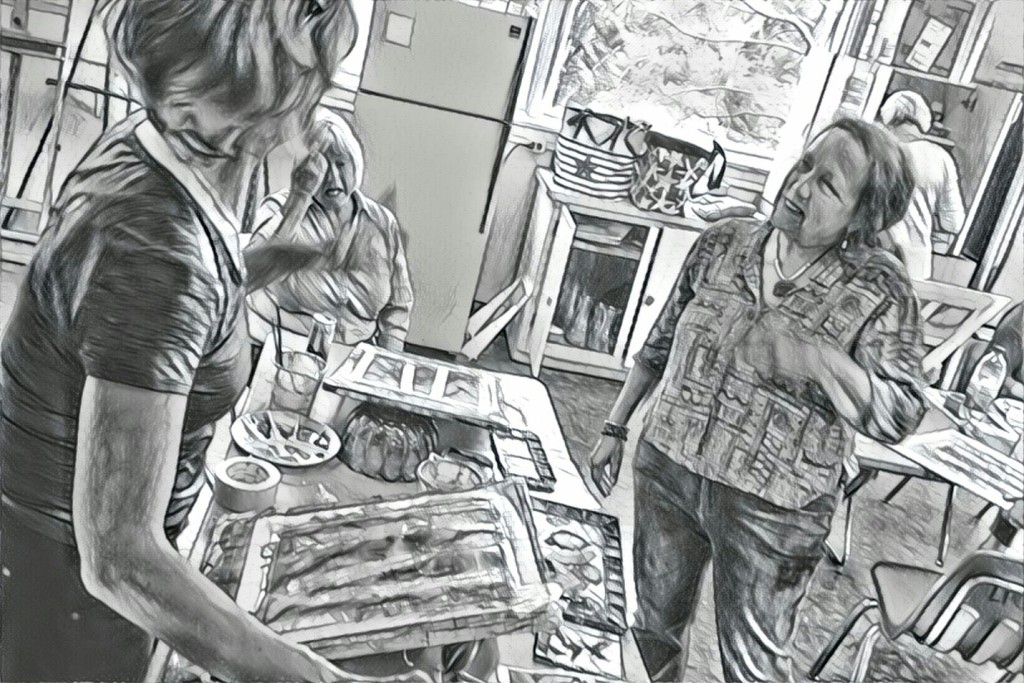
20180821_150037-01Access to these quality resources helped us succeed and accomplish our goals.  At one point I was having a tough time. Sarah happened by me, and suggested I use a different size paintbrush. Then looking at the paint I was using, she went and got her own palette to share with me! She brought several of her own palettes and brushes to share with us, and did so with a great generosity, and zero sense of indebtedness or worry on our part.
IMG_Curly_Hair_20180902_205742_processed

Some of the best resources Sarah shared with us were her artistic-eye, her brain, her experience, and her hands and skills. These were invaluable.

Organizational Support

While just a short workshop, Sarah established great organizational support for us. She shared her vision of creativity available to all of us. She constantly suggested problem-solving strategies to help us succeed. Risk taking, boldness, and fresh ideas were welcomed and encouraged.

Profound image of child/student

Loris Malaguzzi (Reggio Emilia) knew children are “strong, rich, and powerful.” He would have loved Sarah. She saw each of us this way, and she helped us to see it as well.

Profound purpose and possibility of education/learning:

It’s clear Sarah loves to paint, and experiences something profound when she does so. She shared that love with us, and invited us to enter into the depth of the experience. And, I think, she gets the value of what she is doing when she teaches and shares with others.

——

Every single one of the components of the modified KEYS approach to classroom management had been present and employed in Sarah’s workshop! WOW!!!

My research had been about other people — those in literature I had read, as well as my own students. This was the first time I experienced the Amended KEYS Classroom as a learner. Let me tell you, it was powerful!
Having experienced them myself, increases my desire to intentionally and deliberately incorporate them into my learning environment and management practice. It also makes me wonder how I might share this information on a grander scale?

—–

POST SCRIPT: 

I blogged about my angst as I painted a few days after the workshop. At first I was incredibly surprised by the intensity of my angst, and my seeming lack of any learning and ability!

Taking a break, I sunned myself on a rock, feet dangling into the freezing river water. I took a moment to breathe and assess the situation. Certainly I didn’t lose all my learning and ability. But clearly something had changed.

I realized the change was that I was painting by myself. I no longer had the resource of Sarah and her skill and expertise right beside me. That is huge! Huge as a learner, and huge as an educator.

I didn’t enjoy the angst, but I’m glad I experienced it. And, I’m super glad I took a moment to reflect and had that epiphany.  Now to remember it, allow it to inform my practice, and look for opportunities to share it with my students.