What Do You Think about Pre-K? Do You Love It?

We had a birthday celebration today in pre-K, and as the kids were enjoying the birthday treats, the birthday girl’s grandmother asked how I liked pre-K compared to Kindergarten. (I started teaching pre-K this year after 18 years in Kindergarten.) What a great question!

How do I like pre-K compared to Kindergarten? There is so much to love about Pre-K — so much possibility, so much joy, so much fantabulousness. There was a lot to love about Kindergarten too. It’s a gift to hold on to all of that awesomeness, and now have new opportunities, new teammates, new learners, new relationships, and new fantastic parents in pre-K.

So, what do I think about pre-K?

Oh my gosh I love the kids. They are brave, curious, joyful humans. They love to laugh, try things (sometimes with a bit of encouragement or a willingness to be with them). They are wide open to wonder, and awe. And they are always learning, making, and sharing.

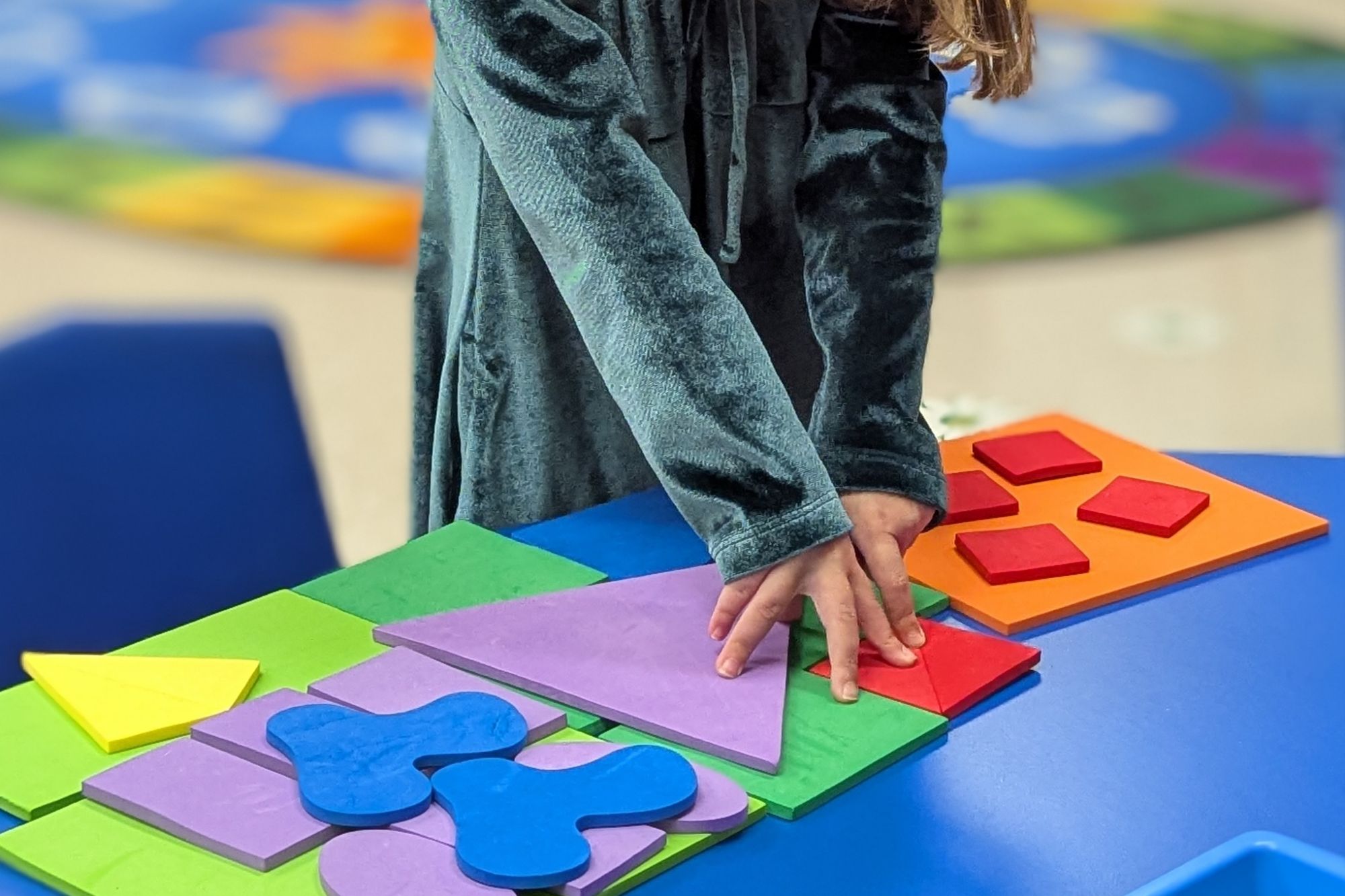
Today one of them asked if I’d come with her to our math center and make things with shapes. (Yes, please!) At one point, I asked her what she was doing. She had been giving me a running commentary, but had stopped. She replied, “I’m making it better. … See?!” Another friend joined in with equal enthusiasm.

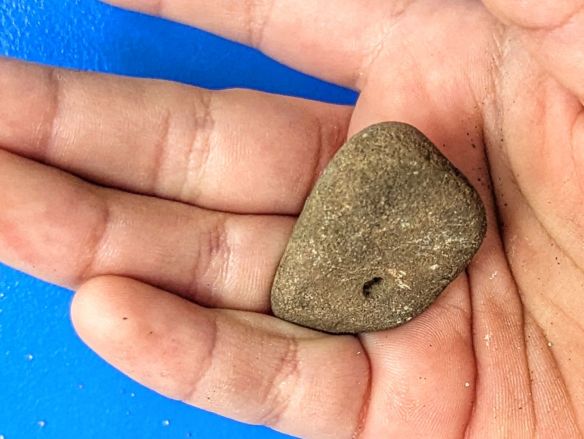
The other day, we took an “Oh WOW! Walk” outside. The super scientists looked for things that tickled their fancy through one of their five senses. They collected these things to share with one another. One mighty pre-Ker showed me her stash as she tried to decide what to take home and what to leave in our science trolley. She had several rocks. One in particular seemed to be a treasure.

Me: “Can you tell me about that rock?”
C: “Oh! This rock has a belly button!”
Me: “Come on!!! A belly button??!! Get out!”
C” “Look!”

I laughed out loud! She was right. It was a rock with a belly button! It may sound silly to you. But, think about her thinking. She noticed similarities between this rock and a belly and belly button. She was able to use her imagination to put those noticings together. She found joy in her musings, and was courageous enough to share it with another. These are the skills, and habits of mind that are used when we problem solve and create things as yet unknown. Once again it is not the simple cuteness of the young, it is the beginnings of profound critical and creative thinking.

Another thing I’m grateful for in pre-K is time. I’m super grateful for, and really enjoy, the extra time there is to simply be in pre-Kindergarten. This gives us the opportunity to talk, share, develop relationships, play, explore, create. and learn. Today one of the girls was missing her mom. At the end of the day, she came over to me and told me. I asked her if there were anything I might do to help her. She said no, and just quietly stood next to me, her face devoid of joy. Then, she began to button the buttons on my denim jacket. She didn’t ask if she could do it, she just began to button them. Her sadness turned to determination and joy as she checked and buttoned each button — even rolling down my sleeves to button the cuffs. It was as if she felt and embodied the care and love of her mother, as she took care of me by buttoning my buttons.

Oh, and then there’s car line. When I first started teaching, we did Kindergarten car line in the morning and after school. It was something I loved because it allowed me to get to know the parents a bit, and interact with them and their children together. We stopped doing it in Kindergarten a few years ago, and it was something I’ve always missed. Well, in Pre-K we get to do it again. I’m happy to be back interacting with parents each time I have the opportunity to do carline.

And, oh my gosh, Jr. Pre-Kers! They are a joy to get to know. Since I’m in Pre-K, I get to help take the JP-Kers out of the cars, and sometimes see them before and after school. We’re working on learning each other’s names, and as they remember mine, they joyfully call, “Ms. James! I know your name!” I love the joy, the connection, and the feelings of accomplishment – for them and me.

So, to answer that Grandmother’s question as clearly as I can. Do I miss Kindergarten? I do. But, do I love PK? Yes, I do! Are the kids fantabulous? Yes, they are! Are the parents marvelous? Yup, they sure are! Are my teammates amazing? Indeed! Are the possibilities awesome and limitless? Yes! So, I breathe on, learn, grow, love, be me, and enjoy it all.

Learners and Writers Blossom Through Creative Passion, Process, and Product

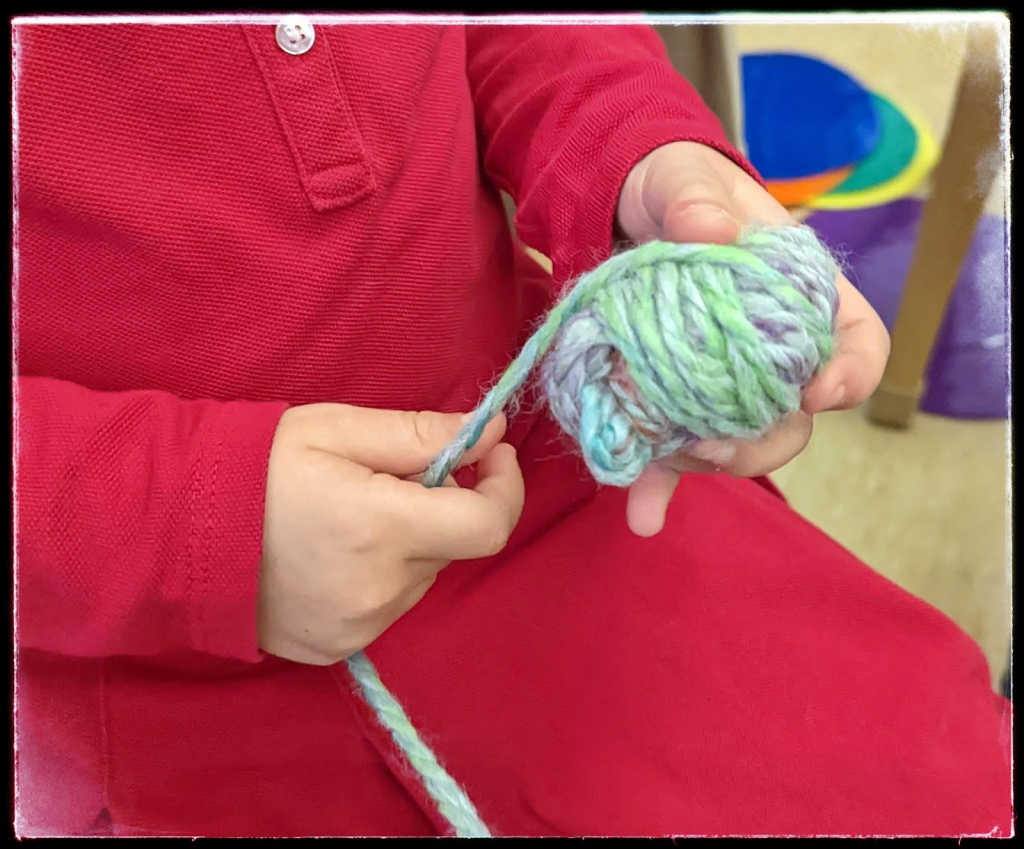
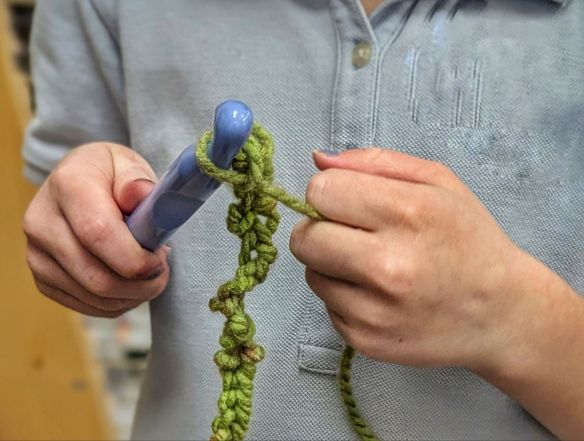
My learners love to finger-knit. It’s a never-ending source of joy, creativity, flow, and peace. When we begin, I show them two methods of finger-knitting, and then they choose their favorite way to continue. Amazingly, every year, after working with my two methods for a bit, my learners develop their own iteration of finger-knitting and teach it to me. Soon, they take over my job of teaching others how to finger-knit, make the beginning slip-knot, and wind yarn balls. 

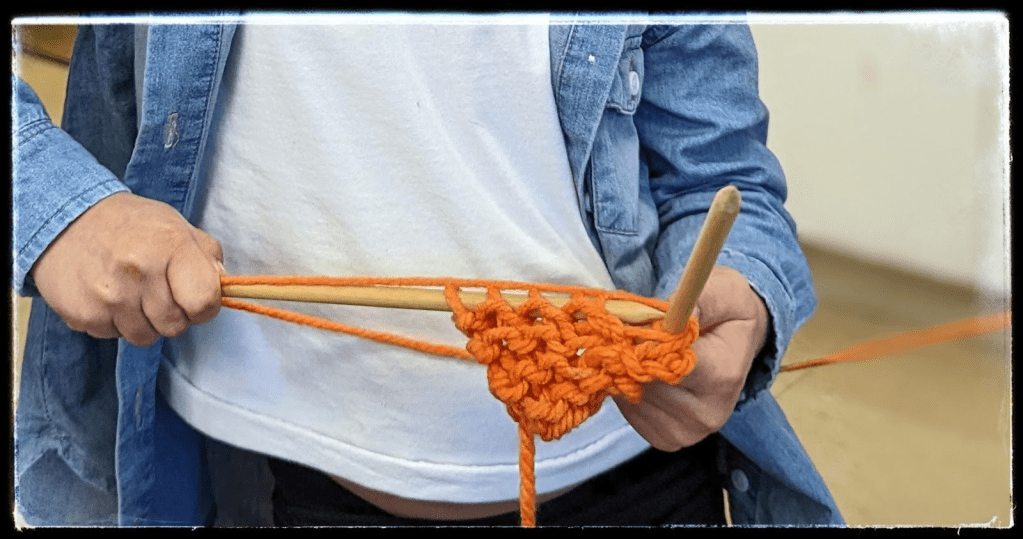
Soon after they learn to finger-knit, they are curious about the knitting needles I have in the classroom. They begin to ask questions: Can you knit with sticks, Miss James? Did you knit that on sticks? What else can you knit on sticks? Their curiosity turns to wonder and awe as they discover I know how to knit with sticks and have made many things. One by one, they ask me to teach them to knit with sticks. 

They wait patiently – or not so patiently – for time and sticks, so that they can be the next knitter. At one point, five of them had work on the sticks, and I was commissioned to make more sticks so that they could all knit. 

Whether they knit with fingers or sticks, the process is one of grit and growth. First, I show them, often helping them move their hands, fingers, or sticks. Frequently, they make mistakes. Sometimes they forget a step. Other times, their knitting falls off their fingers or sticks, and they accidentally pull it all apart. We breathe through our angest, and rehearse the movements and the words that describe those movements: Make a loop. Put it on your finger. Wrap the yarn around your finger in front of that loop. Don’t make it too tight! Now pull the loop over that piece of yarn. Once that’s done, pull these two ends. Finally, we celebrate and encourage: You got it! Now do it all again – over and over until you’re done.

After working with me, they work on their own – sometimes in close proximity to me, sometimes with a group of other knitters. They frequently check in, asking, “Is this right? Can I take it off now? Can you fix this, Miss James?” As their competence and confidence grow, they begin to say, “Can you teach me how to do it so I can do it by myself?” If, when helping, I miss their aha moment, they say, “Miss James. I can do it. Would you let me do it?” My response is always, “Yes, of course!” More often than not, the exact same words begin to greet me in reading, writing, and math. “Can you teach me how to do it so I can do it by myself?” 

Finger-knitting is a shared experience of creating, taking chances, trying, problem-solving, teaching, learning, using tools, and creating a valuable and genuine product. It’s a lot like being a writer!

If you aren’t a knitter (finger or sticks), there are many wonderful resources online to teach you. However, it may be better for you to consider the ways you create and make in your own life. What creative love do you have that you can share with your learners? When you do it, do you have to take chances, try again, problem-solve, learn, use tools? Do you create a valuable and genuine product? Then it’s a lot like being a writer, perhaps we can consider it pre-writing skills since we are growing the mindsets and habits of a writer. Weaving, cooking, collage, mark-making, origami, calligraphy, or embroidery may be your jam; use them. Your excitement, joy, peace, and curiosity will spark the same in your learners and motivate them to give it a go. 

As you and your learners engage in the creative process, you will learn about yourself, your learners, and the process. I am always amazed at how much I learn about something I have done forever, as I listen to and watch my learners. Sometimes, as we work, we work in silence, absorbed in the struggle of learning or the peace of flow. But often, we employ one of HGSE’s Project Zero’s Core Thinking Routines. We notice, think, and wonder, and share our thoughts with one another. This thinking routine allows us to verbalize what we are doing with our hands, share the new things we notice about the yarn and how it works, think about and share our thinking, create new iterations, notice similarities and differences, get suggestions from others, talk through our struggles, and celebrate our successes. 

As we knit together, I noticed how often we use the phrases – first, then, next, after that, and finally. I realized this shared passion was a way to make the concept of beginning-middle-end-thinking concrete for my young learners. If we could notice the concept of beginning, middle, and end in our repeated experience of finger-knitting, perhaps we could translate that into the use of beginning, middle, and end in writing.

I set a task for my learners the next morning. During Investigate and Explore time, they were to finger-knit. My instructions and explanation were intentional and specific. “Everyone must finger-knit so you have it fresh in your big, beautiful brains for writing. As you knit, use our Notice-Think-Wonder thinking routine. You can use it by yourself or with friends. I particularly want you to think about how you are knitting. What steps are you taking? Do you always do things the same way? Notice. Think. Wonder.” 

Finally, writing time arrived, and my learners peppered me with questions. “What are we doing with finger-knitting, Miss James? How is finger-knitting writing? What are we doing? Can we finger-knit again now?” As they settled in, I explained that we were going to teach others how to finger knit by explaining what we do first, then, next, after that, and finally. A plethora of hands raised, as ideas tumbled out of their mouths. I asked them to breathe and hold their excitement while I finished my explanation. 

“First, I want you to work with a partner. Talk about your process. Notice what is the same and different. Think about what is possible. Do you both start and end the same way? Are you middle steps exactly the same? Do you explain them in the same way? Why or why not? Use our learning question What makes you say that? to discover what your partner is thinking. Show your partner what your words mean by finger-knitting for them. Use your art sketchbook to draw pictures. This might help you try things out and will give you a guide as you write.

Then, write and illustrate your process – your finger knitting steps – so others can learn to finger knit. Please remember to use the words first, next, then, after that, and finally. After that, share your work with your partner. Finally, when you are satisfied with your process and product, come share it with me. 

Everyone – even my writers who struggle – was successful. Everyone – in word, action, and illustration shared a possible finger-knitting process iteration using beginning-middle-end-thinking. It’s only a first step, but it’s an important step in their life and growth as writers. 

(Translation: First, you take it out of the finger-knitting basket. Then I do a loop and I start finger-knitting. Then I talked a friend to help me.)

These images are of my Kinders over the past few years. This year I’m teaching pre-Kindergarten. Just like my Kinders, they love to learn how to do things, and then do them — even when they’re hard things. And goodness gracious, they love to make things. I’m excited to teach them how to finger-knit, and to be their scribe as we construct first, then, after that, and finally finger-knitting plans.

Creating a Safe Home Away from Home in Education

My uncle — a devotee of Henri J,M, Nouwen — recently recommended Nouwen’s Here and Now to me. He assured me “You’re going to like it!”

He’s right, I do. But I wonder if he thought my like and inspiration would start with the acknowledgments and preface?

The acknowledgements reminded me of the importance of friends who give help, support, and time. Henri expresses gratitude for their “competence, kindness, and generosity.” He continued to express gratitude to others who gave him “a safe home away from home.” I love all of those things: friends, seeing the blessings given us in and by our friends, expressing gratitude, and perhaps most touching to me right now “a safe home away from home.”

A safe home away from home. My first thoughts go to a lovely couple who rent a B&B to me each summer. They couldn’t be more kind and invested in making their home a safe home away from home for me. Then my thoughts go to my aunt and uncle, who for years hosted my mother and me for each of my Dana-Farber visits. What an incredible blessing both these homes away from home are to me. I can’t imagine my trips without them, and the people who make them amazing.

Then, my thoughts turned to a different sense of home. Not a building but a feeling, not a physical space but an emotional one. As a friend, a teacher, a human, I am called to do that for everyone I come in contact with. Do I make time for the person who helps me in the grocery store or the Post Office, or do I rush through the moments that could create a small moment of home for them? As a friend, do I take the time to stop and listen, giving my friend my time, energy, and the intention and wish for safety and happiness? For that matter do I do that as a daughter and sister, or do I take our home and love for granted and crank instead? When I do, that energy removes a bit of the safety and love of home.

And finally, what about as a teacher? Is my classroom a safe home away from home? It is my goal and hope. Does the fact that my Kinders frequently call me mom mean I’m doing it? Perhaps. When they come in with joy and eagerness, willing to take risks, perhaps it’s proof my hope is realized. Even so, I am never complacent — or at least mostly never. I try to watch, listen, reflect, and talk with my students and their parents to learn if they are feeling safe, happy, welcomed, and at home.

A parent I just met at the end of last year was telling me about her experience of my learning space. She commented on its beauty and the fact that it clearly showed the care with which I curate my space. Then she said, “Your space is beautiful — your chair, the lovely things hanging from the ceiling, your tree, the lights. When I walked in, I felt like I was home.”

Wow.

I’m teaching Pre-K this year. I’m sad to leave my Kinders and all the fantabulousness we have co-created there. My sadness is totally ok, acceptable, and right. As it comes, I feel it. Then I breathe and remind myself there are endless possibilities of fantabulousness and home to co-create in Pre-K.

Kindergarten has been a safe home away from home for me and all the Kinders I’ve been blessed to have with me for all these years. Pre-K will be another safe home away from home. How do I know? Because I will be there, with my marvelous teaching team, the amazing Pre-Kers and their remarkable parents. Together, we will co-create a safe, beautiful, joyful, and magical home away from home filled with delight, curiosity, exploration, and learning.

Sharing Art Sharing Joy

Looking for summer art inspiration I picked up Sarah J. Gardner’s book Share your Joy: Mixed Media Shareable Art. Just now, looking for a link to share with her book, I came upon Sarah’s website — complete with a blog, tutorials, learning possibilities and, as her book suggests, joy.

I have a zillion art books. A zillion? Perhaps not, but for sure a plethora of them. Is her book filled with brandy dandy new ideas I’ve never seen or imagined? Nope. Is it fantabulous and inspiring and bringing me joy? Yes, indeed it is!!!! There are so many beautiful things about her book — the colors, the photographs, Sarah’s spirit of joy and exploration, and the idea of sharing art in easy to manage, don’t fret too much, small art pieces.

It’s been just what I need for a hot summer that has felt stifling in many ways. I’m grateful that I found her book and her site. I’m creating small things, enjoying the process, and excited to send small art treasures to friends.

The other day I wandered the aisles of a local craft store. A gift card was burning a hole in my pocket but nothing struck me.Then I found a fab set of alcohol ink designed origami paper. Much like Sarah’s book, I bought it for beauty, joy and inspiration.

Back home, I wondered what to do with the paper. It seemed a bit of a waste to simply fold them. So much of their beauty would be hidden inside the folds. Flipping through the pages, admiring the colors and metallic designs of the ink, I grabbed my metallic pens and started tangling. At first I added strings, but as I did more pages I began to look for inspiration in the shapes on the page. It was a blast — relaxing, creative, enjoyable.

After tangling, I folded a paper crane, and sent it off to a friend in need of a bit of joy.

I made another and set it on my art desk along with a decorated but unfolded piece of paper. Passing it one evening I thought, “Oh!I have the perfect person for that crane!” She’s a fantabulous human who values creativity and joy. She’s had a bit of a rough time these past few months, so sharing joy and art seemed perfect. The package grew to include an unfolded piece of decorated paper along with the folded crane. Then, while brushing my hair I thought “Oh! I should send her an undecorated piece of paper, too! That way the joy is three fold — a finished piece, and two unfolded pieces — one decorated and one not — that she can use for anything she wants.” Can’t wait for her to get it.

Oh wait! I just had a thought. The joy is 5 fold because I get joy of making and sharing! YAY!

Finding Inspiration: The Power of Hope and Creativity

Life isn’t always easy. Sometimes it’s downright hard. For a plethora of reasons, now is one of those downright hard times. So, what do I do to help combat the overwhelm and find a sense of peace and control? Clean, rearrange, go through things, be inspired, or if I’m not inspired, purge.

Today I found inspiration in a sketch I did with my Kinders, and an end of course assignment from IDEO’s Creative Leadership program.

Crowned with Hope

This sketch is from an assignment I gave my Kinders. Who are you? How might you change the world. I sketched myself as the Queen of Hope, or perhaps just as myself, an ordinary human, gifted with a headpiece of hope. Did you know the first definition of headpiece on merriam-webster.com is “a protective or defensive covering for the head.” Imagine! Hope is protecting and defending me!

Hope is a wonderous, powerful thing. It enables one to face and fill the unknown and the what ifs with positive possibilities. Instead of imagining the worst, hope encourages us to use our imagination to see and create the best possible next moment.

I’m reminded of an A.A. Milne quote:

Supposing a tree fell down, Pooh, when we were underneath it?’
‘Supposing it didn’t,’ said Pooh after careful thought.
Piglet was comforted by this.

― A.A. Milne

Hope seems to travel with encouragement and possibility. After the sketch, I stumbled upon the letter I wrote myself as one of the final assignments for IDEO’s Creative Leadership course. If you’ve never written a letter to your future self, you might want to try it. It might feel silly. Do it anyway. Perhaps imagine yourself as someone else you are coaching. Be honest and encouraging. The process and product are powerful, and a lovely gift to your future self.

A Letter From Me to Me
(Do you get the reference? It’s a gift Dave, from me, to me! )

Dear Molly,

You rock, girl! I love the path your life is taking. It’s awesome to see you continue to move forward with relentless positivity and joy. You really are fantabulous. Don’t ever doubt it!

The IDEO course was awesome, wasn’t it? I’m glad you engaged in the struggle, and had a lot of aha moments!

I’m so psyched you’re going to continue to listen, take time, and engage — eye to eye! I can’t quite decide which is most important, so I’m going to rant a bit about each. You’re shocked aren’t you?!?!!! (Not! lol)

LISTEN
Listen with your eyes, your ears and your heart!
Listen to yourself, your students, your colleagues, your intuition.
Listen to the questions, the answers, and the lack of answers.

TAKE TIME
Take time to ask a plethora of good, open ended, encouraging, hopeful questions.
If you can’t think of any, take a bit more time, have a cup of tea, and trust they will come! Experiment, ideate, iterate and just have fun. Invite others to join you.
Oh, and don’t forget about yourself!!!
Feed your soul, and your creative self — breathe, pray, make, think, do, and just be.

ENGAGE — EYE TO EYE
It’s so important, and so awesome, when you do this, Molly!
Some of the most amazing times are when you engage,
eye to eye, with those around you — especially those young students of yours!
Don’t let others, or the job, or time, or anything else, rob you of this great joy and privilege.

Through it all, Molly, believe and trust. Believe in yourself and your creative team. Believe in the profound power of learning, relationship and creativity! Trust your knowledge, your intuition, and your awesomeness!

You have a strong point of view about your students, life, learning and creativity — – and it’s a profound one, Molly! Continue to embrace it, share it, grow it and live it!

You create cultures of trust, joy, positivity, possibility, inspiration, collaboration, creativity, learning and transformation, Molly. You encourage curiosity and a willingness to risk. And when there’s failure — and there so often is — you work to help your team, and yourself, accept it, learn from it, and move on with relentless positivity.

You are present and engaged, in really beautiful, powerful ways. Making space for your self, others, questions, possibility, creativity, joy, ambiguity, tension, mess and even chaos, is a gift, Molly, and you have it!

You really are something else, Molly. I can’t wait to see what the future holds. I’m sure remarkable things will come from your new thoughts, ideas, learning, and practice.

Rock on, my sister! Rock on!

I love you.

Molly

PS. Give me a call. We’ll have tea and catch up!

Empowering Young Artists: A Holistic Approach to Art Education

Someone asked me if I planned my art for the show. I asked what they meant. They continued “Well, do you choose specific artists and pieces knowing the show is at the end of the year?” I told her, “Not really. I just pay attention to what sparks joy in my Kinders and in me. I notice things we are interested in and want to experiment with, and I keep in mind what I think will work for us as artists. The Kinderes and their art just make the show amazing.”

After the show, a grateful parent commented, “This must have take hours to set up!” In reality it took me and an amazing alum mom more than two days to set up and hang the show. And prior to that, It took my girls nearly 9 months to create the art!

As I thought about those nine months and the set up hours, and looked at photos of the Kindergarten artists working on their creations, my mind returned to that original question. Do I plan my artwork — what I teach — knowing we will have the end of year celebration of Kindergarten art?

After some reflection, I’d like to change my answer. Yes, I do, but in a very organic holistic way. I plan the art with a vision of the artists and our celebration of them in mind.

I choose artists and art pieces, and teach them the way I do for two reasons — to encourage, empower and teach these young artists and to hang a show that illustrates their power, talent, and fantabulousness.

To encourage, empower and teach these young artists I choose artists and artwork that:

  • allow my young artist to experience many different mediums and art modalities.
  • help the Kinders know they are creative humans and amazing artists!
  • present them challenges and teach them how capable they really are.
  • encourage them to engage with artistic struggle and self-doubt with confidence and joy.
  • hone their artistic sensibilities and decision making abilities.
  • give them the opportunity to make artistic decisions, make mistakes, learn from their mistakes and make beautiful things!

To hang a show that illustrates their power, talent, and fantabulousness, I choose artists and artwork and hang the show in a way that:

  • highlights the K-artists’ courage, joy, exuberance, and talent.
  • tells the story of our artistic process and journey.
  • illustrates ways our lives and learning are expressed through our art.
  • demonstrates the ways we have used our art to learn, speak our truths, and make a difference in the world.
  • is aesthetically pleasing and interesting.
  • elevates my Kinders’ thinking, work, and art pieces to make clear the remarkable, courage, work and talent of these young artists.
  • that brings me joy, and will hopefully make my young artists and their families feel awestruck by their work and the care taken to display it.

That was a really great question!

The Power of Children’s Writing: Notes With a Purpose

Some of my favorite things are notes from my Kindergartners. Often they are notes of love, at other times, they are notes requesting I do something for them.

This one was delivered after winter break. She told me her grandmother taught her to crochet over break.

Me: “Wow! That’s amazing. Was it fun?”

Her: “Yeah! Can I show you?”

Me: “Absolutely!”

Her: “Do you have a crochet needle?”

Me: “I do. But not here. I have some at home.”

Her: “Can you bring it in?”

Me; “Sure! Would you write me a note to remind me?”

Her: “A note? (pause) Yeah, I can write one.”

A few minutes later she returned with this note.

How absolutely amazing is this?! Yes, there are some reversals, but look at all the fantabulousness.

  • My name is spelled correctly.
  • Please has the correct vowel team! This means she talked with a friend who knew about vowel teams and they worked together.
  • Crow shay. That has to be my favorite spelling. It’s not conventional, but it tells me all I need to know.

And, perhaps most importantly, she has — with her own beautiful brain, and amazing hand — used writing for her own purpose. She wants a crochet hook, and she knows this will get her one.

I brought in two crochet hooks the next day. She, and others, have been using then happily ever since.

Celebrating Little Moments: A Kinder’s Art of Noticing

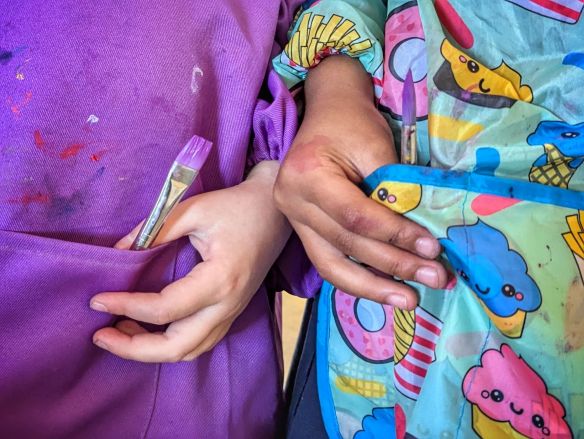
The other day two of my Kindergarten artists were moving excitedly to a new spot in our learning space — paint brushes in hand. Paint brushes that were dripping with lovely purple watercolor paint.

Me: “Careful with the paint brushes. Maybe you can leave the here while you go there.”

Them: “Ok.”

They didn’t drop them off with me. Instead, a few moments later, as I wondered where they and their paint filled brushes were, I heard squeals of delight as the two of them hurried back to me.

Them: “POCKETS! Miss James, we have POCKETS!”

Me: (laughing out loud) “Indeed you do. What a great way to use them!”

Little things. Are there really any little things? Or is it simply the way we look at them.

Pockets — when I don’t need them or notice them — become small insignificant things. But when noticed, found, needed, and used, they become wonderous things to celebrate.

I’ve been wanting to bring more joy, positivity and hope into my life these days. I think this is an answer — notice and celebrate the little things.

Oh! How fantabulous is this?!?! I’ve also been looking for ways to encourage my Kinders to reflect and write. Perhaps a little-things-noticing ritual with a lovely handmade little-things-noticing journal is the answer! Art, writing, and mindfulness all wrapped up in one. This can be a beautiful ritual that allows us to slow down, take a moment, notice, celebrate, and keep track of the lovely little things. I think I can find a bit of time in the morning and afternoon for us to note one little — wonderful — thing.

Fingers crossed I’ll keep you posted.

Here’s a few of mine for right now:

  • sunshine
  • naps
  • sprouts growing
  • birds chirping
  • my flute
  • greeted by name by a kind soul
  • conversations with old friends
  • delicious green tea
  • my inhale-exhale mug
  • a blog post

I wonder how the Kinders will experience this ritual of reflection and writing. I will have to think how I might structure it — the journal, the time, the selling — to help them experience it’s power.

My experience? I found that seeing one thing brought another, and another to mind. Occasionally I felt a bit of reticence — thinking other might find my ritual silly, I think. But, as I brushed that away, I found more things to note.

Let us all learn from my Kindergartners. Let’s notice, celebrate and share the little moments — even when we think others might think us silly.

I’ll go first … “A nap! I got a nap!”

A Tribe of Scribes

A couple months ago, I was invited to attend a writing retreat. I love the woman running the retreat. Ruth is kind, supportive, and funny. She has a big beautiful brain and an awesome heart, and she’s a great writer. So, I said yes.

I’ve been feeling tired, ill, and a bit off my game these last few weeks. Even though I was looking forward to it, I almost backed out of the retreat. I was in an exhausted funk.

Today, mid-funk, the mailman dropped off a package for me. I opened it to find this.

At first, I wondered what crazy person had sent me a book about murdering your darlings. Then I noticed the subtitle and he enclosed gift card. The card said “I’m looking forward to the retreat. Shine on!” The book was a gift from Ruth! Her gift and words were a beautiful balm for my heart and soul.

I’ve only read the cover, the dedication, the table of contents, and the introduction. But, I’m already hooked. I appreciate Roy’s sense of humor, honesty, and ideas. I can’t wait to read more. In Roy’s spirit of sharing, and to encourage you to read his work, here are a few fantabulous snippets:

  • DEDICATION: Roy dedicates the book to journalists, and reading and writing teachers. “You deserve medals as champions of literacy and democracy. Thank you for your service.” I feel seen and valued!
  • TABLE OF CONTENTS: There is just too much to comment on right now. Get your hands on a copy of Roy’s book and check it out for yourself.
  • INTRODUCTION: Roy’s comment about writing guides “… in rare but crucial cases spin my head around like an owl’s at an exorcism!” made me laugh out loud and nod in agreement about equally head-spinning ideas I’ve experienced. Later on, I cracked up reading his response to a question regarding how he managed to be such a prolific writer. He responded, “I write at faculty meetings.” Oh my gosh! Again, I cracked up.

Then I came upon this gem.

When an author writes a good writing guide that author is inviting you — in Frank Smith’s good phrase — to join a club. You may aspire to become a writer, but after reading their work on writing, you can better identify as one, feeling part of a community, a tribe of scribes. (Roy Peter Clark, p. 6)

Too bad I didn’t have a video recording of my response. I closed the book as I drew in my breath and fell back in my chair. I clasped the book to my heart, and gently stroked the cover.

That is what I want — as a human to be part of a club, a community, and as a writer to be part of a tribe of scribes! Thank you, Roy. Thank you, Ruth. Thank you to all the marvelous writers who have already accepted me into the tribe of scribes. I’m grateful and so glad to be here.

Play, Paint, and Learn

Lately, I’ve been painting in a 6.5 inch square watercolor sketchbook. I’m able to do a good bit of playing and still finish in a comfortable amount of time. When I feel like doing more, I use both sides of the page to create a 6.5 x 13 inch spread. I like having the option of the two sizes, as well as my previous art for provoking ideas and bringing me joy.

I played with circles the last few days. I did the one with the colored shapes first. It was a multi-day process:

  • Tape the edges and paint the circles.
  • Look, enjoy, and wonder, “What might I add?”
  • Draw the flowers.
  • Add the splatters of paint.

I unintentionally got paint on the other page of the spread. It’s what happens when you forget to cover it before splattering paint. It was, at first, a bit annoying. When I let go of the annoyance I saw the opportunity to play.

  • How else might I make circles?
  • How might I use my mistake in a new piece?
  • How would it look to add a border and paint the inside with payne’s gray?

I’m pleased with how the two images look. There’s something quite satisfying and entertaining to have them next to each other, supported by the round-ish rocks gathered on a previous hiking trip.

My playing, painting, and thinking — was fantabulous and fruitful. I’m struck by how important my playful exploration was to me as a creative, a thinker, a watercolorist, a designer, an educator, and a learner!

  • How I hold my brush makes a big difference in the quality of my painting.
  • Even though I’ve painted for quite some time, I continue to experiment, notice, learn, and perfect how I hold the brush.
  • The very same paint yields wildly different results depending on the combination of water and paint.
  • As I play I develop and deepen my relationship with the paint, the paper, the brush, myself, my brain, and what’s possible.

As I played and reflected, I thought of my young learners. I want to create space, time, opportunities, routines and rituals that afford them the same opportunities I have as I sit at my kitchen table, or out on my patio, with plenty of paint, paper, markers, pencils and time at my disposal.

Here are some things I’m wondering about:

  • How else might we store and use our sketchbooks, markers, paint.
  • How might we integrate art (painting, clay, drawing) writing and reading.
  • How might we engage in intentional reflection — self reflection and reflection together — about our noticing, thinking, and playing.
  • How might I make time to regularly join my Kindergartners in these things.