Be Brave and Kind

Yesterday morning I was listening to Simon Sinek talk with French biochemist Jessie Inchauspé. They didn’t just talk about reducing our glucose spikes. They talked about passion, profound work, and caring a lot. I dug what she said about dietary hacks to help reduce glucose spikes, was amazed by the various benefits, and have already started using her hacks. But, I think the most incredible outcome was the stream of consciousness I had after listening, and then the clarity I found as my brain continued to mull over the ideas as I drove home this evening. Do you ever notice your brain working on things without your conscious help? It’s wild.

I was reminded of the way I end the yoga practice with my Kindergartners. We take each other’s hands (one at a time) make good eye contact and then express gratitude and acknowledgement of each other’s awesomeness. I love those moments with my Kindergartners. I’m not doing yoga as often as I’d like, hence we’re not doing as much thanking and affirming.

After listening to Simon and Jessie I knew I wanted to add it back in, but how? I decided to do it as my dismissal ritual. I tried it yesterday but stumbled on the words as I wasn’t sure what important thing I wanted to affirm. It was good, it was modeling, it was affirmation, but it wasn’t a great sound bite yet.

Then on my way home, my mind was wandering among many things and at some point I thought — Brave and kind! Bravery and kindness are my jam — or at least what I strive and hope for — and they encompass so many other marvelous things about which I am passionate.

Be brave and be kind! If we are brave step boldly in the world We are creative. We apologize when we are wrong. We ask for help when we need it and forge ahead even if we aren’t positive we can do it. We problem find and problem solve. We are curious and imaginative. We lead, and we follow. If we are kind we live and lead as our best selves. We see others, touch hearts, and change the world.

Today I posted this message under our white board, next to our meeting carpet. I say it all the time, now it’s written and there for all to see. At dismissal, I will take each of my Kindergartners hands in mine, look them in the eyes, and very intentionally speak the words I want them to hear after a long day of thinking, doing, learning, and being. “Thank you for being brave and kind. You are fantabulous!”

Tell Me More

I recently did a free-paint art project with my students. The only requirement was to paint something on the paper using the paint colors they had mixed during our color mixing activity. They love to paint, and being able to use colors they created intensified their enjoyment.

I moved around the room snapping photos, chatting with the girls, and putting finished works on the drying rack. On one of my passes I captured this.

jojo1

I was intrigued by the horizontal lines. I loved the structure and the contrast between the flowers organic shape and the horizontal lines.

After a bit of time I returned to this same artist. She was focused. She didn’t raise her head but continued to look and add, look and add.

Her work was so different than when I last saw it. I was intrigued. I loved it even more now then before. I wasn’t sure what was behind the flower, but I liked. I snapped a photo, and told her how cool I thought it was.

jojo2

She stopped painting, gave it one more look. and then with a gigantic smile and complete clarity, she looked up and said.  “It’s a flower growing in a library.”

Me: “Oh, wow … it is!!! That’s fantabulous!”

I snapped another photo, and continued the controlled chaos that art clean up sometimes is.

Afterwards I realize I missed an opportunity. I missed an opportunity to take a breath and a moment to let her tell me more.

Did she have that idea from the beginning?

Did it just happen?

Did her work remind her of a library?

Does she have a library with a flower in it?

So many questions. So many opportunities for connection, affirmation, wonder, relationship, joy, learning.

For some time, I fretted about not giving her that time.

Now I see it as a lesson and an opportunity for me to learn and grow as an educator and human being. And, I breathe easy remembering her focus, intensity, experience and smile. She was content.

Imagination

I never cease to be amazed, and amused, by the imagination of my Kindergartners! Here are some examples from the first few weeks of school.

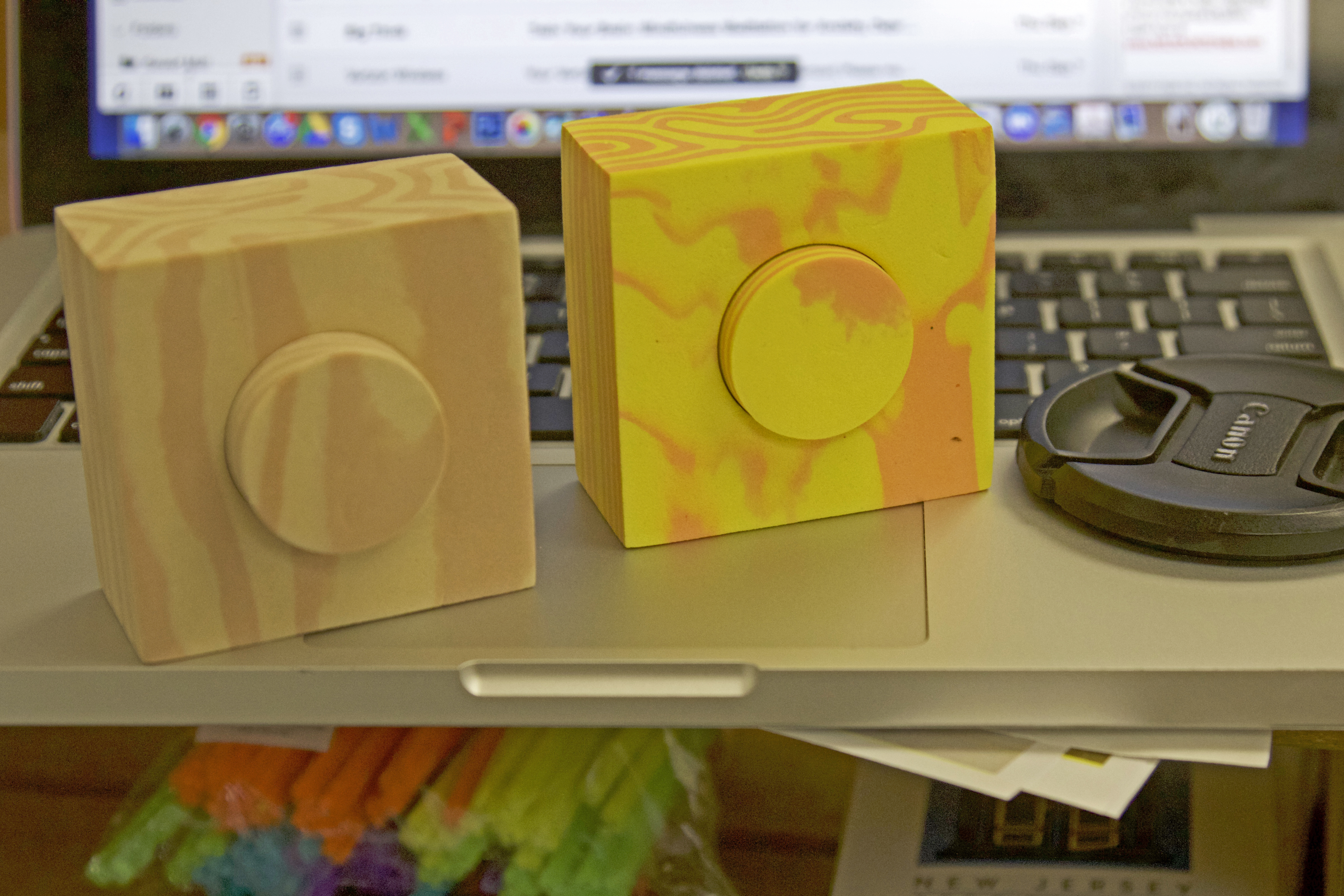
Every year, the kindergartners regularly take what is, and transform it into what might be. This year is no different. The other day two of my girls excitedly exclaimed  “Look, Miss James!!! CAMERAS!”  First they used them — photographing anything that sat still — then they shared them with me.

IMG_8329 (1)

In a similar fashion, imagination filled our space with ringing phones. The K architects and builders had to get the building inspector (me) to come inspect their buildings prior to giving tours. Blocks and popsicle sticks were quickly taped together to create phones which rang loudly — often with shouts of “We’re calling you!!!!” — as they tried to get me to come review their building.

Imagination soars as blocks, objects, and ideas, are combined in new ways to create fanciful builds during our social studies work. Stories, even more elaborate than the building  itself, accompany each new structure  — “In order to get in, you have to use sticky shoes, climb up this tower, stand on the top, and LEAP to the balance beam below!”

They use their imagination as they struggle to understand the new, and its connection to the known. At these times they construct theories as to how what is, might have come into being. While playing in our sensory table, one of them said, “Miss James, did you paint this beans to look like cows?!”

IMG_8321 (1)

I almost burst out laughing – imagining myself painting each bean. I didn’t though. Instead I affirmed her observation “Wow those DO look like cows. I never thought of that!” Then we looked at the many different types of beans in the bin and marveled that the beans grow this way!

I always tell the Kindergarten parents their children’s imagining is important. It may be entertaining, but, it’s so much more. It’s powerful and valuable, and must be affirmed, encouraged, supported, and grown.

Imagination enables them, and us, to make meaning, understand, explore, investigate, test, and create new ideas and things. Strengthening the skill of imagining –the ability to think, see, conceive of, and believe in, things that are not before us — as well as strengthening our belief in its efficacy, is remarkably important.  It’s meaningful and necessary now, and for the future.

Imagination fuels our creativity. The great scientists and researchers, trying to solve any of the many problems facing us will not succeed without imagination. They must be able to imagine what does not yet exist — new ideas, new combinations, new structures. They have to be able to imagine a world without the problem they seek to solve — no more illness, hunger, loneliness, pollution, war, hatred, to name just a few. And, they have to imagine themselves conceiving of the solution.

While researching a bit for this post, I was thrilled to discover the article by psychologist Lev Semenovich Vygotsky, entitled Imagination and Creativity in Children. He writes:


Imagination is not just an idle mental amusement,

not merely an activity without consequences in reality,

but rather a function essential to life.

(Vygotsky, 2004,  p13)


RESOURCES:

Vygotsky, L.V. (Jan-Feb 2004). Imagination and Creativity in Children. Journal of Russian and East European Psychology, vol. 42, no. 1, January–February 2004, pp. 7–97. Retrieved from http://lchc.ucsd.edu/mca/Mail/xmcamail.2008_03.dir/att-0189/Vygotsky__Imag___Creat_in_Childhood.pdf