Relationships are powerful and essential components of learning.
I’m not the only one who knows this is true. Many educators — from Vgotsky, to Frances and David Hawkins, Harvard Graduate School of Education, and Reggio Emilia (and RE inspired educators) — speak of the importance of relationships for learning, understanding, creating, and thinking.
Inspired by Reggio Emilia I value relationships between parent, teacher, learner, and the environment. – and do my best to cultivate them. And, not just my relationship with each of them, but their relationships with each other. Through these connections, learners develop relationships with:materials, thoughts and ideas – their own and others, themselves, play, other learners, and the importance and value of struggle.
I’m always reminded of relationships as the school year ends and my summer begins. My relationship with time, energy, rest, exploration, play, creativity and my own physicality are blessed with opportunity and possibility. And of course, my relationships with my current learners and parents transition and change.
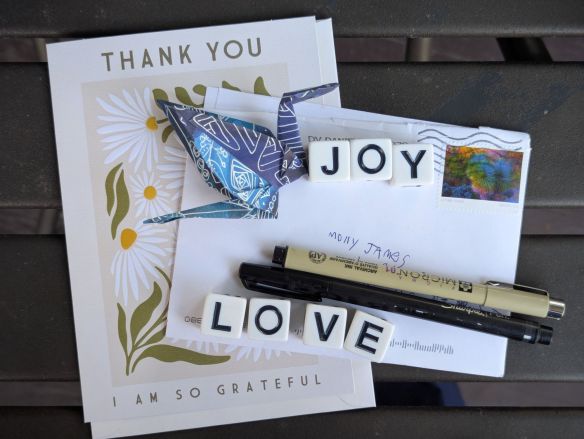
I never cease to be amazed (and edified) as I experience the power, essentiality, and inspiration of these relationships from learners new and old. I never take for granted the gift it is to bump into a former student, or receive a note in my mailbox. Here are a few that touched and reminded me of the power of these relationships.
An 11th grader saw me moving things around in the classroom. It’s a normal part of my end of year routine — but not a normal one for her.
11th grader: “What are you doing, Miss James?” Me: “I’m moving some of my things out of the classroom.”
A look of confusion, then shock and horror, crossed her face. She asked a string of questions in rapid fire: “Are you leaving, Miss James? You’re not leaving are you? You can’t leave! What will the Kindergartners do? What would we do? You can’t leave!”
I took a breath, as I looked into those loving and panicked eyes of hers, and said, “Nope. I’m not leaving. Just moving some of my things.”
She looked at me as though trying to decide if I had told her the truth. Then she took a breath and said, “Oh, good. We need you.”
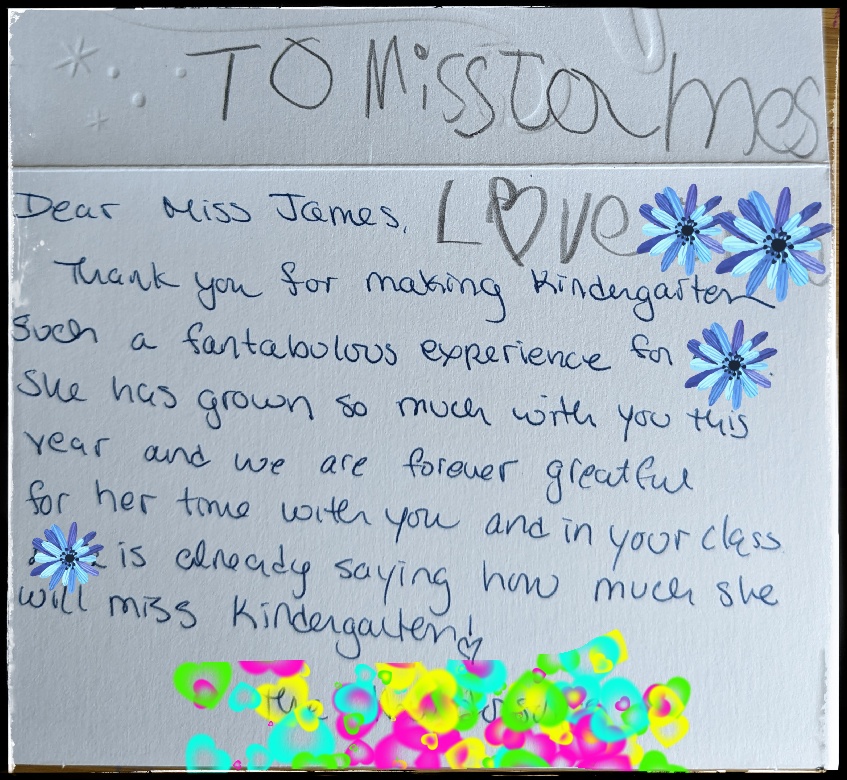
Then a 7th grader left me an amazing letter in my mailbox telling me about how I — and the way I teach Kindergarten — has continued to impact her life and learning. “Even though it’s been a while since Kindergarten, I still remember how your creativity, kindness, and positive energy made learning so much fun. You helped build the foundation that inspired me to grow, explore and believe in my myself. I’ll always be grateful for the start you gave me.”
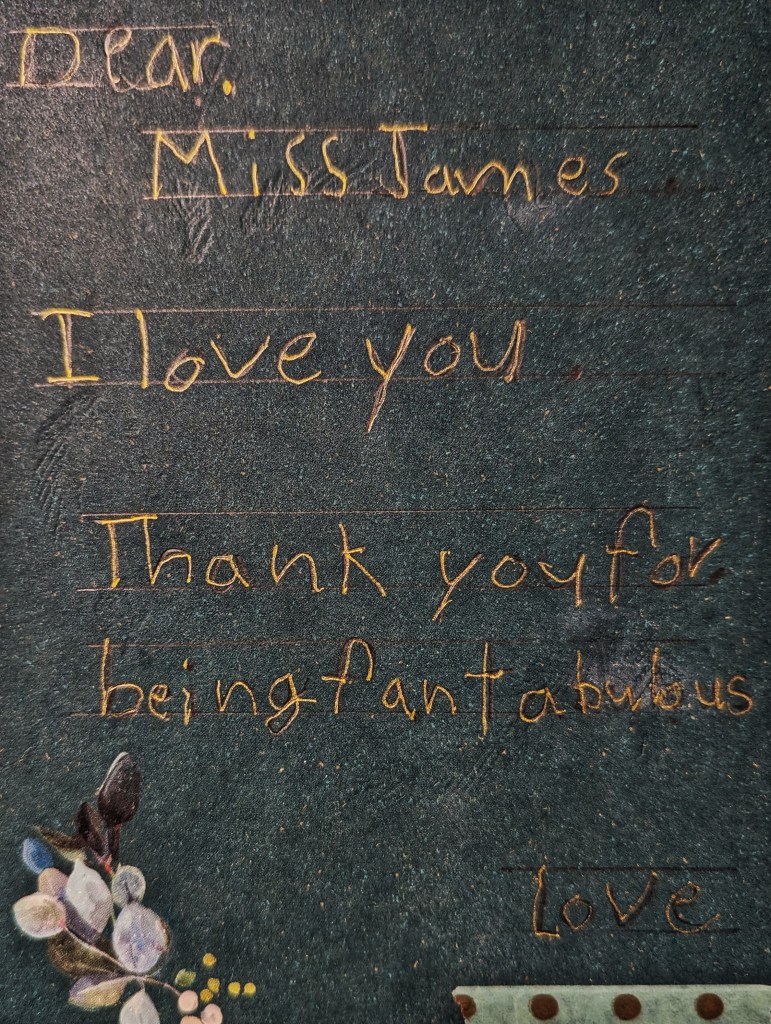
And then there’s my sweet Kindergartners. One mom emailed me to share her daughter had been asking when she might have a playdate with me! And then, I a letter in the mail from another KJer proclaimed “Miss James. I love you. I loved being in KJ. Thank you for a great year. You are the best teacher.”
I know they don’t have a lot to go on when they proclaim me the best teacher. I understand it means they have experienced goodness, kindness, and acceptance in me. It means they have experienced and know that I am their (to quote Rita Pierson’s TED talk) “champion, an adult who will never give up on them, who understands the power of connection, and insists that they become the best that they can possibly be.”
Never underestimate the power of love, joy, relationships, understanding, acceptance, and dogged determination that we should all be the best we can be.
And (if you’ve read my previous post) never be afraid to share the joy of your art — cause we are all artists — with others. The crane’s flying soon!
Life isn’t always easy. Sometimes it’s downright hard. For a plethora of reasons, now is one of those downright hard times. So, what do I do to help combat the overwhelm and find a sense of peace and control? Clean, rearrange, go through things, be inspired, or if I’m not inspired, purge.
Today I found inspiration in a sketch I did with my Kinders, and an end of course assignment from IDEO’s Creative Leadership program.
Crowned with Hope
This sketch is from an assignment I gave my Kinders. Who are you? How might you change the world. I sketched myself as the Queen of Hope, or perhaps just as myself, an ordinary human, gifted with a headpiece of hope. Did you know the first definition of headpiece on merriam-webster.com is “a protective or defensive covering for the head.” Imagine! Hope is protecting and defending me!
Hope is a wonderous, powerful thing. It enables one to face and fill the unknown and the what ifs with positive possibilities. Instead of imagining the worst, hope encourages us to use our imagination to see and create the bestpossible next moment.
I’m reminded of an A.A. Milne quote:
Supposing a tree fell down, Pooh, when we were underneath it?’ ‘Supposing it didn’t,’ said Pooh after careful thought. Piglet was comforted by this.
― A.A. Milne
Hope seems to travel with encouragement and possibility. After the sketch, I stumbled upon the letter I wrote myself as one of the final assignments for IDEO’s Creative Leadership course. If you’ve never written a letter to your future self, you might want to try it. It might feel silly. Do it anyway. Perhaps imagine yourself as someone else you are coaching. Be honest and encouraging. The process and product are powerful, and a lovely gift to your future self.
A Letter From Me to Me (Do you get the reference? It’s a gift Dave, from me, to me! )
Dear Molly,
You rock, girl! I love the path your life is taking. It’s awesome to see you continue to move forward with relentless positivity and joy. You really are fantabulous. Don’t ever doubt it!
The IDEO course was awesome, wasn’t it? I’m glad you engaged in the struggle, and had a lot of aha moments!
I’m so psyched you’re going to continue to listen, take time, and engage — eye to eye! I can’t quite decide which is most important, so I’m going to rant a bit about each. You’re shocked aren’t you?!?!!! (Not! lol)
LISTEN Listen with your eyes, your ears and your heart! Listen to yourself, your students, your colleagues, your intuition. Listen to the questions, the answers, and the lack of answers.
TAKE TIME Take time to ask a plethora of good, open ended, encouraging, hopeful questions. If you can’t think of any, take a bit more time, have a cup of tea, and trust they will come! Experiment, ideate, iterate and just have fun. Invite others to join you. Oh, and don’t forget about yourself!!! Feed your soul, and your creative self — breathe, pray, make, think, do, and just be.
ENGAGE — EYE TO EYE It’s so important, and so awesome, when you do this, Molly! Some of the most amazing times are when you engage, eye to eye, with those around you — especially those young students of yours! Don’t let others, or the job, or time, or anything else, rob you of this great joy and privilege.
Through it all, Molly, believe and trust. Believe in yourself and your creative team. Believe in the profound power of learning, relationship and creativity! Trust your knowledge, your intuition, and your awesomeness!
You have a strong point of view about your students, life, learning and creativity — – and it’s a profound one, Molly! Continue to embrace it, share it, grow it and live it!
You create cultures of trust, joy, positivity, possibility, inspiration, collaboration, creativity, learning and transformation, Molly. You encourage curiosity and a willingness to risk. And when there’s failure — and there so often is — you work to help your team, and yourself, accept it, learn from it, and move on with relentless positivity.
You are present and engaged, in really beautiful, powerful ways. Making space for your self, others, questions, possibility, creativity, joy, ambiguity, tension, mess and even chaos, is a gift, Molly, and you have it!
You really are something else, Molly. I can’t wait to see what the future holds. I’m sure remarkable things will come from your new thoughts, ideas, learning, and practice.
The day before winter break I was surrounded by students as we talked about our upcoming performance and I opened various cards and gifts. One of my Kindergartners looked at me and asked “Miss James, why does everyone say you’re the best?” All eyes turned to me as they awaited my response. Genuinely curious I responded “Hmmm … why do you think people say that?”
There was some chatter amongst themselves and then they turned to me and said “Because you love us.”
I responded “Yeah, I do love you. Do you think that makes me the best?”
They responded “Yes.”
It’s an answer that gets to the heart of the matter. I do many things. I am always thinking, changing, making, trying new things, talking, explaining, laughing, teaching, learning, guiding, and being with them. But at the center of it all is love. I love them.
What the educator does in teaching is to make it possible for the students to become themselves.
I trust my love makes it possible for my students to become themselves — their best truest selves. Yes, of course my diligence, my fantabulousness, my work, my thought, makes it possible, but mostly it’s my love. All that other stuff grows in strength, brilliance, and awesomeness because of love.
Funny, I thought this would be a quick post about the power of love in the classroom. But, as I wrote I was reminded of a conversation I had years ago with someone in the educational field who discounted the idea of love. They declared it was only a word and would fail at some point. I was aghast. Love only a word??? Love would fail! Never. Might I fail, yes. Might I be less than loving? Of course. But when I say I love you, I mean it in all the power it can hold. Love isn’t a sentiment. It’s a way of being. It’s a choice.
Anyway, that recollection urged me to look for a way to put into words what I mean when I say I love my students.
Andrea Bonier PhD wrote about healthy relationships in Psychology Today. When I read her article, I thought about my students, my love for them, and theirs for me. Here are her 11 elements of a healthy relationship (and one of mine). Perhaps they don’t contain the fullness of what my love for my students is, but, they are a concrete way to see the love I have for my students.
Trust – I operate from a place of trust. I trust in their word and their abilities. I live in a way that enables them to trust me. I encourage them to trust themselves and each other.
Communication with openness and honesty – We communicate a lot — sharing our feelings, our ideas, our wondering, our apologies, our needs and wants. I do my best to model the best form of communication — honest, respectful, and powerful.
Patience – Phew. Every relationship requires patience. Relationships in a classroom often seem to require more. I do my best, but when I fail, I apologize and try to do better. My students do the same.
Empathy, healthy conflict resolution, and individual boundaries – I’m always trying to increase our Emotional Intelligence. Are we self aware? Are we socially aware? What are we feeling? What might they be feeling? Have we talked with each other? Have we really listened to what is being said? What did I hear? How might I behave because of what I’ve heard and know.
Affection and Interest – Love is action, but there is also feeling, emotion, and affection — even in the classroom. Learning to navigate that is a huge part of loving well. And interest — oh my yes, we all want to share about ourselves. We want others to be curious, interested, even amazed. I always operate from the position that nothing they do or are can be relegated to the “Oh that’s so cute.” category. There’s always more — it’s hard work, it’s imaginative, it’s creative, it’s fantabulous, it’s worthy of my time and attention.
Flexibility – Whenever it’s possible I am flexible and give choice and wiggle room. For me it goes back to trust, empathy, and affection.
Appreciation and if I might add valuing – I appreciate and value my students and let them know. I appreciate and value their hard work, their humor, their thoughts, their courage, their love, their willingness to try, and much more.
Room for Growth – Gosh yes, this is a huge part of love. We always have to give others the room to grow and change. We are not who we were yesterday, or for that matter even a moment ago. Allow for growth and when appropriate, communicate about it.
Reciprocity – There are many opportunities for reciprocity in our learning space. Learning from one another, doing for and with one another, supporting one another. These are not just roles that I fill. I encourage my students to teach me, to show me, and I let them know that I’ve been inspired or learned from them. I accept their help with grace and gratitude, even when I know I can do things faster and or better than they can. I check in with them often, and I relish the moments they check in on me.
I found myself in an unusual emotional space at the end of this school year. I had the same bittersweet feelings about my students and I leaving one another. But, I also had rather strong feelings of angst, frustration, stress, and honestly, just overall ick. Top it all off with the perception that I couldn’t shake the ick, but instead was somehow stuck in that grey, disgusting, frustrating, depressing, putrid space.
How’s that for an image?
So, what’s an educator to do when she finds herself in that spot? Choose a new story.
Kindra Hall says “In life, the most important stories are the ones we tell ourselves.”
If I were in the audience when she said it, I might have jumped up and yelled “Preach it, sister!”
Ah, but how to do that? It seemed the story I was telling myself was quite true. It certainly felt true. And, in some very real way, it was true. But was it the whole story? Was it the only story? Was it the story I wanted to choose to tell myself about the year, or me, or teaching, or the world? No, no, no, and no, it certainly was not.
Well then, what was that story? What was the truth I was overlooking, or not highlighting as the star of my story? What is the story I want to tell myself about this year, and perhaps about every year?
It is a story filled with love, triumph, learning, and inspiration. Listen as I tell myself (and you) the truest stories about this year.
One night this spring, I just broke down. Crying, I said “I don’t know what the matter is.” My brother paused and softly said “It’s been a hard two years.” It has indeed. I did cancer treatment – during a pandemic. I didn’t teach or coach for what seemed like forever. I felt awful more than I felt good during my six months of treatment. I taught Kindergarten virtually after spring break – that’s a remarkable new level of exhaustion. I took a 200 hour yoga, SEL, and mindfulness course as I recouped over the summer. I returned to the classroom in person this school year with a compromised immune system, no antibodies, masks, seating charts, tons of new tech, and tons of new teaching load. For sure it’s been a hard two years.
And yet, at the same time, and for many of the same reasons it’s been a year of triumph, grace, gift, and amazing strength, love, and overall fantabulousness. Let me explain.
I did cancer treatment, during a pandemic, with drugs that compromised my immune system more than it already was. I did it! Not by myself, mind you. I did it with the help of the amazing docs, nurses, and researchers. I did it with the love and support of family and friends. We did it! Me, and my tribe, did cancer treatment during the pandemic, and lived to tell about it with smiles and deep gratitude to God.
I taught Kindergarten — virtually! Not by myself. I did it with the help of many beautiful, kind people who helped me, encouraged me, affirmed me, and sometimes sat with me while I cried. And I didn’t just do it. I did it well. I proved that distance is not a deterrent to learning or to relationship. It’s an opportunity to rethink, to collaborate, and to figure out ways to make it amazing.
Fall of 2021, I returned to my Kindergarten classroom with a compromised immune system, no antibodies, masks, seating charts, tons of new tech, and tons of new teaching load, in a year that was difficult, exhausting, and taxing to the best of us. I returned. I struggled. I ideated and iterated. I breathed through a lot. I imagined possibility and I worked to bring it to pass. I entered into relationships with my Kindergartners and their parents. Together we created a year of learning, joy, discovery, and creativity. Together we created and lived a year of triumph!
A sentiment I send right back to all my Kindergartners and their families!
As I processed this to share, I noticed the Kindergartner’s handwriting. It is ALL correct upper and lower case letters with beautiful legibility. That is a triumph on so many levels!
At times this year was fraught with stress and anxiety. Unwilling to have that be our experience of the year, we worked together to fill the year with joy, peace, affirmations, breath, and mindfulness. As those dear sweet Kindergartners wept — missing their parents, unsure of what their friends where feeling — we breathed together. Sometimes I held their hands, and did the affirmation and breath practice while they simply stayed with me. I trusted that their mirror neurons would do their job and calm them by simply observing my practice of self-regulation. At other times the Kindergartners were the ones reminding me to breathe and practice mindfulness of doors, or helping their friends with affirming thoughts and suggestions of ways to proceed. They embraced their classroom jobs of peace person and positivity proclaimer and daily led their peers through mindful, beautiful moments of breath, affirmation, and peace. They even asked if they could increase their having a holiday job to include leading their friends in two yoga poses each morning. They also took their practice home and shared it with their families and friends. I know, because parents regularly shared their amazement and gratitude with me.
As I gathered my thoughts for this post I went through the notes from this year, as well as ones I’ve saved from years past. These add weight and validity to my stories. They strengthen the positive neural pathways in my brain.
The Kindergartner made affirmations for the letters that spell my name.
Love notes from the Kindergartners
Thank you for creating a warm, peaceful, exciting, artistic, free thinking and child driven classroom.
You are a warrior queen — determined and victorious!
Remember what an inspiration you are to so many.
You encouraged her to try new things no matter how scary they seemed. You taught her to not be afraid to ask questions.
We appreciate your fantabulousity.
I’m not the only educator who had a difficult year of triumphant teaching and learning. I’m not the only creative one. I’m not the only amazing one. There are so many others. I hope each educator that reads this post, takes the time to carefully choose the story you are telling yourself. Make it about your triumphs, your discoveries, the lives you’ve changed, the relationships you’ve forged, the difficulties you have overcome. Make it the best and truest story about yourself, who you are, and what you do.
With gratitude to God and all the amazing people who encourage me to be me, and who help make what I do possible, I say, “I am capable, and strong. I have a big beautiful brain and am always learning. I am kind. I am brave. I can do hard things — and regularly do. I have an awesome heart. I make a difference. I inspire others. I am deeply loved. I am, and always will be, fantabulous. My year was not easy, but it was amazing.”
Post Script: If you’re anything like me, it may feel a bit uncomfortable to say all these things in such a public way. It may even seem somehow improper to do so.
But, the truth is it is completely proper, and absolutely necessary!
We must treat ourselves as we would a good friend or colleague. We acknowledge their foibles and the times they have fallen short, but we champion their fantabulousness and all their victories, and gains. We tell them the stories that help them understand who we know them to be. We tell others those same stories and more — because they are valuable stories — to tell and to hear.
Please tell your amazing stories! I’m happy to listen if you want to share them in the comments. But feel no pressure. Just tell them to yourself and at least one other.
But, as I sit here, surrounded by sweet cards, notes, paper bracelets, assorted treasures, and art, I’m reminded of the most important reasons — perhaps the only reasons — I teach.
Love Relationships Changing lives — theirs, mine, and hopefully, the world
By the way, at first I wondered why I was in a box. Then I realized, that’s how they saw me, and how they know me. At first my heart broke just a little, then I remembered my MA study. That’s how I always saw Karl, and it was no problem. He taught me tons, made me laugh, encouraged me, and helped me be the best me I could be — all through the magic of technology. Just like me and my students this year.
I agree, my fantabulous Kindergartners, I can’t wait to see you “in prsin”, either! But first, enjoy your summer.
Teaching — of every kind — is all about design thinking. Teaching remotely while your Kindergarten students are in school? That’s a whole other level of design thinking!
Much like when I teach in person, I’m currently doing whole class, half class, and small group teaching. I’ve been teaching number sense lessons during math in small groups. Depending on how you look at it, it’s been: … a lesson in patience … an example of how remarkable these Kindergartners are or … the perfect illustration that design thinking is an essential element of teaching.
Take this week as an example. I wanted the mathematicians to join me in some math talks. They love to notice and share. So, it seemed like a great idea.
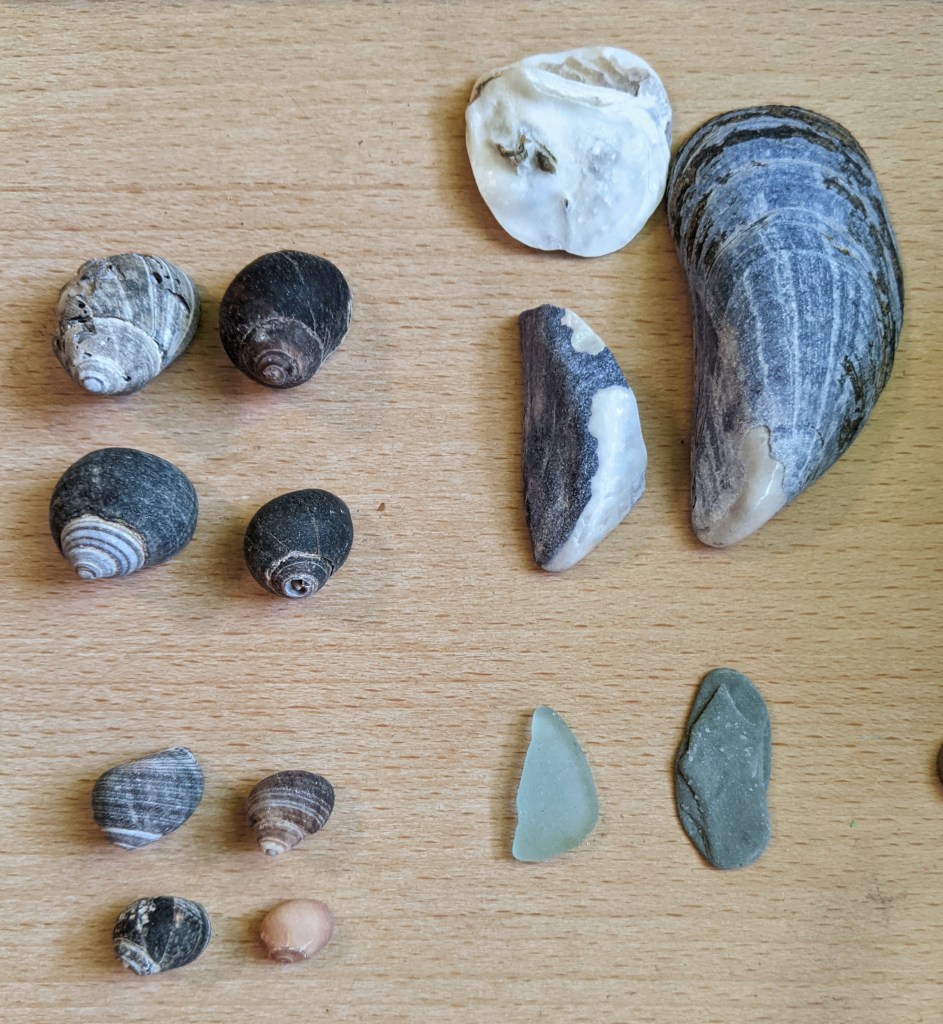
I populated a slide deck with some photos that allowed for all sorts of noticing. There’s tons of great photos online – just search for images for math talks. Or, make your own. You can group the items to encourage seeing in certain ways, or leave it completely free and see what they notice on their own.
I spent some time reflecting on the photos myself so I’d be prepared to join the conversation. My plan was to leave things very open. I hoped for something like this. … “I see shells and stones.” … “I see 4 small shells and 4 bigger shells.” … “Hey that’s 8 shells all together.” … “I see a cup with a tea bag in it.” … “I see a circle on the top of the mug and one on top of the glass. That’s 2 circles all together”
We noticed things. We did math. But, phew, it didn’t go as I hoped.
Other than math, here’s what happened. … My Kindergarten mathematicians were all over the place. (Note to self: it’s the last full week of school and their energy and excitement is, understandably, remarkably high.) … The technology didn’t work so well. Mathematicians were getting kicked off zoom. They couldn’t hear me, or I couldn’t hear them. … The other mathematicians and teachers in the room seemed quite loud to us on Zoom. … My patience, self awareness, and self regulation was quite low. … And, my quest for open ended discussion turned out to be a little too open ended.
So, I gathered my observations, thought about what my mathematicians and I, needed, re-considered the task and goals, and designed June Kindergarten Math Talk Iteration #2.
Day 2, iteration #2: Included: …. Fingers crossed for better wifi connection. … More patience from me. … More self awareness and self regulation for me. … More breathing for me and my mathematicians. … A request to colleagues to monitor the classroom volume level. … A new prompt – What MATH do you see?
We noticed things. We did math. And, things went a bit better.
The tech worked better. The class was quieter. I was calmer and happier — so were the Kindergarten mathematicians. But, they remained a bit distracted by the very technology that allows us to meet together. They adore writing on the screen and wanted to do it more — and it was tough to be patient and take turns. They love changing their names, and found it difficult to focus on math instead of surreptitiously changing their screen names.
Once again, I gathered my observations, reflected, pondered, and created the June Kindergarten Math Talk Iteration #3 — unless, of course, you count the many tiny changes I did on the fly. If you do, then consider this iteration #453.
Day 3, iteration #3 (#453) included: … Mathematicians come to group with whiteboard and marker. … I give mathematicians 2 minutes in the beginning of our session to change their names. Four of … us are now Miss James! … Same question – What math do you see? … Mathematicians take turns choosing a photo to examine. … Mathematician who chooses the photo, share her findings by writing on the screen. …. I stop share so other mathematicians can share their findings on their whiteboards. … Repeat for each mathematician.
We noticed things. We did math. We had fun. I didn’t have to do much classroom management.
I don’t have a day 4 or 5, but my mind is already iterating. I’m taking what worked, combining it in new ways, and being inspired to make changes that allow for remediation as well as enrichment. … Choose an image. Each mathematician finds and circles a particular quantity (2 eyes, 1 nose, … … etc). We all then use our whiteboards and various strategies to determine how many we have all … together. Then we share how we figured it out. … Same as above but I get to remove a quantity., or ask what is one more or one less. My mathematicians figure out the answer and share how they figured it out. … We choose a quantity and each mathematician shares a way they see it in the photo. … We all use the chat feature (I disable private chat) and they each write the quantity they see into … the chat box, but we don’t share it until we count to three, or to 10 by 2s, or to 20 by 5s.
Empathize. Define the problem. Ideate. Prototype. Test. Repeat/Iterate. It’s what we do as teachers. I love the d.school design thinking bootleg deck. It keeps me thinking, and reminds me of the remarkably deep design thinking I engage in as I teach.
I’m teaching again! I’m super excited to be back, getting to know the girls, and doing my thing.
One big wrench in the works — or one gigantic and glorious opportunity for new thinking and wonderful possibilities, depending how you look at it — is that I’m teaching remotely. Most of my class is back in school, and one student continues to learn remotely.
It’s a lot of work to teach and develop relationships in person. Now I’m doing that remotely. Can you say “PHEW!”
This week I got to teach art. I could cry with happiness!
And, speaking of crying, I did cry — big ugly crying — as my colleague and I tried to work out the logistics for the art class. We went through many possible iterations, and each one seemed to have a reason it might not, or would not, work. Thank goodness, my colleague was super understanding and encouraging. She told me I was doing a great job and it was only the second day back in school. She assured me we would work it out. and it would be awesome. I decided to believe her, and signed off for a much needed moment and cup of tea.
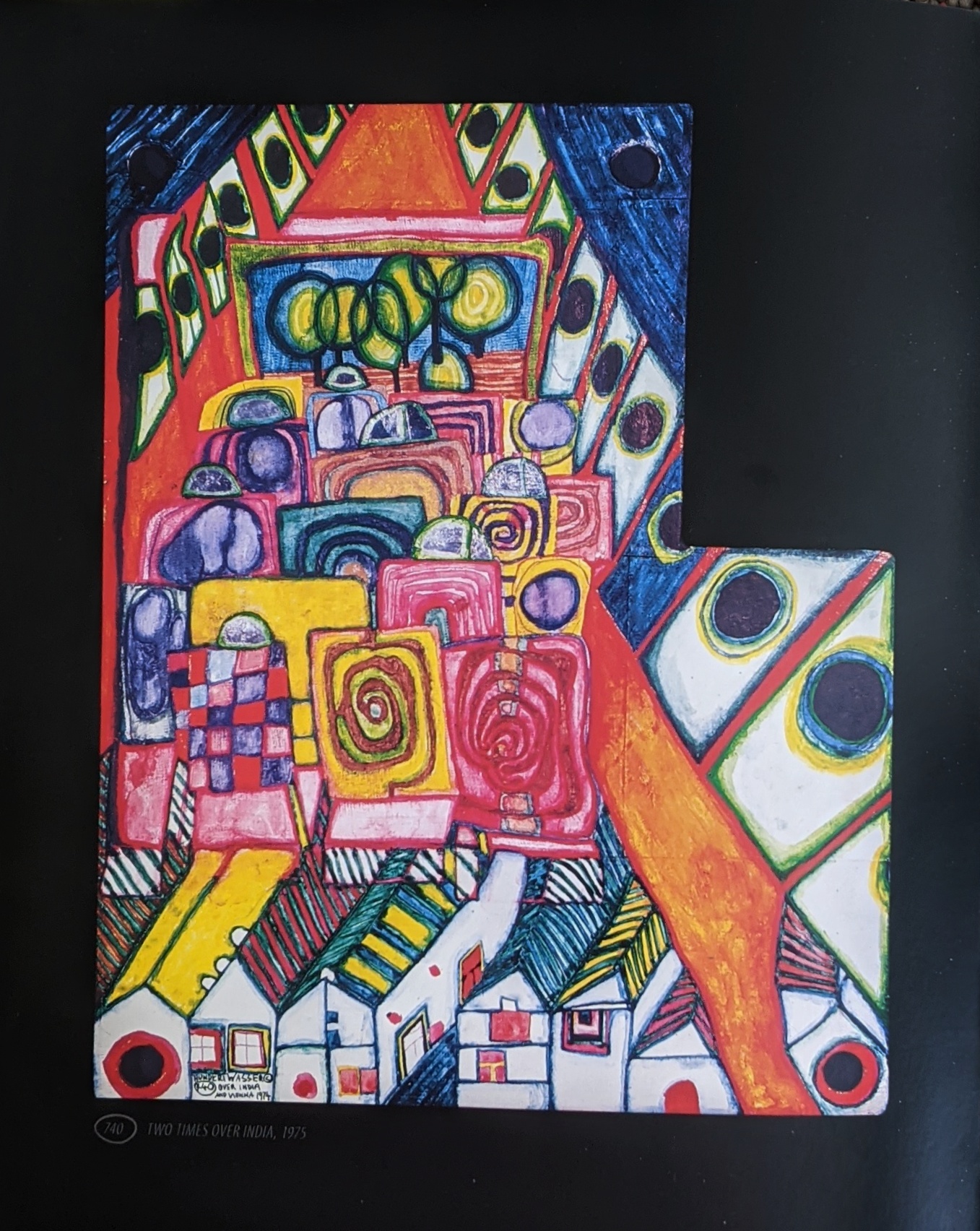
Once I was settled and able to agree — It is only the second day. I am a fantabulous teacher. It is going to be alright, maybe even better than alright. — I was able to take a breath, and think creatively about what and how to teach. I settled on Hundertwasser.
First I considered how my image might be the large enough for them to see me, and the art I shared, while still allowing me to see all of them. A friend of mine signed on to a zoom call with me — along with her two daughters — to test out spotlighting and pinning. Pinning seemed to be the best choice.
Then I looked at my Hundertwasser books. What images did I have? Could I narrow them down to no more than 5? I wanted the Kindergarten artists to have time to notice, think, and wonder about the art, but I also wanted them to have plenty of time to create their own work, inspired by Hundertwasser.
What did I want them to know about Hundertwasser? I decided on these points:
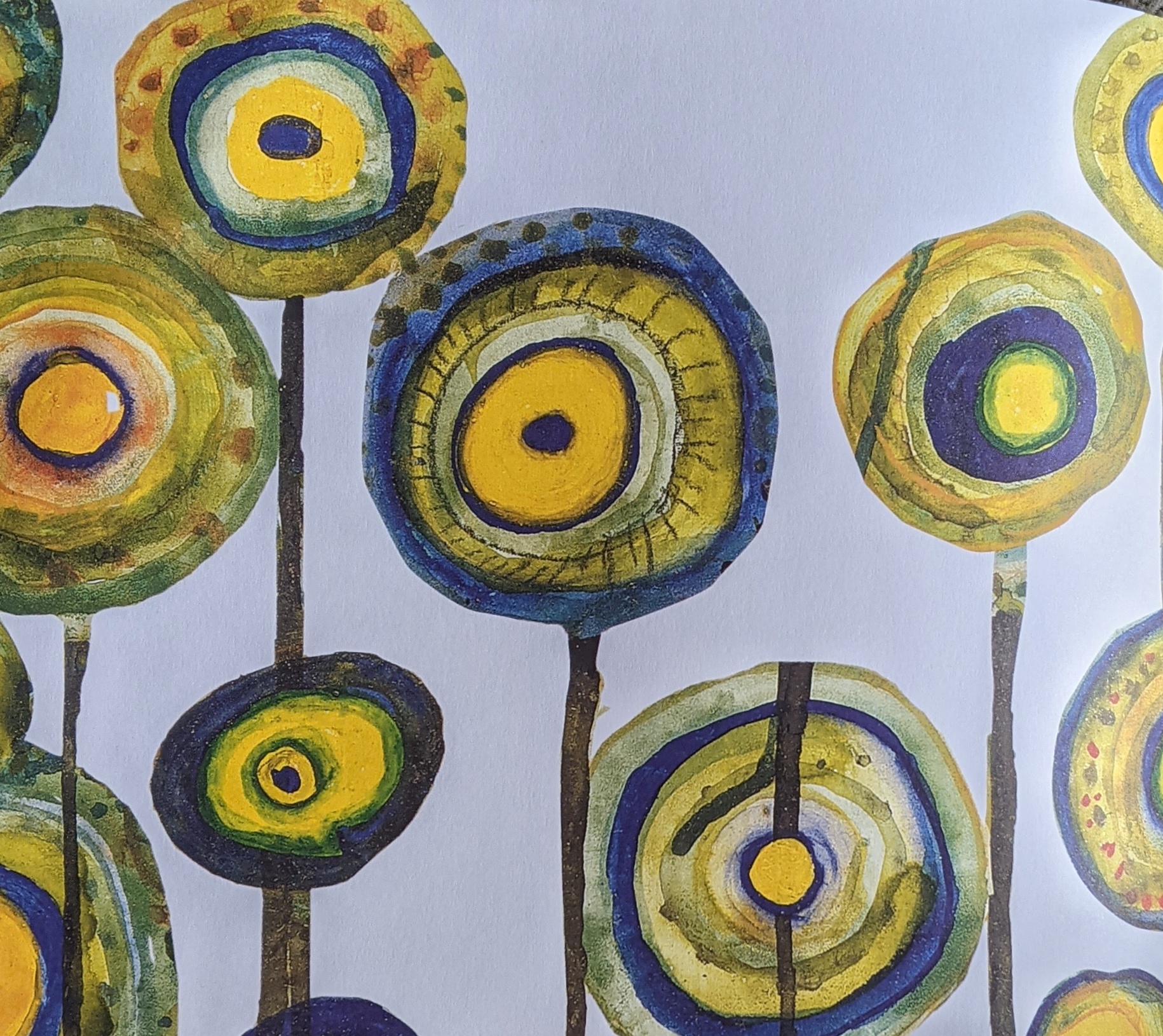
Hundertwasser was curious and couragous. Hundertwasser did a lot of thinking and imagining. Hundertwasser’s ideas became artwork or buildings. Hundertwasser liked spirals, wavy lines, bricks and stones on his buildings, lollipop trees, and color. Hundertwasser changed his name when he became an artist.
I shared these images with the Kindergarten artists, and we dialogued about them.
Once they were familiar with Hundertwasser, I asked the Kindergarten artists to use their sketchbooks to experiment with, and practice, the various elements. They worked with determination, focus, imagination, courage, and joy. They used the classroom document camera to show their sketches to me. I shared what I noticed, thought, and wondered. I did my best to encourage their artistic freedom and decisions making, while also highlighting the elements we were using from Hundertwasser’s art.
I was surprised how well we were able to interact with one another. Even though we were miles away from one another, they seemed to be able to feel my love, respect, awe, and joy. I worked hard to express it through my emotions, language, and very self. I was very intentional with my words, and actions, so as to be able to express what I was feeling, thinking, and believing about them.
Before the second Hundertwasser inspired class, I again thought deeply about what I would present, as well as what we would discuss. The time and zoom constraints were a blessing — an annoying blessing but a blessing none-the-less. The constraints forced me to be very clear about my purpose and plan.
The Kindergarten artists and I reviewed the elements together, and re-examined the images so they were fresh in our minds. I shared a bit of my thinking as an artist. “I do lots of thinking – and often move my head or step back in order to see my art work in new ways.” I told them Hundertwasser was very thoughtful as well. I assured them that they could do great art thinking, and make great artistic decisions, too! I showed them a few watercolor tricks – using your dry brush as an eraser of sorts, and mixing colors on the page rather than a palette.
Finally I reminded them about Hundertwasser changing his name when he became an artist. Since we are all artists in Kindergarten I suggested we all change our names for this piece of art. I told them some names I was considering, and remarked that Hundertwasser changed his name to something that had meaning to him (peace and water).
After reviewing the steps – pencil first, sharpie marker next, then colored pencils if wanted, and and finally watercolor — I set them free.
I decided to work on my own art while they worked on theirs. I resisted the urge to micromanage them, but instead chose to trust them as artists. One of my colleagues asked if a teacher should see their work before they moved on with each step. Taking a deep breath, and willing myself to continue to trust those artists, I said wanting to be clear to her and the Kindergarten artists, “Nope. We don’t have to see it. They know what they have to do, and I trust them as artists. I’d love to see their work, but they don’t have to show it to me.”
My art was wonderfully interrupted by Kindergarten artists eager to share their work with me. Each time I would do what I did with their sketching. I would affirm their artistic decisions, express awe and joy, notice the elements they had included, and encourage them to think if they might add whatever was missing. But, if they pushed back that they were totally happy with their work, and it didn’t stray too far from the path we were walking together, I accepted their decision.
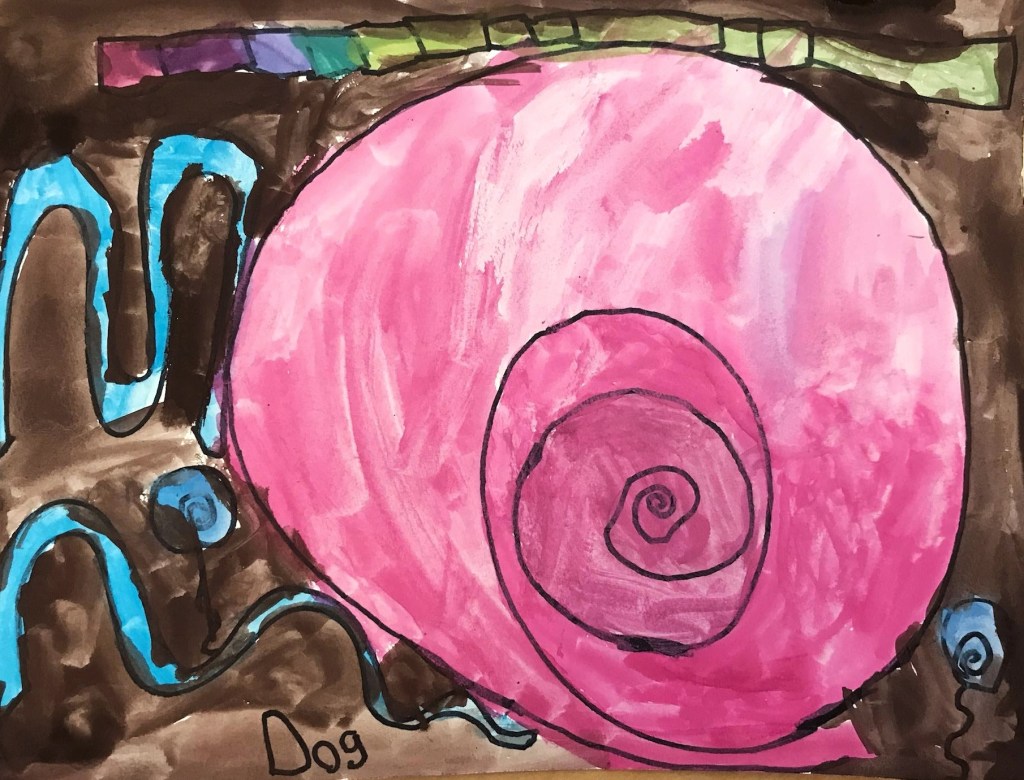
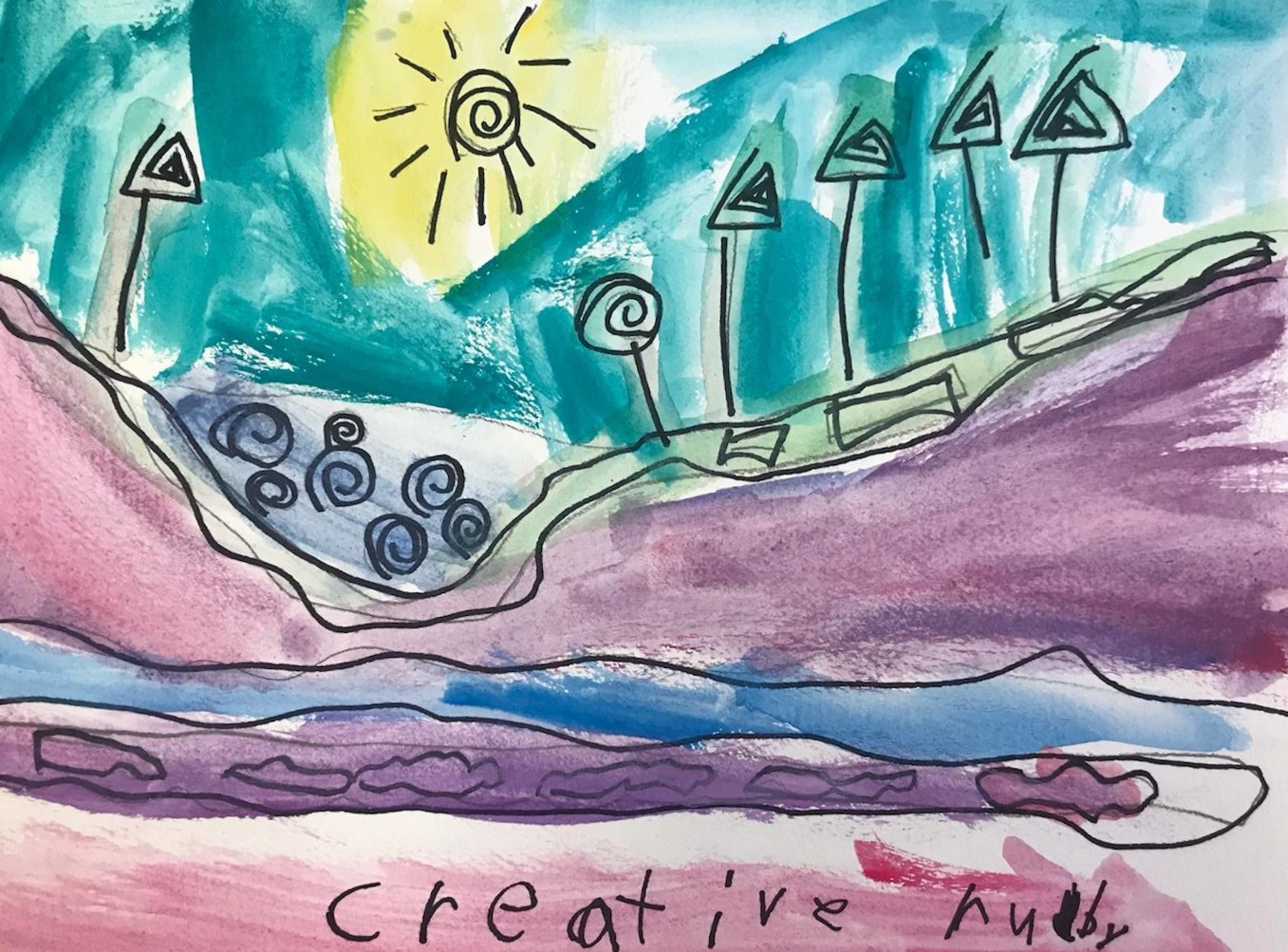
At the end of the class I heard a call “Ms. James, the artist known as Dog, would like to show you her work. And here is the work of the artist known as Creative Trees. Oh, and the artist known as Swirl, as well as the artist known as Creative Ruby, would also like to show you their work..”
I laughed out loud, and expressed my joy to these fantabulous Hundertwasser-inspired artists. Their work was amazing. Their name choices were spectacular.
I’m SO glad I took the risk and trusted the Kindergarten artists!
Their work didn’t turn out as I imagined it might when I picked Hundertwasser as our inspiration. But, that’s exactly as it should be! Their work turned out like a piece of Hundertwasser- inspired art — created by them, not by me.
Teaching is not an easy job. It’s a great one, but certainly not an easy one.
Each day of teaching is a mix of incredibly awesome moments — joy, discovery, laughter, learning, negotiating, helping others, finding problems, brainstorming possible solutions, experimenting, exploring, being inspired – as well as frustratingly annoying and energy sapping moments.
In each moment it’s possible for us to be our best selves. Possible, but not simple or easily done.
I’ve been experiencing some of those difficult moments lately. Painful, frustrating, make me want to quit kind of moments. And then — thankfully — I got an unexpected, and lovely reminder that I shouldn’t quit.
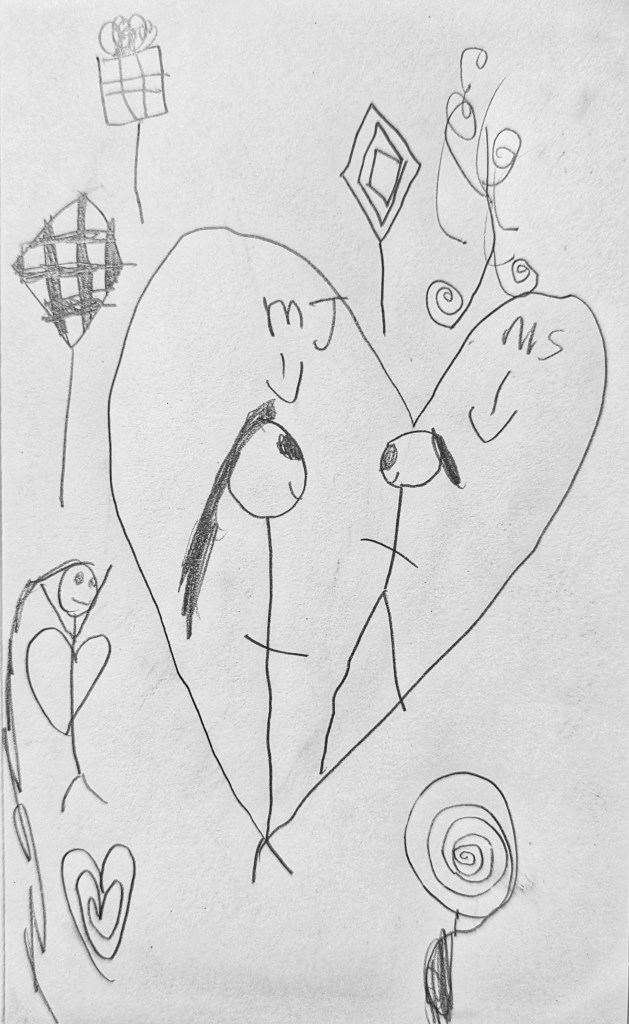
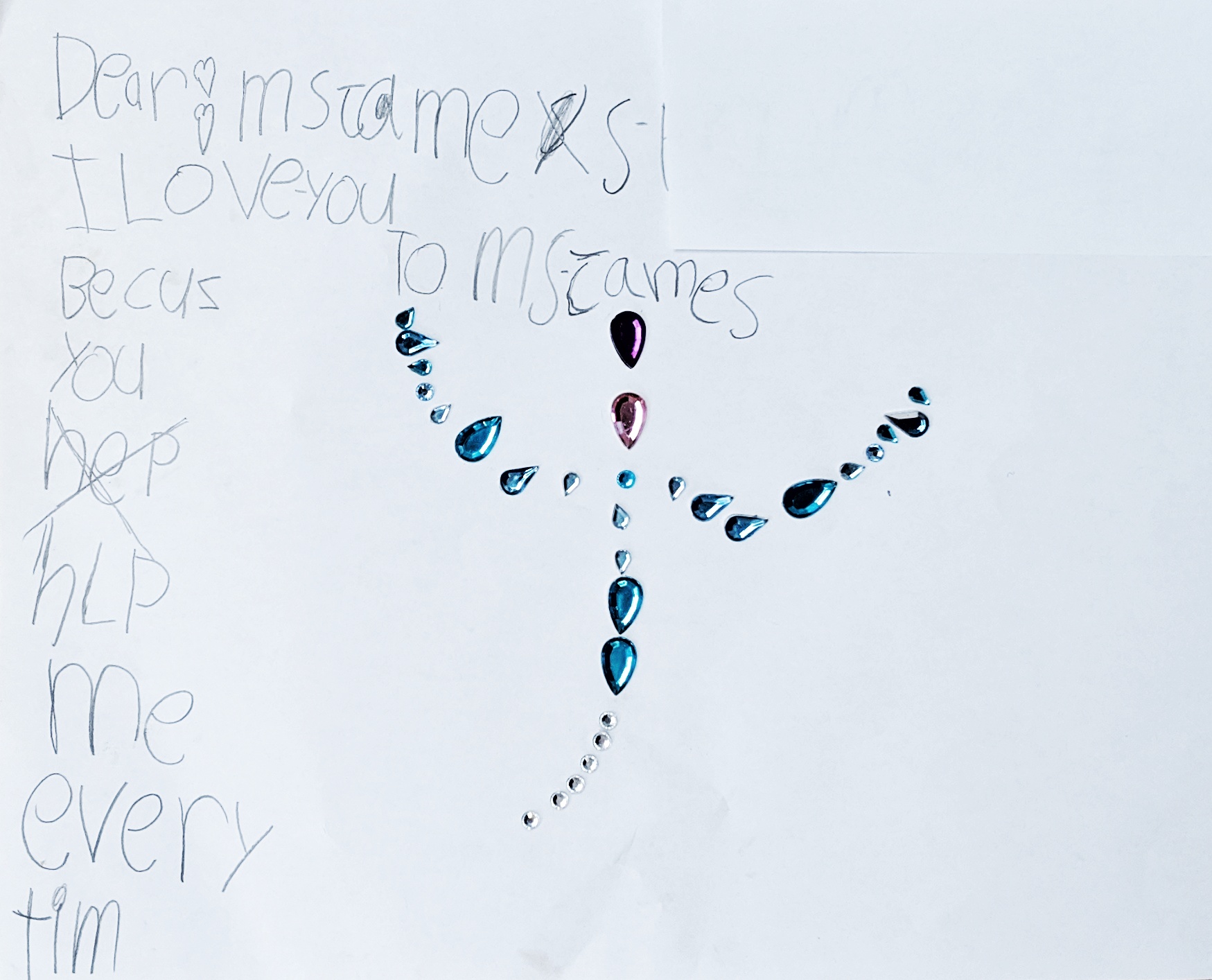
One of my girls ran back into the classroom after being dismissed, and handed this to me. “Here. This is for you.”
I love you too, my sweet, strong, and courageous girl.
This is why I work as hard as I do. This is why I am constantly learning, and why I always work to improve my practice. This is why I endure the angst and frustration.
I do it because I love these young humans. I do it so I am always prepared to help them – every time.
Thankfully, my mighty wee ones reach out and help me as well – every time.
Contrary to what people outside of education think, things don’t wind down as the year ends. Instead, they ramp up, and come dangerously close to spiraling out of control. Holding onto the tail of that spinning mass is exciting — and exhausting.
Each night I tell myself I’m going to bed by 9PM, and at 11 PM I’m still awake, working. When I close my computer and my eyes it seems like only minutes until my alarm announces 5AM.
It’s the end of the school year.
I’m tired. I’m sick with a cold. I’m coughing enough to make my head hurt. I have tons of assessments to catalogue, reports to write, forms to fill out, orders to make, and curriculum maps to tweak for next year. My classroom no longer has children in it, but it has lots of stuff in it. Stuff that all needs to be gone through and placed in its proper spot.
That brief rant may make you wonder why I teach.
Sometimes it makes me wonder, too!
Thank goodness, deep down, under the weariness, I know why I teach. Teaching is me. It’s what I do. It’s who I am. It brings me joy.
Even though I know teaching is my thing, still, it’s really nice when someone else notices and points it out to me. Especially in these moments of fatigue and big work it’s super helpful to be reminded I make a difference. I value each and every one of those comments. But, every once in a while, I’m blown away.
This is one of those times.
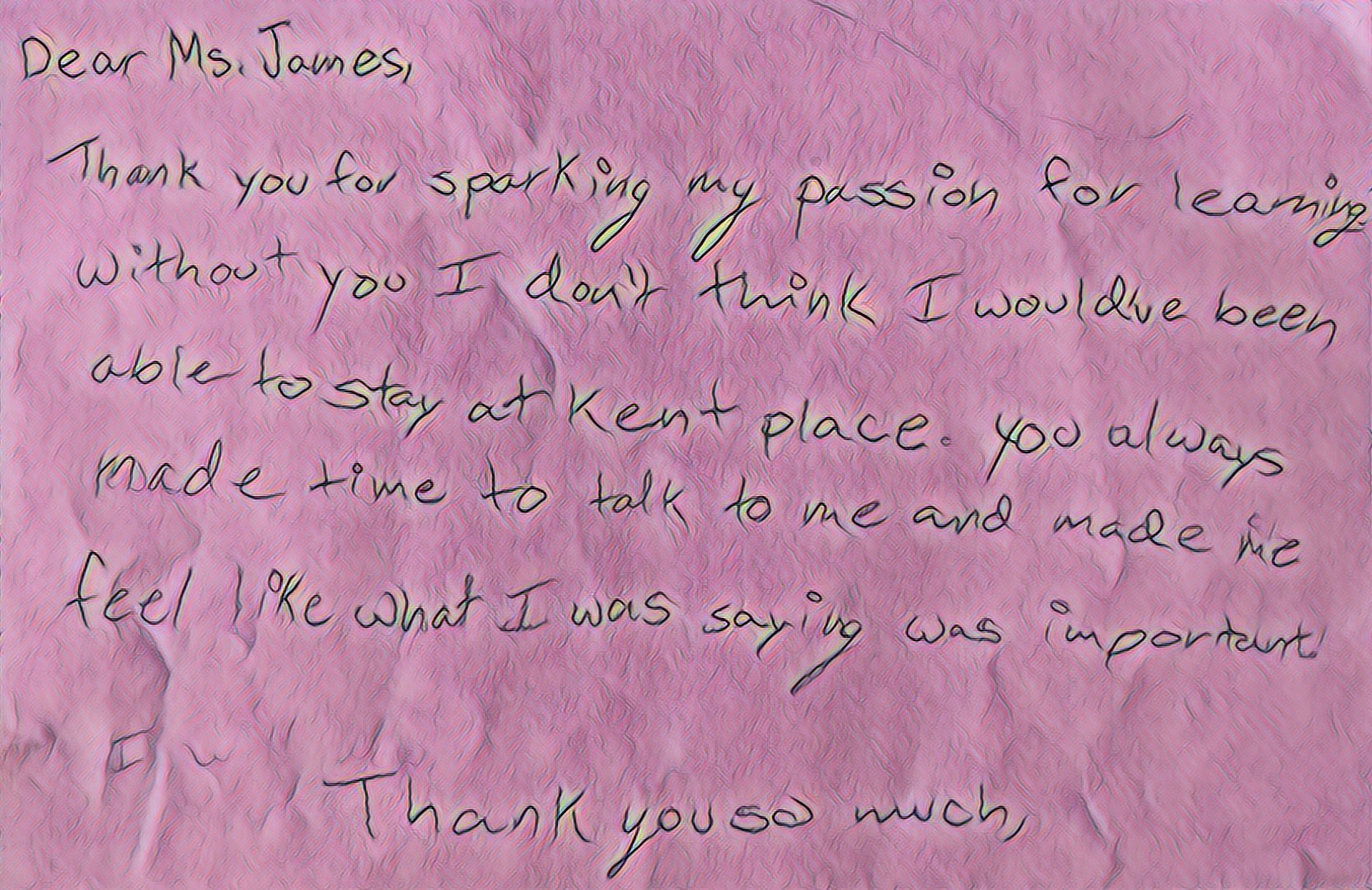
A few days ago I got this note in my mailbox.
Wow. Just, wow.
This is why I teach. I teach with that hope that I’ll touch hearts, minds, and spirits. I teach so I might spark a passion for learning. I teach so I can show each and every child that they are strong, rich, powerful, and important … foibles and all.
And, I teach because my students do the same for me.
I’m super grateful this 9th grader took the time to write to me.
I helped her see her worth and power. She helped me see mine.
My first Kindergartners are now 10th graders. Hard to believe, but true.
Recently, I had the pleasure of seeing one of them participate in the NJ Poetry Out Loud finals. She recited three poems. Each was filled with pauses, inflection, breath, emotion, and gestures, which drew me more deeply into the words and meaning of the poems.
My favorite was Undivided Attention by Taylor Mali. It’s a fun, and thought-provoking poem for an educator. An added sweetness was that I was introduced to it by my alumna!
If you’re unfamiliar with the poem, take a moment to go read it now. Especially if you’re an educator, read it — right now.
I’ll wait.
The whole thing is glorious. But, if you ask me, the most striking part is:
So please.
Let me teach like a Steinway, spinning slowly in April air, so almost-‐falling, so hinderingly dangling from the neck of the movers’ crane. So on the edge of losing everything.
As I listened to my alumna recite the poem, I imagined the educator asking permission of her administrators, coordinators, and colleagues to allow her teach in this fashion. As I listened, I heard her imploring others to share her vision.
Later that day I read the poem to myself, and then aloud to others. I heard it differently. I’m not completely sure why.
Perhaps I heard it differently because it was my own voice that spoke the words. Or, perhaps it was because Mali’s words had been floating in my brain since the morning, somehow becoming my own.
“Let me teach like the Steinway …so almost-‐falling, so hinderingly dangling … let me teach like the new snow, falling.”
The word I heard, with soft, encouraging, invitation was me. It felt like a quiet manifesto.
Much like the piano movers I need to move my personal Steinways. My Steinways are lessons, ideas, inspiration, motivation, classroom culture, design experiences, creativity, and much more. Similar to the movers in the poem, occasionally, my eye-popping, jaw-dropping, risky, awesomeness has to hang out the window. Scary, but also a huge blessing, because, hanging out the window, others can see it, engage with it, and be excited by it.
First snow, falling, is nothing new, and yet each time it falls it feels new. The snow beckons all who notice it to come and look with long interested looks. It reworks the view out the window. It offers the opportunity for play, and the necessity of work. And, when examined closely, it reveals the marvels of each unique flake. That is a profound way to teach.
Yes. Let me teach like that Steinway — big, brave, bold, and fantabulous. Let me teach like snow falling — offering play and work, changing views, and surprisingly breathtaking wonders.
















 Life lived with relentless creativity