You Love Us

The day before winter break I was surrounded by students as we talked about our upcoming performance and I opened various cards and gifts. One of my Kindergartners looked at me and asked “Miss James, why does everyone say you’re the best?” All eyes turned to me as they awaited my response. Genuinely curious I responded “Hmmm … why do you think people say that?”

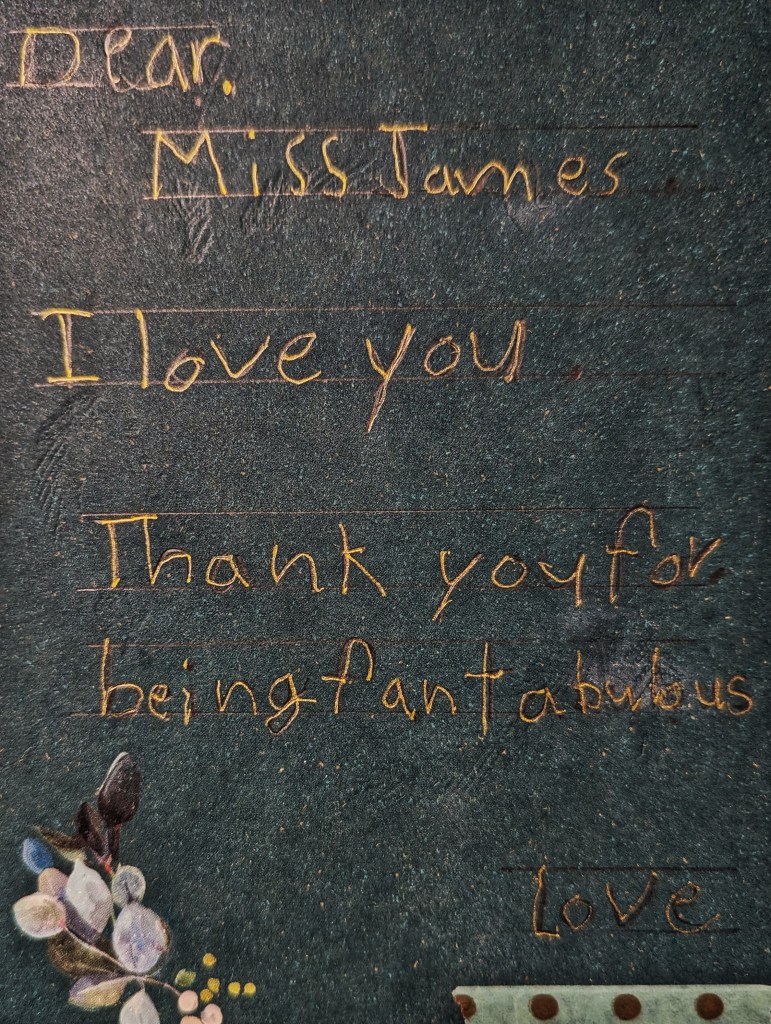
There was some chatter amongst themselves and then they turned to me and said “Because you love us.”

I responded “Yeah, I do love you. Do you think that makes me the best?”

They responded “Yes.” 
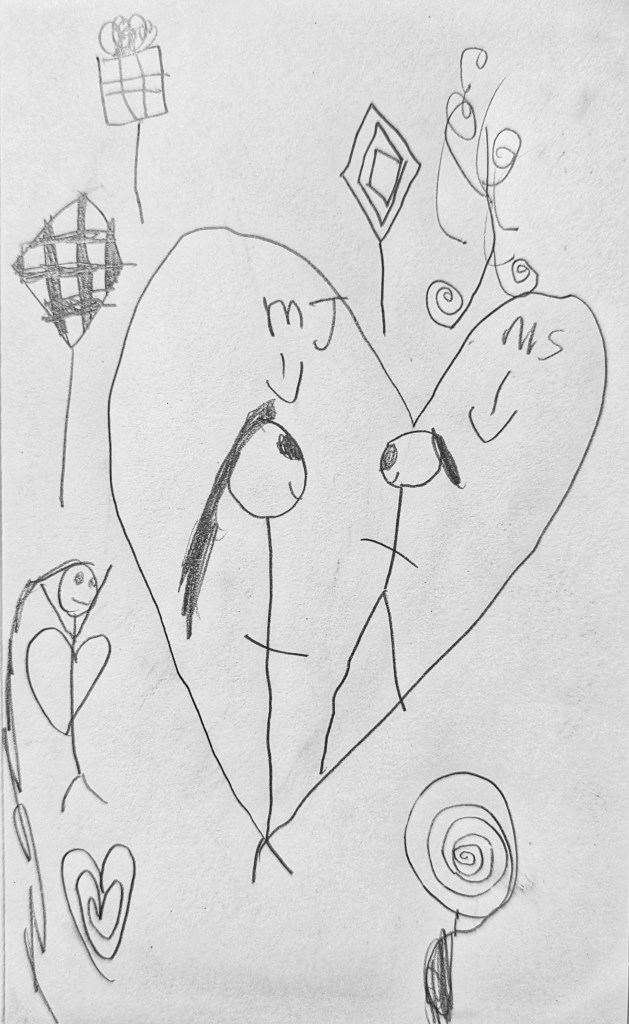
It’s an answer that gets to the heart of the matter. I do many things. I am always thinking, changing, making, trying new things, talking, explaining, laughing, teaching, learning, guiding, and being with them. But at the center of it all is love. I love them.

What the educator does in teaching is to make it possible for the students to become themselves.

Paolo Fiere (https://civiceducator.org/paulo-freire-quotes/)

I trust my love makes it possible for my students to become themselves — their best truest selves. Yes, of course my diligence, my fantabulousness, my work, my thought, makes it possible, but mostly it’s my love. All that other stuff grows in strength, brilliance, and awesomeness because of love.

Funny, I thought this would be a quick post about the power of love in the classroom. But, as I wrote I was reminded of a conversation I had years ago with someone in the educational field who discounted the idea of love. They declared it was only a word and would fail at some point. I was aghast. Love only a word??? Love would fail! Never. Might I fail, yes. Might I be less than loving? Of course. But when I say I love you, I mean it in all the power it can hold. Love isn’t a sentiment. It’s a way of being. It’s a choice.

Anyway, that recollection urged me to look for a way to put into words what I mean when I say I love my students.

Andrea Bonier PhD wrote about healthy relationships in Psychology Today. When I read her article, I thought about my students, my love for them, and theirs for me. Here are her 11 elements of a healthy relationship (and one of mine). Perhaps they don’t contain the fullness of what my love for my students is, but, they are a concrete way to see the love I have for my students.

  • Trust – I operate from a place of trust. I trust in their word and their abilities. I live in a way that enables them to trust me. I encourage them to trust themselves and each other.
  • Communication with openness and honesty – We communicate a lot — sharing our feelings, our ideas, our wondering, our apologies, our needs and wants. I do my best to model the best form of communication — honest, respectful, and powerful.
  • Patience – Phew. Every relationship requires patience. Relationships in a classroom often seem to require more. I do my best, but when I fail, I apologize and try to do better. My students do the same.
  • Empathy, healthy conflict resolution, and individual boundaries – I’m always trying to increase our Emotional Intelligence. Are we self aware? Are we socially aware? What are we feeling? What might they be feeling? Have we talked with each other? Have we really listened to what is being said? What did I hear? How might I behave because of what I’ve heard and know.
  • Affection and Interest – Love is action, but there is also feeling, emotion, and affection — even in the classroom. Learning to navigate that is a huge part of loving well. And interest — oh my yes, we all want to share about ourselves. We want others to be curious, interested, even amazed. I always operate from the position that nothing they do or are can be relegated to the “Oh that’s so cute.” category. There’s always more — it’s hard work, it’s imaginative, it’s creative, it’s fantabulous, it’s worthy of my time and attention.
  • Flexibility – Whenever it’s possible I am flexible and give choice and wiggle room. For me it goes back to trust, empathy, and affection.
  • Appreciation and if I might add valuing – I appreciate and value my students and let them know. I appreciate and value their hard work, their humor, their thoughts, their courage, their love, their willingness to try, and much more.
  • Room for Growth – Gosh yes, this is a huge part of love. We always have to give others the room to grow and change. We are not who we were yesterday, or for that matter even a moment ago. Allow for growth and when appropriate, communicate about it.
  • Reciprocity – There are many opportunities for reciprocity in our learning space. Learning from one another, doing for and with one another, supporting one another. These are not just roles that I fill. I encourage my students to teach me, to show me, and I let them know that I’ve been inspired or learned from them. I accept their help with grace and gratitude, even when I know I can do things faster and or better than they can. I check in with them often, and I relish the moments they check in on me.

Why Teach?

Oh my gosh the list is long.

But, as I sit here, surrounded by sweet cards, notes, paper bracelets, assorted treasures, and art, I’m reminded of the most important reasons — perhaps the only reasons — I teach.

Love
Relationships
Changing lives — theirs, mine, and hopefully, the world


By the way, at first I wondered why I was in a box. Then I realized, that’s how they saw me, and how they know me. At first my heart broke just a little, then I remembered my MA study. That’s how I always saw Karl, and it was no problem. He taught me tons, made me laugh, encouraged me, and helped me be the best me I could be — all through the magic of technology. Just like me and my students this year.


I agree, my fantabulous Kindergartners, I can’t wait to see you “in prsin”, either! But first, enjoy your summer.

It’s a Good Day

I haven’t added anything to my inspirational art journal lately. For some reason I’ve been feeling uninspired, and frankly, unconfident. As I experienced this lack of inspiration and confidence, I thought of my Kindergarten girls and all I ask them to do. Sometimes they are uninspired and unconfident, too. I don’t let them stay in that uncomfortable spot, or use it as an excuse. So, I figured I wouldn’t let myself do that either.

I didn’t immediately make an entry, but at least I noticed what was what, and agreed to make one soon.

As I waited to make an entry, I distracted myself by sorting through my rather large collection of books. I found a few books I am ready to let go, a TON of books I want to read, and an old journal.

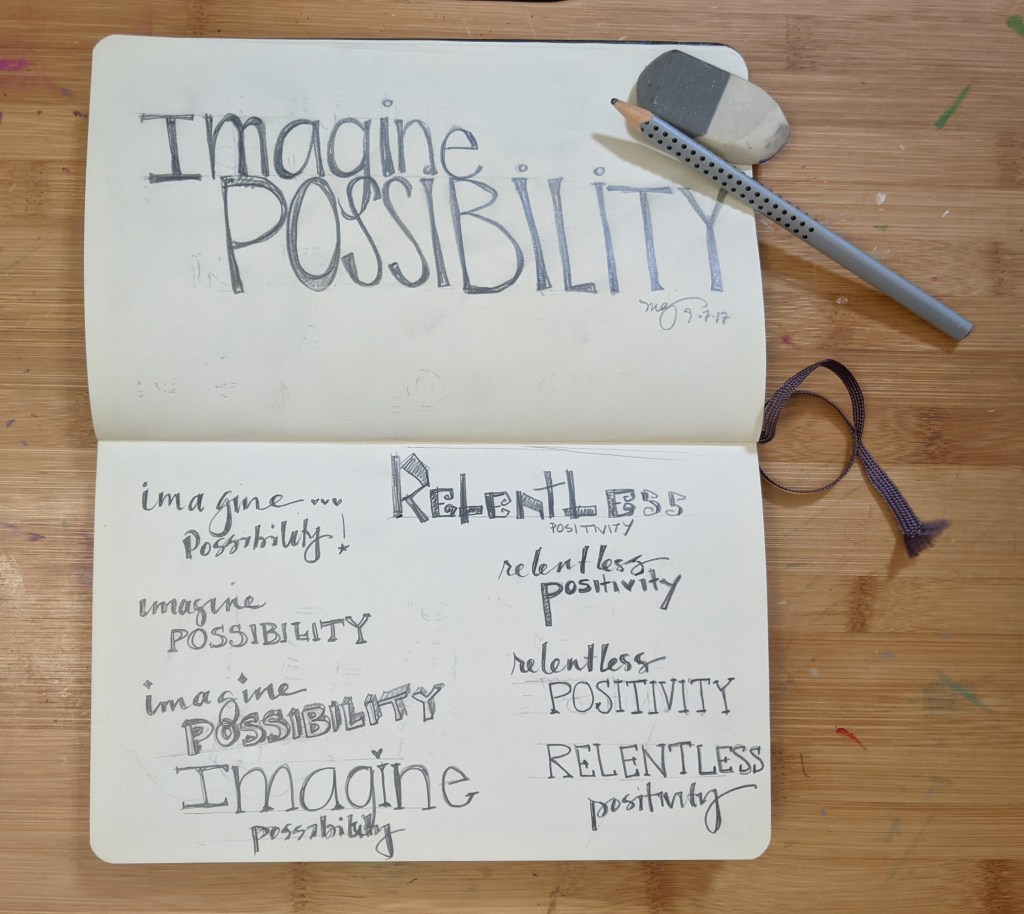
I flipped through the pages of the journal. This page stopped me mid-flip.

I’ve always admired people who are calligraphy stars, but haven’t yet found my groove with that. Hand-lettering is a different story. I enjoy it, and I’m pretty pleased with my ability.

I remember this hand-lettering adventure. Much like when my kindergartners learn handwriting, I worked to accurately replicate an already created font. It wasn’t simple. I needed to really look at the letters. I endeavored to notice shape, size, angles, relationships between the various components of the letter, and the general feel of the font. Then I took what I noticed, let it inspire me, and created my version of the font. I like it!

There’s a strong connection between my hand-lettering work, and the handwriting work my Kindergartners do. It’s important for me to acknowledge that, and even more important for me to share that with them.

I see at least two reasons to share it with them.

One is to encourage them to really look at the letters. I think sometimes the curiosity that might increase their learning, interest, and enjoyment, gets pushed aside for the rote “learn the steps” method.

The second reason I want to share this with them is to elevate their opinion and understanding of their own work. Rarely do our students see us struggle, practice, or learn new things. Perhaps even worse, the work we ask them to do — writing letters repeatedly — is often perceived as something only for children, or the less skilled. When we share the times our learning looks very much like theirs, we end up elevating their learning, work, and struggle. We normalize it as the way we all learn, become more proficient, and make things our own.

I think it would be amazing if we encouraged our students to create their own hand-lettering. It could be an extension of handwriting, and might even help them become more adept at forming the letters correctly.

Imagine the conversations you could have together about their created hand lettering. They could point out the things they noticed about the various letters, the things they kept the same, the things they emphasized or de-emphasized, what they were thinking, what was easy, what was hard, what they did to overcome various struggles, how they hoped to use the lettering they created, and much more. We could marvel at their noticing, thinking, and creativity. We could notice things about their lettering — how it resembles the handwriting letters, and how it doesn’t, how it makes us feel, and how it inspires us. We could even ask them to teach us how to make it. So much potential for amazing interactions, learning, and growth.

Back to my lettering. I remembered the joy of creating it, so I decided to let that be my ticket back into my inspirational journal. I wrote just one word:

Then I added a few bits of advice for myself. God is love. Be love. Be loved. Beloved. It’s sitting next to my chair, reminding me of the importance and place of love in my life. One might think it’s hard to forget about love. But, I think, sometimes, it’s pretty easy to forget. I want to stop forgetting, and really live love and all its remarkable power.

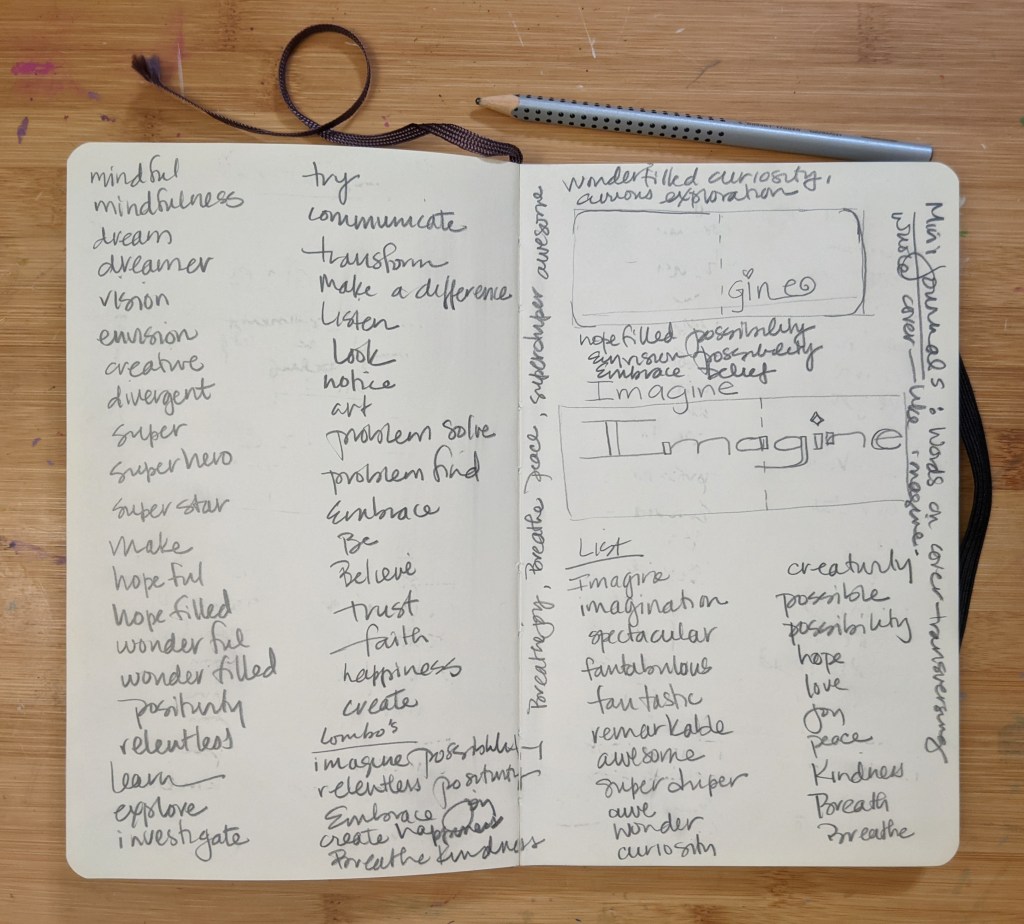
I flipped a few more pages in my old journal, and noticed this:

and then this:

Have I mentioned lately that I LOVE writing in pencil? Especially a wonderful pencil like the one in the photo — a Faber Castell graphite grip pencil. It is sweet! And no, I don’t receive any free pencils from Faber Castell for recommending them — but boy that would be pretty fabulous!

Again, my thoughts go to my Kindergartners. I understand there are reasons we ask our students to write with particular pencils. But if I love writing more when I use particular pencils, and I know I like my handwriting better with certain pens, mightn’t my students as well? And if they might, shouldn’t I sometimes give them the opportunity to write with tools they love? Yes, I should.

These two pages reminded me of another practice I’d like to incorporate into my day with my students. I like making lists of words — words that inspire me, words that are things I love, words that are things I want to do, or be, or feel. I find joy as I combine the words into phrases – in this case simple two word phrases that are easy to remember and might become mantras. And it’s fun to experiment with various combinations, and imagine things to create with them. Mmm. So good. Fantabulous, even!

So, I’m back on track with my inspirational journal. I am excited to continue my hand lettering work. I’m reminding myself to love, allow myself to be loved, and remember I am the beloved of a God who is love. And, I have some great ideas I want to bring to my fantabulous, big-beautiful-brained Kindergartners!

It’s a good day.

The Joy of Inventing

Recently heard in my classroom …

Miss James!

I LOVE inventing! Inventions are the BEST!

(And yes, the bold, large font is appropriate as it conveys, I hope, just a bit of her enthusiasm!)

20171129_143136-1-01

Oh my GOSH!!! I loved the passion, zeal, and joy of this young inventor!

She’s right, you know, inventions are awesome and fantabulous!  They are the best because they allow, encourage, enable:

  • joy
  • passion
  • engagement
  • independence
  • collaboration
  • thinking
  • problem solving
  • sensible risk taking
  • failure, re-thinking, re-designing, re-making, and increased understanding
  • creativity
  • learning
  • love of making, exploring, and learning

I loved her enthusiasm, and I’m so glad she shared it with me. I am grateful for the reminder to search for, and find, ways to support freedom, making, play and inventing in my learning space!


Creativity in Unexpected Places

2016-03-03 08.52.11

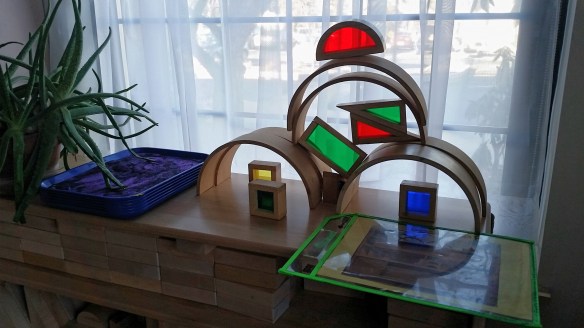
My students have been cleaning up the building area this week. 

This is what I found when I came back into the room today. Beautiful isn’t it!?!!

With a bit of freedom, growing love for aesthetics, and joy-filled support, even cleaning up can be filled with moments of creativity and beauty.