
The Courage to Create and Connect à la Frank Gehry

Poking about the internet I came upon a Playing for Change video. I was enjoying the various stars and regular humans in the video, and up popped Frank Gehry. “Wow!” I thought. “Is he still with us?” No disrespect intended, I hoped he was, I just didn’t know. So I searched, and sure enough he is.

I don’t know too much about Frank, but in spite of my lack of knowledge, I am fascinated by him. His thoughts, his less than linear buildings that defy the traditional rectangular box-like structure and the way he embraces the possibilities of architecture, walls, buildings, and materials are intriguing. It’s as though he envisioned the walls as fabric — able to curve, move, and have life. How cool, courageous, creative, and amazing is that vision, much less the choice to actual create these structures. Look at the Guggenheim in Bilbao. The building is wild and beautiful, and what the museum is doing with the space for community and learning is pretty amazing. I suspect a great deal of what they are doing is inspired by his design.

With Frank back in my consciousness, I searched for videos with him speaking. There are a lot! I’m looking forward to watching a few. I’ve just started watching Jump Into the Unknown.

I feel a kindred spirit with Frank when I hear him speak. While we are in different fields — he an architect, me an educator — I see my interactions with him and his ideas as remarkable moments of professional development! I’ve blogged about him previously, and suspect there will be many more thought-provoking ideas, but for now, here’s what struck me today.

Jump Into the Unknown begins with Frank telling the story of standing before a large Greek statue. He said the experience made him cry. He goes on to say, “I thought, boy that’s what an architect should do … be able to have an emotional response with their work that lasts through the centuries. So that’s what I try to do now. I know that’s pompous, but at least it’s a wish. It’s a hope.”

I thought, “That’s my hope and wish, too!”

I understand your incredulity, but before you scoff or write me off let me explain.

Might I have people with emotional responses to my work centuries from now? Perhaps not. My work is much different than an architect’s. Nonetheless it remains my hope, my wish, and my goal to have that type of impact on others, And let’s consider my work. My work and interactions with others changes me and them. This then impacts future thinking, doing, and interacting. Continue this line of thought and it is highly likely that my choices, words, behaviours, creations, and dealings with others, will engender connections and emotional responses centuries after each young human and their parents have been in my learning space.
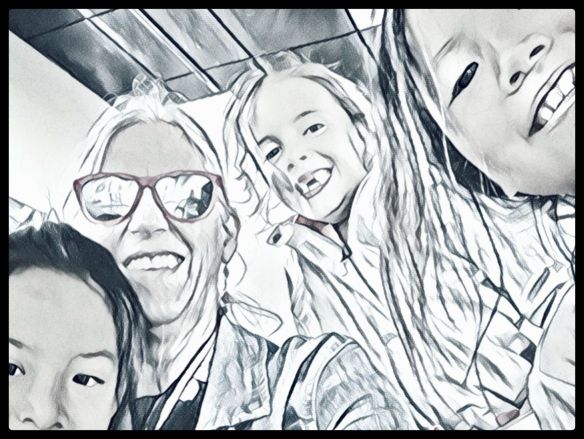
As an educator, I strive to create positive connections and emotional responses, and to make a difference in the lives of those I encounter. Unlike Frank, I don’t think that’s a pompous wish or hope. It’s a wish and hope that understands the importance and power of what I do, and the people I do it with and for.

A Conversation with Frank Gehry

I first heard of Frank Gehry, several years ago, when I visited the EMP (Experience Music Project — now know as the Museum of Pop Culture) in Seattle, Washington. It’s a remarkable building! It features Gehry’s folds, and some awesome finishes that reflect light, images, and shadows in fascinating ways.

It’s wild, and so unlike other buildings I had experienced. I was fascinated by how it interacted with the things around it – including me. I could have taken photographs for days!

20180703_220047-01-01

I was reminded of Gehry and his building, the other day when I noticed Master Class, offered a class of Gehry teaching design and architecture! How cool is that? I haven’t finished the class yet, but I’ve already been inspired.

Now, to be clear. Frank and I didn’t sit down over a cup of tea, and converse. Our conversation began when I experienced his building, and picked up again with his master class. As I think, talk with others, and allow his words and ideas — as well as my thoughts and responses — to impact me as a creative and an educator, our conversation continues.

Two thoughts really struck me.

“My advice is forgot about creative block. Assume you’re always blocked. Just keep trying. Creative block is an excuse out of fear. I don’t think it’s relevant, and I think you should forget about it.”

Interesting, right? Instead of being bothered if you feel blocked, just let it be. Recognize it as a natural state of being as a creative, and keep doing your thing.

I’m reminded of Uri Alon’s idea of the cloud,  and think Gehry’s idea can have similar power in the classroom. Much like our thinking, sometimes our creating appears to happen easily, almost magically. Often my girls ask me, with voices filled with awe and disbelief, “Wow. How did you do that, Miss James?” They only see what I can do after hours of struggling with my own blocks. Even the blocks that I may be experiencing at the time they query me, are invisible to them, because like Gehry, I just accept them and move forward.

What an amazing concept to share with my students.  Being blocked is  a natural state for creatives. It would be fabulous to help lessen the power of their own blocks and worries. It’d be amazing to help them get to the point where they felt the blocks, even acknowledged they were feeling them, and then dismissed them, with a “No worries!”

Perhaps I need to think of a Gehry mini lesson. Maybe I should include other artists as well. Or, it could be that it’s not a mini lesson at all. It could be I just live a bit more transparently — sharing my own process of blocks, fretting, noticing, breathing (with an eye-roll in the general direction of my blocks), and moving on.

The second quote follows nicely after the first.

“Trust it, don’t force it, don’t leave it. Take a risk even if you know it doesn’t work … Where’s the line and what can you do with that information? If you’re relentless you can make the fly that stops the train.”

I love the idea of balance — trust, without force and without abandonment. Take a risk. See what innovative, creative, outlandishly wild, and fabulous ideas you can hatch. Then, see how far forward you can take your ideas.

And his question is power-packed. “What can you do with that information?” You don’t just create something, or fail, no matter how spectacularly you do either. You notice, you learn, and you do something with the information.

Thanks for the conversation, Frank! I have so many great thoughts and truths to share with my students.

Now to integrate these understandings  more deeply into my life and being, so I can bring them into my practice and classroom with ease. I’m looking forward to the conversations, provocations, questions, learning , risks, successes and failures …. and things I have yet to imagine.